A Hidden Evolutionary Milestone
In the vast expanse of the Jurassic Period, an era defined by dinosaur dominance, a small, furry predator was quietly setting the stage for the future of mammalian evolution. Scientists have recently identified Megacauda sungei, a 165-million-year-old creature whose anatomy provides a missing link in the story of how mammals—and eventually humans—developed the capacity for complex brain growth.
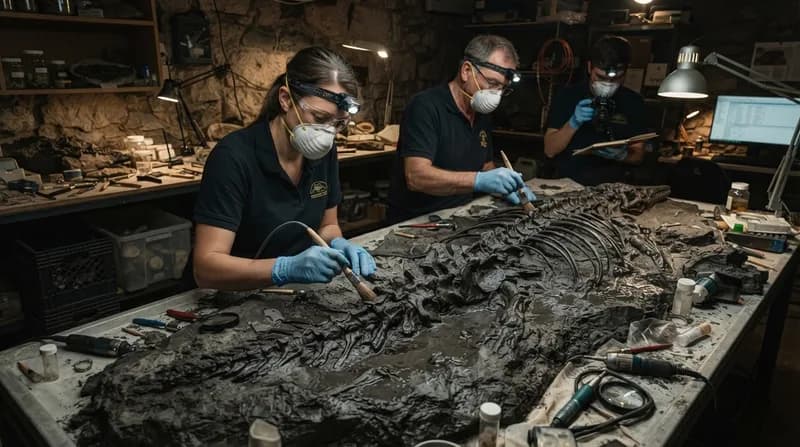
Discovered in Inner Mongolia and analyzed by an international team of researchers, this animal measured roughly 20 inches from nose to tail. While its size might seem trivial in an age of giants, Megacauda sungei was a heavyweight among its contemporaries. Its existence proves that early mammaliaforms were far more biologically sophisticated and ecologically diverse than previously understood.
The Anatomy of Innovation
The most groundbreaking aspect of the discovery is the presence of a sophisticated soft palate. Unlike modern reptiles, which rely on rigid hyoid bones and gravity to gulp down food, mammals possess a complex arrangement of throat tissues that separate the mouth from the pharynx. This allows for continuous breathing even while swallowing.
This anatomical adaptation was not merely for convenience; it was a biological imperative that enabled nursing. By allowing the young to consume nutrient-rich milk safely without the risk of liquid entering the nasal passages, this development provided a significant survival advantage. Prof. Dr. Thomas Martin of the University of Bonn, a lead researcher on the project, notes that this specific capability is directly linked to the development of the mammalian brain. By ensuring consistent energy intake for offspring, this adaptation became a cornerstone for the advanced cognitive development seen in later mammal species.
A Specialized Aquatic Hunter
Beyond its physiological contributions to brain evolution, Megacauda sungei was a remarkable predator in its own right. Detailed computed tomography scans revealed an animal built for water, sporting a flattened tail used for propulsion and a body structure reminiscent of a modern-day otter or platypus. Its swimming ability represents one of the earliest examples of an aquatic lifestyle in the mammaliaform lineage.
Its hunting gear was equally specialized. The creature possessed teeth with backward-curving cusps designed to secure slippery aquatic prey. Perhaps most notably, it featured canine teeth with three roots—a highly distinct dental configuration that helped the research team classify the specimen within the docodont group. This extinct lineage of early mammal relatives clearly occupied a wide array of ecological niches, from burrowing underground to navigating the waterways of the Northern Hemisphere.
Why it Matters
- Evolutionary Bridge: The soft palate adaptation confirms that the physiological foundations for modern nursing were established millions of years before the rise of modern placental mammals.
- Ecological Diversity: The discovery highlights that early mammals were not just ground-dwelling insectivores but had already adapted to complex roles, including specialized aquatic hunting.
- Neurobiological Link: The ability to nurse safely allowed for sustained, high-energy nutrition for developing offspring, a critical factor that facilitated larger brain growth over millions of years.
- Methodological Advancement: This study exemplifies how high-resolution CT scanning and international collaboration can extract profound insights from previously archived museum specimens.
Ultimately, Megacauda sungei serves as a reminder that the trajectory of life is often shaped by small, quiet innovations. While the dinosaurs held the spotlight, this 20-inch predator was quietly perfecting the biological mechanics that would eventually define the unique capabilities of the mammalian class.