The Quest for Cellular Integrity
Mitochondria serve as the essential power plants of our cells, responsible for generating the chemical energy required for nearly every biological process. When these delicate organelles malfunction, the results can be devastating, leading to a host of complex, often rare mitochondrial diseases that primarily impact high-energy tissues like the brain and muscles. Despite their critical importance, developing medical interventions that can interact with these structures without disrupting their fragile internal mechanics has remained a significant hurdle in modern medicine.
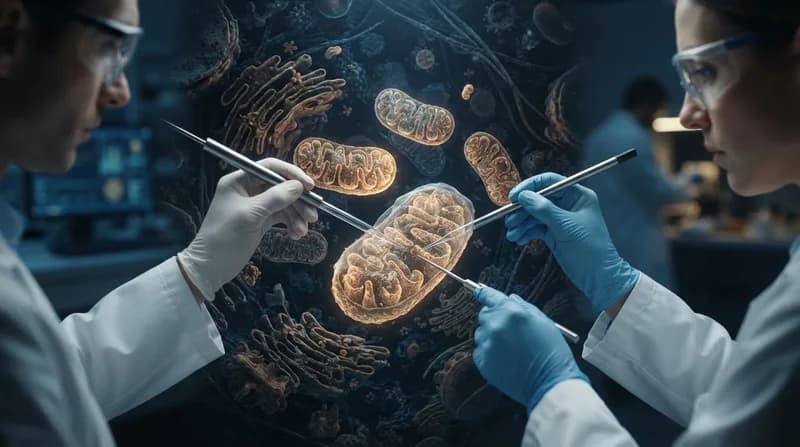
A collaborative breakthrough from the BraiNs laboratory—a joint venture between the IRCCS Fondazione Istituto Neurologico Carlo Besta (FINCB) and Politecnico di Milano—has introduced a transformative solution. By leveraging advanced materials known as Metal-Organic Frameworks (MOFs), researchers have successfully developed a technique to apply a protective, functional coating to the surface of individual mitochondria. This development marks a pivotal shift in cellular bioengineering, as it allows scientists to manipulate these powerhouses without compromising their energy-producing capabilities.
The Role of Metal-Organic Frameworks
The selection of Metal-Organic Frameworks (MOFs) as the coating material is no coincidence. As highlighted by the 2025 Nobel Prize in Chemistry, MOFs represent a class of highly versatile materials whose chemical and physical properties can be precisely tailored. The research team faced an uphill battle; coating a biological structure as sensitive as a mitochondrion typically risks damaging its membrane or interfering with its metabolic processes. To circumvent this, the team developed a specialized application process that deposits minimal, optimized quantities of MOF material directly onto the organelle.
Empirical testing revealed that these coated mitochondria retained their full bioenergetic function, successfully producing energy at levels comparable to their uncoated counterparts. This validation is the cornerstone of the study, proving that researchers can effectively "armor" mitochondria with synthetic materials without "killing the engine." This delicate balance between structural modification and metabolic preservation is what sets this approach apart from previous attempts at organelle engineering.
Why It Matters: Context and Potential Applications
- Disease Mitigation: Many rare diseases stem from mitochondrial failure. This technology offers a potential pathway to protect or modulate these organelles in vivo.
- Customizable Functionality: Because MOFs are modular, future iterations could be functionalized to perform specific tasks, such as acting as targeted drug-delivery vehicles directly into the cell.
- Organelle Transplantation: A major focus of the research is the long-term feasibility of mitochondrial transplantation. A specialized coating could act as a shield, facilitating the stable transfer of healthy mitochondria into damaged cells and ensuring better integration with the host environment.
An Outlook on Future Therapeutics
While the initial results published in the Journal of the American Chemical Society are highly promising, the research team remains cautious about the road ahead. The successful application of the coating is a definitive "proof of concept," yet significant investigation is required to determine how these engineered organelles behave within a complex living system. The next phase of research will focus on whether these coated structures perform more effectively during transplantation procedures compared to native, uncoated mitochondria.
As science continues to bridge the gap between materials engineering and molecular biology, the ability to modify the building blocks of cellular life opens doors to entirely new therapeutic modalities. If these MOF-coated mitochondria can be successfully utilized in clinical settings, it could fundamentally change the treatment landscape for neurodegenerative and metabolic disorders, offering a high-tech lease on life for the powerhouses that keep our bodies running.