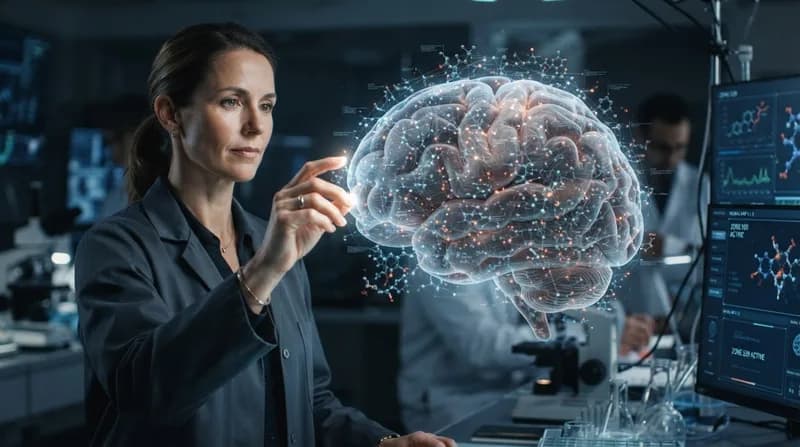
Bridging the Gap Between Patient and Machine
For decades, epilepsy management has been a top-down affair. Patients equipped with EEG monitoring devices—whether scalp-based or implanted—have essentially been passive observers of their own physiological data. These devices record vast streams of brain activity, yet the critical insights derived from that data have historically been locked away, reserved for clinical review days or weeks after an event has passed. A team at the University of Pennsylvania is now shattering this paradigm with an innovative AI-driven interface that facilitates real-time, bidirectional communication between patients and their monitoring hardware.
The study, published in Nature Medicine, introduces a platform that empowers patients to query their own brain data through a smartphone application. By acting as a bridge, the AI system translates complex EEG readings into accessible, conversational insights. This change gives patients immediate visibility into their neurological state, turning a previously cold, observational tool into an active, collaborative health partner.
The Power of Patient Feedback
The most transformative aspect of this research is the system's ability to learn from the human element. Standard seizure-detection algorithms are notorious for mislabeling benign brain activity, leading to a high volume of false alarms that frustrate patients and burden clinicians. By integrating the patient's own felt experience, the new AI platform creates a feedback loop that rapidly refines its diagnostic accuracy.
During a clinical trial involving 13 patients, participants were able to confirm or flag suspected seizures in real-time. This user input allowed the machine learning model to fine-tune its detection parameters on the fly. The results were dramatic: the AI reduced false seizure alarms by an impressive 80%. When combined with supplementary expert oversight, the system's accuracy continued to climb, demonstrating that human-AI collaboration is significantly more effective than isolated algorithmic processing.
Why It Matters
- Reduced Anxiety: Fewer false alarms mean fewer unnecessary interventions and less stress for individuals living with epilepsy.
- Data Symmetry: Patients gain a clearer understanding of how their behavior and environment impact their health, fostering better self-management.
- Clinical Efficiency: By filtering out noise through patient interaction, clinicians spend less time reviewing false positives and more time focused on actual neurological events.
- Adaptive Potential: The underlying framework is versatile enough to be adapted for other chronic conditions, including Parkinson’s disease management via deep brain stimulation devices.
The Road Ahead: From Hospital to Home
While the initial study was restricted to a controlled hospital environment, the overwhelming positive reception from patients suggests a clear path toward outpatient adoption. The researchers noted that participants were so impressed by the system's utility that many expressed an unprompted desire to take the monitoring platform home with them immediately. This eagerness is a strong indicator of both the system's ease of use and its perceived value to those dealing with the daily unpredictability of seizures.
As the team shifts its focus toward larger-scale outpatient trials, the promise of this technology extends well beyond epilepsy. The success of this human-in-the-loop approach serves as a blueprint for future medical devices. By treating patients as active agents in their own monitoring processes rather than mere subjects, the medical community is moving toward a more adaptive, personalized, and patient-centric model of care that could reshape how we manage chronic disease in the digital age.