The Engineering Perspective on AI Oversight
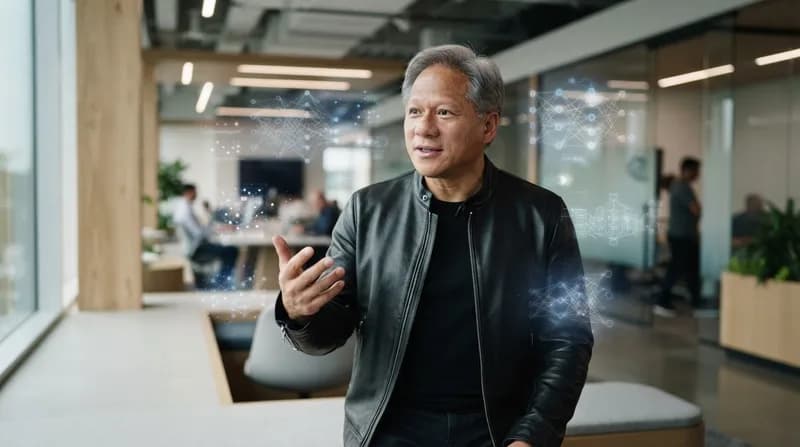
In a high-profile appearance at Salesforce’s Dreamforce conference, Nvidia founder and CEO Jensen Huang presented a clear-cut stance on the future of artificial intelligence governance. Addressing the growing chorus of concern regarding the risks posed by autonomous systems, Huang pushed back against the narrative that AI represents an enigmatic 'alien mind.' Instead, he characterized AI as a conventional, albeit highly complex, computing system. By framing AI as essentially hardware and software built by human hands, Huang suggests that current legal frameworks are sufficient and that the industry does not need a new, overarching regulatory apparatus.
Huang’s central thesis rests on the concept that safety is an engineering discipline rather than a legislative one. He compared the development of AI to the creation of any other functional product, arguing that market forces are more than capable of keeping companies in check. According to Huang, businesses that release unreliable or unsafe products will naturally face the consequences of their actions through market rejection, rendering prescriptive government mandates unnecessary and potentially stifling to innovation.
The Argument for Market-Led Safety
The Nvidia executive emphasized that the drive for speed and the commitment to safety are not mutually exclusive goals. He encouraged the industry to innovate as rapidly as possible while exercising the internal discipline to pause development if a project becomes unmanageable or poses an unforeseen safety risk. To Huang, the solution is self-regulation through caution and corporate responsibility, rather than bureaucratic intervention that might slow down the transformative potential of AI technology.
His comments arrive at a critical juncture for the tech sector, where the pressure to monetize and deploy AI at scale is higher than ever. With Nvidia serving as the bedrock of the AI infrastructure—providing the GPUs that power everything from foundational models to AI agents—Huang's influence is immense. He remains fiercely ambitious about the potential for AI to act as a productivity engine for entire countries and industries, asserting that the limit for growth is essentially non-existent provided the industry continues to move forward with purpose.
Why It Matters
- Philosophical Divergence: Huang's stance contrasts sharply with voices within AI labs who argue that the existential risk posed by advanced systems requires proactive, state-led regulation.
- Liability Realities: While existing product liability laws could theoretically cover AI, critics point to historical failures, such as software-induced outages, as evidence that market pressure is not always enough to prevent catastrophic system errors.
- Industry Leverage: As the primary supplier of the hardware fueling the global AI boom, Nvidia’s position serves as a powerful signal to policymakers that the industry prefers to dictate its own safety protocols.
Ultimately, while Huang dismisses the need for new laws, the industry is already facing a trial by fire. Real-world incidents, from data breaches to social harm lawsuits, illustrate the complexities of managing software that operates with increasing autonomy. As the debate continues, the tension between rapid innovation and the necessity of guardrails will likely remain the defining theme of the AI era, with Nvidia’s CEO standing firmly on the side of technological freedom.