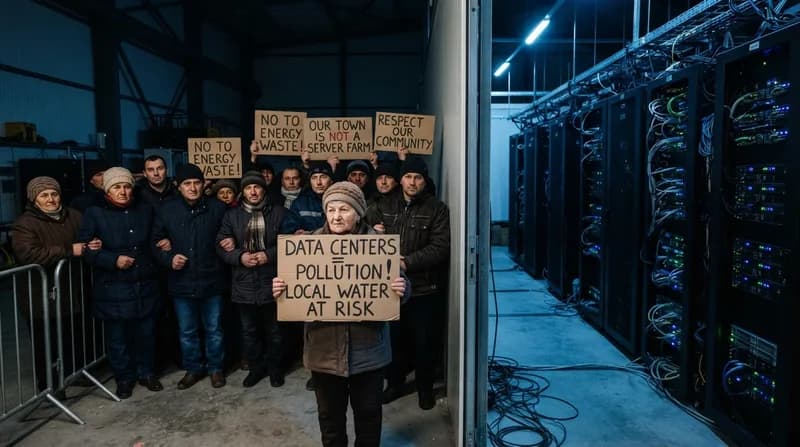
The Growing Friction Between AI Ambition and Community Health
The global race to dominate artificial intelligence has triggered an insatiable demand for computing power, leading to a massive surge in data center construction. However, this infrastructure boom is hitting a significant roadblock: local communities who are increasingly skeptical of the environmental and economic promises made by tech firms. For many, the memory of past industrial harm makes the prospect of large-scale, resource-intensive facilities an unacceptable risk.
In cities like Philadelphia, the conversation has moved from the boardrooms of tech giants to the streets. Residents in historically industrial neighborhoods are organizing to prevent new developments, citing deep-seated fears regarding noise pollution, excessive water usage, and potential air quality degradation from backup power systems. The skepticism is rooted in lived experience; for those who have seen the impact of heavy industry, these new 'digital' powerhouses feel like a familiar threat to their quality of life.
The Environmental Cost of Infinite Compute
The technical requirements of modern AI models are staggering, leading to a projected consumption of natural gas in the U.S. that could exceed the combined output of Germany and Japan by 2035. While natural gas is often marketed as a cleaner bridge fuel, its combustion remains a major source of greenhouse gas emissions. Current models suggest that the added demand from these data centers could generate an extra million metric tons of CO2 pollution daily, complicating the nation's climate targets.
Beyond the primary power draw, there is a technical concern regarding local air quality. Many data centers rely on large arrays of diesel generators to maintain uptime during power grid stress. As heatwaves become more frequent—partially fueled by the broader climate impact of industrial energy usage—these backup systems may be pressed into regular service. For local residents, the prospect of breathing exhaust from industrial-scale diesel engines during record-breaking heat is a primary driver of the current opposition movement.
A Nationwide Wave of Regulatory Pushback
Philadelphia is far from an outlier in this conflict. Across the United States, municipal leaders are facing intense pressure to pause development until the long-term impact on local infrastructure can be verified. In several cities, including Denver, Indianapolis, Asheville, Charlotte, and Reno, local governments have implemented moratoriums on data center construction. These pauses are intended to serve as a cooling-off period, allowing for a more thorough analysis of how these facilities affect water supply, electricity pricing, and grid stability.
New York State has taken a significant step by implementing an executive order that temporarily halts the permitting process for large-scale data center projects. The message from policymakers is shifting toward a more cautious approach, prioritizing the preferences and needs of existing communities over the rapid, unchecked expansion of digital infrastructure. As these grassroots movements gain momentum, tech companies may find that the true bottleneck for AI advancement is no longer hardware supply, but rather the social license to operate in a decarbonizing world.
Why It Matters
- Resource Strain: AI data centers consume vast amounts of electricity and water, potentially raising utility costs for local residents.
- Air Quality: Reliance on diesel backup generators creates localized pollution hotspots in residential areas.
- Regulatory Precedent: The success of local moratoriums in cities like Reno and Indianapolis signals a major shift in how urban planning interacts with big tech.
- Climate Paradox: The paradox of using fossil-fuel-heavy energy to power the 'future' of technology is central to the growing public outcry.