A Creative Solution for Charging Infrastructure
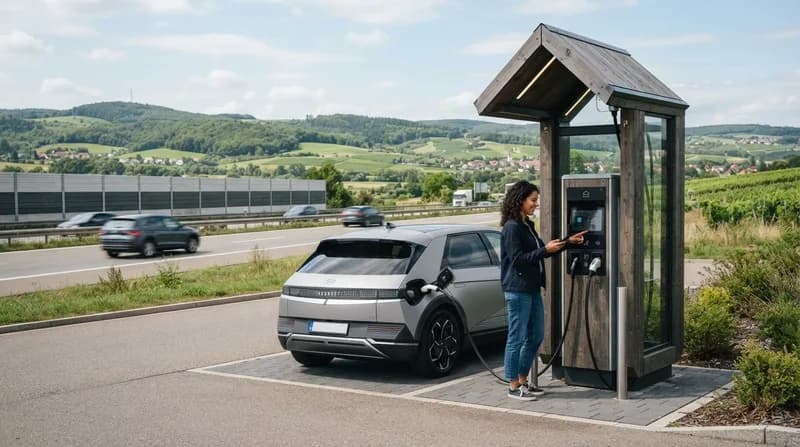
As the European electric vehicle market expands, regulatory frameworks like the Alternative Fuels Infrastructure Regulation (AFIR) have set stringent requirements for payment transparency and accessibility at public charging stations. To meet these mandates, charging network operator Ionity has introduced a novel hardware solution: the 'Birdhouse' terminal. Rather than attempting a complex, costly retrofitting of older individual charging units, Ionity is installing centralized, lamppost-mounted payment kiosks that serve entire charging parks.
The choice of name and shape is far from coincidental. While the device functions as a robust payment interface, its whimsical, bird-themed design is a direct nod to the company’s brand identity, which features the red kite as its central symbol. This approach transforms a utilitarian requirement into a unique piece of industrial design, effectively humanizing the often sterile environment of a high-power charging hub.
How the Birdhouse Payment Process Works
For drivers utilizing traditional charging apps or membership cards, the charging experience remains largely unchanged. However, those opting for ad-hoc charging—typically used by non-members or casual users—will now interact with these centralized terminals. The operational workflow is straightforward: a driver first activates the display on their chosen charging pillar, then walks to the nearest Birdhouse to securely process a contactless payment via debit or credit card. Once the transaction is authorized, the system unlocks the charger, allowing the driver to plug in and begin their power delivery.
While this requires a minor deviation from the 'all-in-one' experience of some modern chargers, Ionity emphasizes that this hardware strategy is essential for bringing legacy infrastructure into modern compliance. By centralizing the payment hardware, the company significantly reduces construction and maintenance complexity. Currently, the ad-hoc rate for this service is set at €0.69 per kilowatt-hour, a price point that remains consistent regardless of the payment hardware used.
Scaling Up Across Europe
The scale of this deployment is significant, with Ionity planning to bring these terminals to 464 locations across 22 different countries. The rollout is already well underway in Germany, where over 60 sites—including high-traffic areas like Gruibingen Süd and Riedener Wald West—are already active. The company intends to continue this expansion, adding new sites continuously to ensure that its network meets evolving accessibility standards.
Why It Matters
- Regulatory Compliance: The Birdhouse system provides a cost-effective path to meet AFIR standards for open-loop payment systems at legacy charging sites.
- Cost Efficiency: Centralizing payment hardware avoids the massive logistical and financial burden of retrofitting individual charging columns.
- Operational Continuity: By decoupling payment from the charging unit itself, Ionity minimizes downtime for its existing infrastructure during the upgrade process.
- Branding: The design serves as a creative brand touchpoint, signaling that infrastructure updates can be aesthetically considered rather than strictly industrial.
Ultimately, Ionity's Birdhouse initiative represents a practical intersection of hardware innovation and regulatory necessity. By balancing the functional requirements of EV infrastructure with a distinct, brand-aligned visual language, the company is successfully future-proofing its network while maintaining a recognizable presence for drivers on the road.