The Mercury Concept: A New Vision for Urban Mobility
Hyundai has officially pulled the curtain back on its latest design study, the Mercury Concept, during the Auto Guangzhou trade show. As a compact B-segment SUV, the vehicle is being positioned as a cornerstone of Hyundai’s renewed strategy for the Chinese market. With a sharp, modern aesthetic defined by a 'Shark-Nose' front fascia and slender lighting signatures, the concept aims to capture the attention of younger urban drivers. Its striking 'Citrine Neon' paint finish, coupled with a steeply raked windshield and an aerodynamic integrated rear spoiler, positions the Mercury as a bold departure from the company's previous offerings in the region.
Beyond the exterior styling, the Mercury Concept is built with a clear focus on the specific demands of Chinese city traffic. Hyundai has confirmed that the vehicle will move from concept to production by 2027, serving as a critical entry point for the brand’s local electric portfolio. While the powertrain technical specifications remain largely under wraps, the company has confirmed that the production version will integrate advanced connectivity features. This includes an 'L2++' level driver assistance system provided by Zhuoyu Technology—formerly known as DJI Automotive—and an intelligent cockpit platform powered by ByteDance’s 'Doubao' AI, ensuring the software ecosystem is tightly tuned to local driver preferences.
A Strategic Bet on Battery Swapping
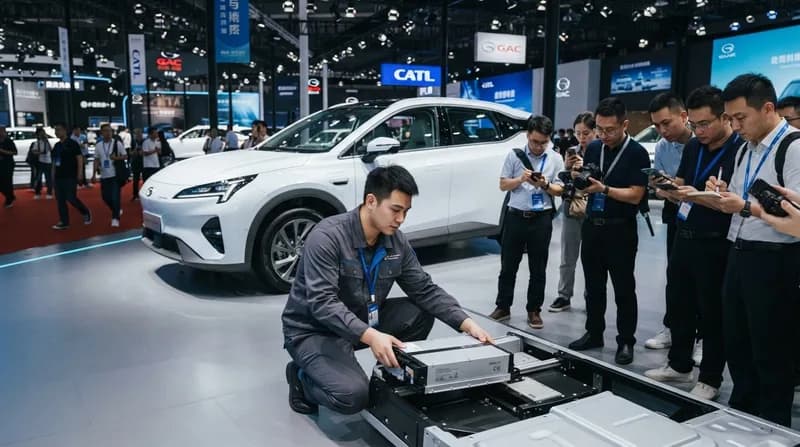
Perhaps the most significant revelation regarding the Mercury Concept is its compatibility with CATL’s battery-swapping infrastructure. By offering a variant of this model that supports swappable batteries, Hyundai is directly addressing the primary concerns of convenience and charging anxiety that have slowed the adoption of EVs among urban apartment dwellers. CATL is currently positioning itself to become the preeminent operator of battery-swap stations in China, with plans to expand its network to 6,000 locations by 2027. This partnership allows Hyundai to bypass the limitations of slow-charging stalls, enabling users to regain a full charge in mere minutes.
This initiative is a critical component of Hyundai’s aggressive roadmap to rebuild its presence in China after previous attempts to adapt internal combustion platforms for electrification fell short. The company is now pivoting toward purpose-built electric vehicles that cater specifically to the Chinese consumer. Following the Mercury's 2027 arrival, Hyundai intends to release a production iteration of its Earth Concept by 2028, with two additional electrified models slated for release by 2029. This systematic rollout underscores a deliberate, long-term commitment to regaining market share through technology-forward, localized hardware.
Why It Matters
- Local Optimization: By incorporating ByteDance’s AI-driven cockpit and advanced L2++ driving assists, Hyundai is moving away from global standard platforms toward China-specific digital ecosystems.
- Infrastructure Synergy: Integrating CATL’s battery-swapping technology provides a tangible solution to urban charging bottlenecks, potentially offering a competitive edge in densely populated cities.
- Market Recovery: After a difficult period in the region, the Mercury Concept serves as a signal that the joint venture, Beijing Hyundai, is finally prioritizing market-specific design and infrastructure integration to compete with domestic Chinese rivals.