A Strategic Shift in the Chinese EV Landscape
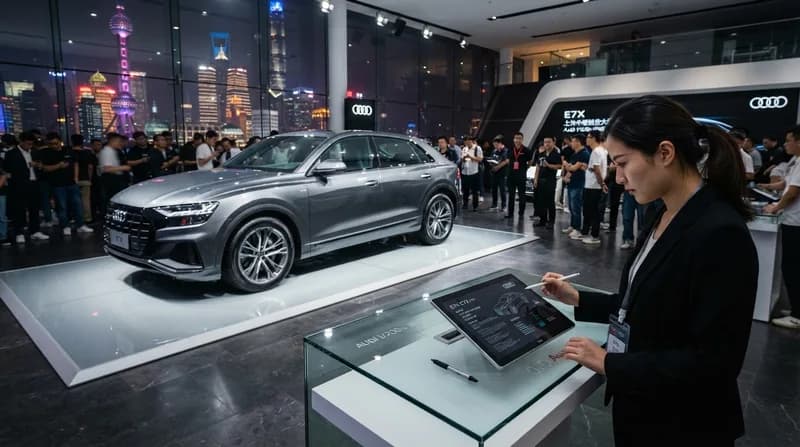
In a significant expansion of its localized strategy, Audi’s dedicated Chinese sub-brand—which operates distinctly under the 'AUDI' nameplate without the traditional four-ring logo—has unveiled plans to introduce a range-extender version of its flagship E7X SUV. Official filings with the Chinese Ministry of Industry and Information Technology (MIIT) reveal that the vehicle, produced in collaboration with SAIC Volkswagen, is set to diversify the brand’s offering beyond its initial pure-electric lineup.
This move is indicative of the unique demands of the Chinese automotive market, where the ability to travel long distances without frequent reliance on charging infrastructure remains a key consumer priority. By integrating a combustion-based generator into an electric vehicle architecture, Audi is positioning itself to compete more aggressively with domestic manufacturers that have successfully captured market share through extended-range electric vehicle (EREV) configurations.
Technical Specifications and Drivetrain Dynamics
The new E7X variant features a distinct powertrain configuration compared to its battery-electric sibling. At its core lies a 1.5-litre petrol engine, which acts exclusively as a power generator to charge the battery while the vehicle is in motion. This internal combustion unit is paired with an electric motor capable of delivering a continuous output of 165 kW and a peak power output of 244 kW. The system allows the SUV to achieve a maximum speed of 205 km/h, maintaining the performance standards expected of the Audi sub-brand.
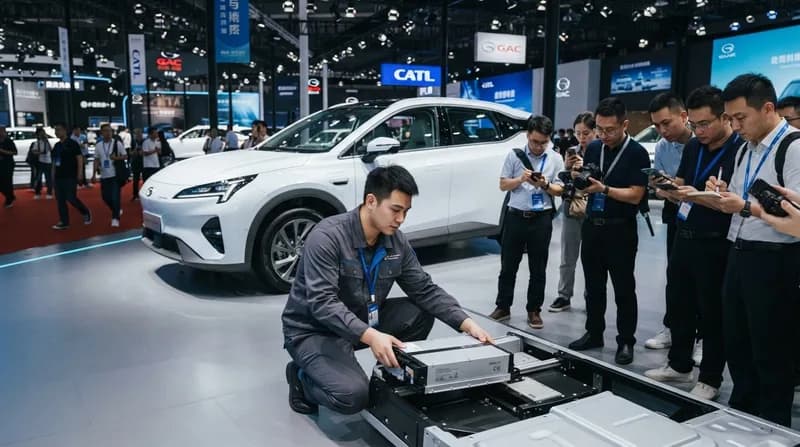
Energy storage is managed via a ternary lithium battery, with cells sourced through a joint venture between SAIC and CATL. While the precise battery capacity has not been finalized in public filings, industry observers anticipate a shift toward smaller, more efficient battery packs compared to the 100+ kWh units found in the pure-electric versions. This adjustment is necessary to balance the additional weight introduced by the fuel tank and combustion hardware. Despite these changes, the vehicle maintains a robust profile, measuring roughly 5.05 meters in length and retaining a generous 3.06-meter wheelbase, ensuring the cabin remains as spacious as the original electric model.
Why It Matters
- Localization Strategy: By utilizing the SAIC Volkswagen partnership, Audi is rapidly adapting its portfolio to meet the specific technical preferences of Chinese consumers.
- Bridge Technology: The range-extender format provides a critical bridge for drivers who are hesitant to commit to pure battery-electric vehicles due to range anxiety, particularly in regions where charging stations remain less accessible.
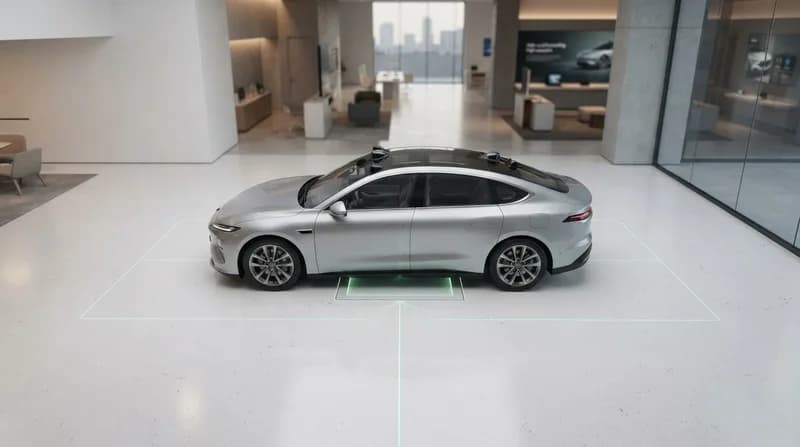
- Design Consistency: The E7X preserves its aerodynamic exterior aesthetic, with only a negligible 5mm increase in total vehicle length, proving that hybrid-like integration does not require compromising the model’s design language.
As the sub-brand continues to iterate on its 900-volt platform architecture introduced earlier in 2026, the arrival of this range-extended E7X signals a maturing of Audi’s Chinese strategy. With aggressive pricing models already established by the existing electric E7X, which launched between €34,200 and €45,600, analysts suggest this new variant could offer an even more accessible entry point into the premium segment, further cementing the sub-brand's presence in a highly competitive and fast-moving market.