A New Strategy for the Chinese Market
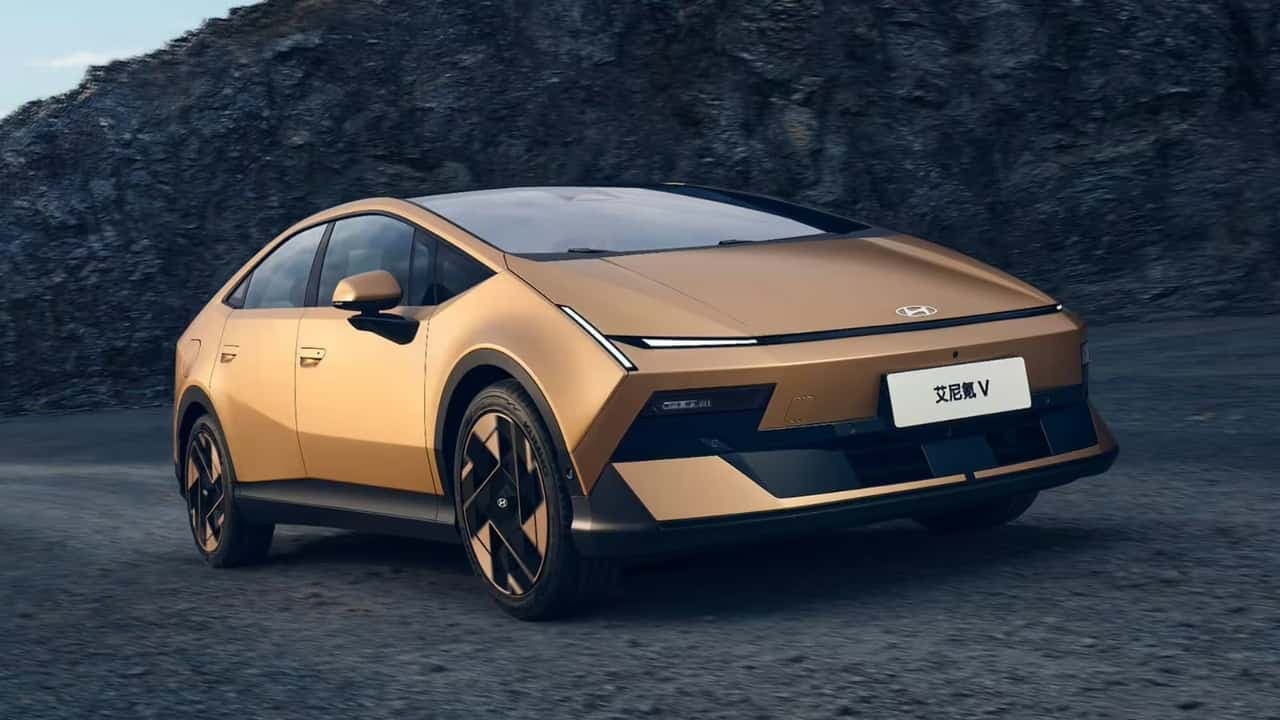
Hyundai is making an assertive play to reclaim its footing in the Chinese automotive market with the launch of the Ioniq V. Unveiled as a cornerstone of the brand's 'triple-down' strategy for the region, this midsize sedan marks a departure from traditional foreign-brand offerings. By developing a vehicle specifically for Chinese consumers, Hyundai is aiming to compete directly with local giants on both design and value. The vehicle’s aesthetic is a striking fusion of sharp, futuristic angles that echo a 'Prius-meets-Lamborghini' silhouette, ensuring it stands out in a crowded landscape of local EV options.
The pricing strategy is perhaps the most shocking aspect of the launch. Starting at approximately $14,800 under a limited-time promotional offer—with a standard retail price of roughly $16,500—the Ioniq V undercuts compact and subcompact competitors like the popular BYD Dolphin. This represents a significant shift for a global automaker, signaling a commitment to aggressive, high-value manufacturing that rivals the speed and efficiency of China’s own domestic brands.
Technical Specifications and Performance
Despite its entry-level price, the Ioniq V does not compromise on core hardware. It is built upon Hyundai’s sophisticated E-GMP platform and features a high-performance 800-volt electrical architecture, a rarity for vehicles in this price bracket. Buyers can choose between two powertrain configurations: a base 188-horsepower motor paired with a 53.5 kWh CATL-sourced LFP battery, or a more potent 225-horsepower motor paired with a 66.8 kWh LFP pack. These configurations offer estimated ranges of 335 miles and 404 miles, respectively, based on the Chinese CLTC testing cycle.
Inside the cabin, the technology suite is designed to appeal to tech-savvy demographics. The dashboard is dominated by a massive, expansive infotainment display that stretches across much of the front console. This system is powered by the Qualcomm Snapdragon 8295P, a high-end system-on-a-chip that ensures smooth performance for navigation, media, and driver-assistance functions. Collaborating with Momenta, Hyundai has also integrated a comprehensive driver-assistance suite, placing the Ioniq V in direct competition with the sophisticated automated driving features found in premium Chinese EV offerings.
Why It Matters
- 800V Architecture: The inclusion of an 800-volt system in an affordable sedan suggests Hyundai is betting on charging speed as a primary differentiator against budget-conscious rivals.
- Market Localization: By designing the Ioniq V specifically for the China market, Hyundai is moving away from a 'one-size-fits-all' global strategy to better cater to local expectations for tech and size.
- Competitive Disruption: Pricing a midsize vehicle at the cost of a subcompact hatchback forces established players to rethink their cost structures if they hope to remain relevant in the world's largest EV market.
As Hyundai continues to iterate on its E-GMP platform and expands its manufacturing footprint, the Ioniq V serves as a litmus test for whether a legacy automaker can successfully adapt its business model to the hyper-competitive Chinese EV sector. The combination of a high-capacity LFP battery, a robust infotainment chip, and a sleek, modern exterior suggests that Hyundai is no longer content to play a secondary role in the transition to electric mobility.