A Lost Chapter of Computing History
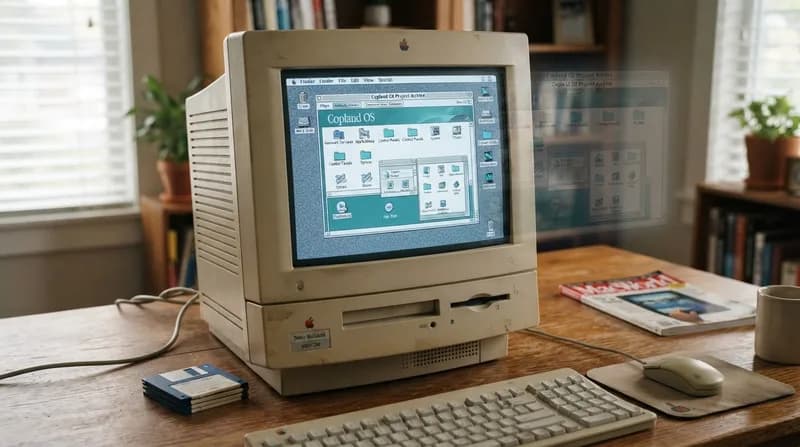
For decades, the story of Apple’s mid-90s internal struggle has been a footnote in the history of personal computing. Now, a new web-based project allows anyone with an internet connection to experience the final developer build of Copland, the operating system that was meant to usher Apple into a modern, multitasking era before it was abruptly abandoned in favor of NeXTSTEP.
Copland was Apple’s ambitious answer to the limitations of System 7. It promised a ground-up redesign featuring a robust microkernel, protected memory, and preemptive multitasking—features that were standard in contemporary rivals but absent in Apple's aging architecture. Developer Michael Steil, known in the retro-computing community as Mist, has utilized an experimental fork of the DingusPPC emulator to bring build D11E4, the final iteration released to developers in June 1996, directly into the browser.
The Tech Behind the Resurrection
The technical achievement is notable for its reliance on modern ingenuity to bridge a three-decade gap. Steil implemented 11 specific patches to the DingusPPC Power Mac emulator to facilitate the boot process. Interestingly, the developer noted that these patches were generated with the assistance of artificial intelligence, though they currently reside outside the upstream project because the original repository does not accept AI-contributed code.
Users should temper their expectations regarding performance. The emulator provides an authentic window into a profoundly unfinished product. Copland was famously unstable, and the browser version stays true to this heritage; hitting an assertion error during operation forces the system into a primitive debugger, requiring manual user intervention to continue. It serves less as a functional desktop environment and more as a digital archeological site.
Why It Matters: The Pivot to NeXT
The failure of Copland was the catalyst for the most significant transformation in Apple's history. By 1996, the project had become a bottomless pit of documentation and unrealized promises. Apple’s then-CTO Ellen Hancock recognized that the project was fundamentally broken and advised the board to look outward. This decision led Apple to acquire NeXT, which brought Steve Jobs back into the fold and provided the foundation for Mac OS X, and eventually, iOS.
While Copland never reached store shelves, its DNA lingered in the late-era classic Mac OS. Elements such as the "Platinum" interface, introduced in Mac OS 8, and the PowerPC-native Finder were direct grafts from the defunct project. These stopgap measures allowed Apple to keep its user base satisfied while the foundational work for what would become modern macOS was conducted behind the scenes. Exploring the browser-based D11E4 build offers a stark, functional reminder of the chaotic "dark ages" of Apple—a period of instability that eventually paved the way for the company's modern dominance.