ScienceTechnical Deep Dive

Fusogenic Neurosurgery Restores Mobility in Paralyzed Pigs, Paving Way for Human Trials

Published
EElectricBuzz Editorial Team
Fusogenic Neurosurgery Restores Mobility in Paralyzed Pigs, Paving Way for Human Trials
1 min read86 wordsElectricBuzz Editorial Team

The Gist

“A new fusogenic neurosurgery technique enabled pigs with severed spinal cords to walk again, opening possibilities for human spinal injury treatments.”

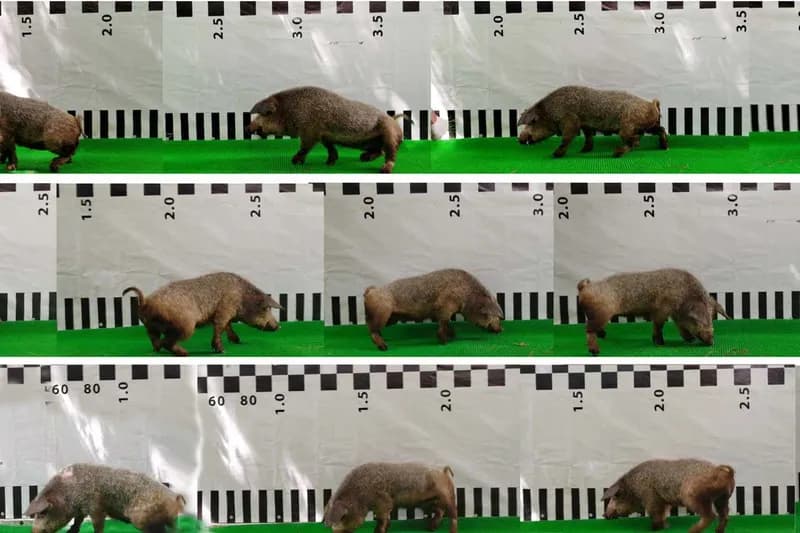
Researchers have developed a fusogenic neurosurgery method that restored walking ability in pigs after complete spinal cord severance. This breakthrough suggests potential for human clinical trials targeting spinal cord injuries.

The technique involves surgical reconnection and fusion of spinal tissue to enable neural signal restoration. While the success in pigs is promising, experts remain cautious about its effectiveness and risks in human applications.

Discussion continues around the feasibility of scaling this method for humans and its implications for complex procedures like full head or brain transplants.


SPONSORED
The 5 Best Over-Ear ANC Headphones of 2026, Tested & Ranked
Editor's Pick Guide
92/100
Tech & Gadgets•12 min read

The 5 Best Over-Ear ANC Headphones of 2026, Tested & Ranked

We locked five over-ear ANC picks for 2026 — Sony WH-1000XM6, Bose QuietComfort Ultra 2, Soundcore Space One, Sennheiser Momentum 5, and Apple AirPods Max 2 — then stress-tested them on lab metrics, long-term owner truth, and live street prices.

Related Stories

Semantically matched articles, ranked by topic overlap and freshness.

The Hidden Legacy: Why Childhood Cancer Survivors Face a Mental Health Crisis in Adulthood
Science

The Hidden Legacy: Why Childhood Cancer Survivors Face a Mental Health Crisis in Adulthood

New research reveals that nearly half of childhood cancer survivors struggle with clinical anxiety and depression, sparking calls for lifelong medical follow-up.

Decoding the Aging Muscle Paradox: New Breakthrough Reveals Molecular 'Survival Switch'
Science

Decoding the Aging Muscle Paradox: New Breakthrough Reveals Molecular 'Survival Switch'

Researchers have identified a key molecular mechanism that forces aging muscles to trade power for protection, opening new doors for therapeutic intervention in age-related decline.

Unmasking ALTNV: The New Tick-Borne Threat Emerging in Asia
Science

Unmasking ALTNV: The New Tick-Borne Threat Emerging in Asia

Researchers have identified a novel orthonairovirus in China that explains previously mysterious cases of severe fever and fatigue in tick-bitten patients.

The Hidden Pulse: Why Earth’s Rotation Is Not a Constant 24 Hours
Science

The Hidden Pulse: Why Earth’s Rotation Is Not a Constant 24 Hours

New research suggests that the millisecond fluctuations in the length of a day are driven by a complex gravitational dance occurring deep within Earth's inner core.

CosmoCube: The Suitcase-Sized Satellite Set to Unlock the Universe's Darkest Secrets
Science

CosmoCube: The Suitcase-Sized Satellite Set to Unlock the Universe's Darkest Secrets

A compact, UK-developed spacecraft aims to listen to the dawn of time from the radio-silent sanctuary of the lunar far side.

Natural Cryo-Separation: How Enceladus Prepares Its Own 'Sample Kits' for Discovery
Science

Natural Cryo-Separation: How Enceladus Prepares Its Own 'Sample Kits' for Discovery

New research suggests that Saturn's moon Enceladus naturally sorts and concentrates chemical compounds, acting as an automated laboratory for future life-detection missions.

The Lingering Shadow of Forever Chemicals: Lessons from Lancashire and Beyond
Science

The Lingering Shadow of Forever Chemicals: Lessons from Lancashire and Beyond

A decade of research into PFAS exposure reveals the complex public health challenges facing communities near contaminated industrial sites.

Natural Compound From Pomegranates Shows Promise in Treating Complex Heart Failure
Science

Natural Compound From Pomegranates Shows Promise in Treating Complex Heart Failure

Researchers at King's College London have discovered that Urolithin A, a natural metabolite, could significantly improve heart relaxation in a difficult-to-treat form of heart failure.