Divergent Evolutionary Paths
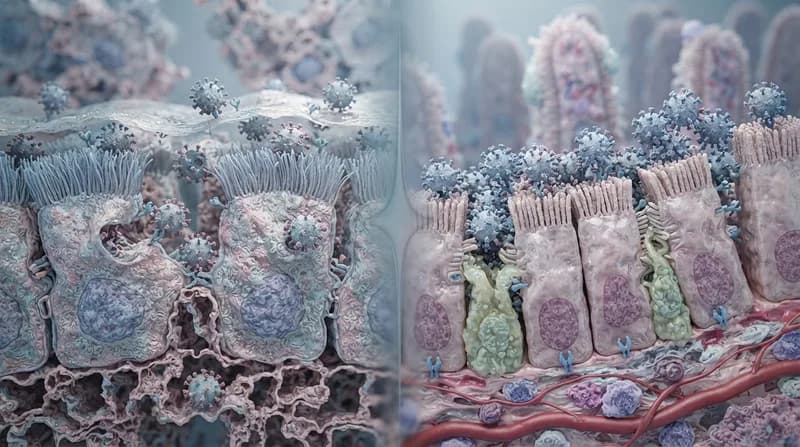
As SARS-CoV-2 continues to iterate through new lineages, researchers at the University of Hong Kong (HKUMed) have unveiled that the virus is not merely becoming more infectious, but is actively adopting distinct biological strategies for survival. Through a series of controlled laboratory experiments using sophisticated human tissue models—including airway organoids and proximal intestinal enteroids—the research team has mapped how different Omicron sublineages exploit the human body.
The findings, published in Nature Communications, suggest a significant bifurcation in viral behavior. While some variants appear to be hyper-optimizing for respiratory transmission and potential lung damage, others are shifting their focus toward the gastrointestinal tract. This functional characterization is critical, as it suggests that future public health responses must account for more than just airborne transmission, potentially tracking fecal pathways as well.
The Respiratory Specialists: XBB.1.5 and EG.5.1
The study identifies specific Omicron sublineages, notably XBB.1.5 and EG.5.1, as being highly adapted for the respiratory system. These variants demonstrated a robust ability to replicate efficiently within human bronchial and lung tissues, underscoring their high transmissibility and potential risk for severe pulmonary disease.
EG.5.1, in particular, presented unique biological characteristics. Researchers observed that it possesses the ability to enter human cells through two distinct pathways, providing it with a functional advantage in tissue infection. Furthermore, EG.5.1 showed enhanced growth capabilities within alveolar epithelial cells located deep in the lungs. This suggests a heightened capacity to infiltrate the lower respiratory system, which researchers warn could lead to more serious systemic illnesses compared to variants that remain confined to the upper airways.
The Intestinal Adapters: BA.2.86 and JN.1
In a striking contrast to their respiratory-focused counterparts, the BA.2.86 and JN.1 variants demonstrated a different evolutionary preference. While these strains showed lower replication efficiency in respiratory tissues, they exhibited significantly higher replication levels within the proximal intestine.
Perhaps most concerning is the nature of this intestinal infection. JN.1 displayed a capacity for robust replication in gut tissue while simultaneously triggering minimal inflammatory responses. This low-inflammation profile allows the virus to potentially persist in the digestive tract without alerting the host's immune system or producing immediate, obvious symptoms. This "silent" colonization suggests that these variants could feasibly utilize fecal transmission pathways, a development that complicates standard infection control measures.
Why It Matters: Public Health Implications
- Alternative Transmission Routes: The identification of gut-tropism suggests that monitoring wastewater and sanitation systems remains a vital component of pandemic preparedness.
- Shift in Symptomatology: Variants that replicate in the gut without causing major respiratory inflammation may change the clinical presentation of COVID-19, making traditional screenings based on cough or respiratory distress less effective.
- Informed Surveillance: Understanding that SARS-CoV-2 is branching into different biological "niches" allows researchers to better predict how future sublineages might behave as they emerge from current parent strains like BA.2.
- Laboratory Reliability: The study validates the use of airway organoids and proximal intestinal enteroids as the gold standard for testing the pathogenicity of new viral threats.
As immunity from previous vaccinations and infections naturally wanes, the continued functional characterization of these sublineages serves as an essential roadmap for public health policy. By tracking these distinct biological strategies, global health authorities can better prepare for the long-term evolution of SARS-CoV-2 and its capacity to exploit different human physiological systems.