A Strategic Shift in Automotive Trade
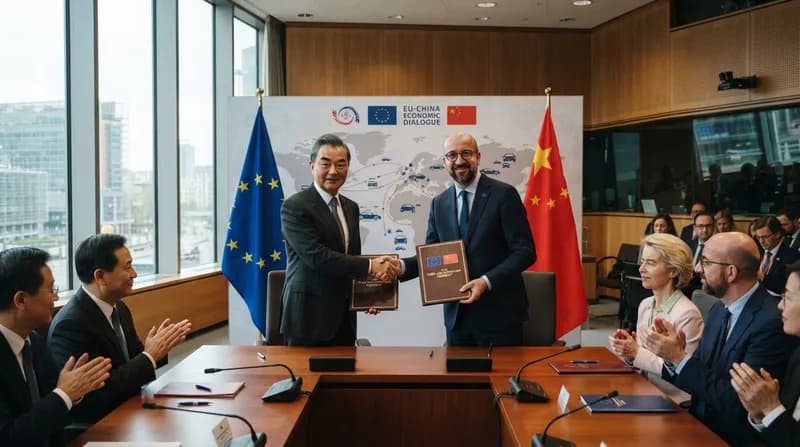
In a significant development for the global automotive sector, the European Union and China have reached an interim agreement aimed at rebalancing trade relations. The deal, announced by EU Trade Commissioner Maroš Šefčovič following intensive negotiations in Beijing, focuses on a critical pillar of the current market: the rising volume of hybrid and plug-in hybrid vehicles (PHEVs) arriving from Chinese manufacturers.
The agreement serves as a necessary mechanism to alleviate competitive pressure on European automakers. Over the past two years, the landscape of vehicle imports has shifted dramatically. While the EU previously focused its regulatory scrutiny on fully electric vehicles via special anti-subsidy tariffs, Chinese brands pivoted toward the hybrid market. This segment, previously subject only to a standard 10 percent import duty, saw Chinese market share for hybrids jump from a mere 2 percent in 2024 to 14 percent by mid-2026. For plug-in hybrids, the surge was even more pronounced, rising to 25 percent.
Why the Agreement Matters
The urgency of this deal stems from fears of market destabilization. European industry leaders, including the European Automobile Manufacturers’ Association (ACEA), expressed concerns that an unchecked influx of vehicles could lead to aggressive price wars and severe economic disruption. By agreeing to a voluntary reduction—targeting a decrease of several million cars over a four-year window—the EU and China aim to move toward a more orderly presence of Chinese technology in the European market.
Key elements of the situation include:
- Tariff Arbitrage: Hybrids were becoming the primary vehicle for Chinese market expansion due to their exemption from the specialized tariffs applied to pure battery-electric vehicles (BEVs).
- Regulatory Leverage: The threat of the EU’s "Safeguard Instrument," which would allow for restrictive quota-based tariffs, provided the necessary leverage to bring China to the negotiating table.
- Long-term Stability: The agreement is framed not just as a restriction, but as a "first step" toward creating a sustainable, long-term trade environment that avoids the volatile boom-and-bust cycles observed in domestic Chinese markets.
The Path Ahead
While the agreement is a landmark political win for both parties, the technical framework for implementation remains a work in progress. EU officials have indicated that the specific rules governing how these exports will be monitored and curtailed are still being finalized. The European Council is set to review the proposal on October 15th and 16th, and further ministerial exchanges are already penciled in for early 2027.
The automotive industry views this development with cautious optimism. Ensuring that the transition is orderly rather than chaotic is paramount for the health of the European economy. As the EU moves to refine its trade policy, the focus will now turn to the precise quotas and the operational logistics of tracking these vehicle volumes at the border. Ultimately, both sides appear motivated to avoid a full-scale trade war, preferring a structured, negotiated path that balances European industrial protection with the realities of a globalized automotive supply chain.