For decades, dark matter has been treated as a uniform, invisible substance that provides the gravitational glue for galaxies. However, a new theoretical study suggests that dark matter may be significantly more complex than previously thought, potentially consisting of at least two different types of particles with varying masses.
The Separation Effect
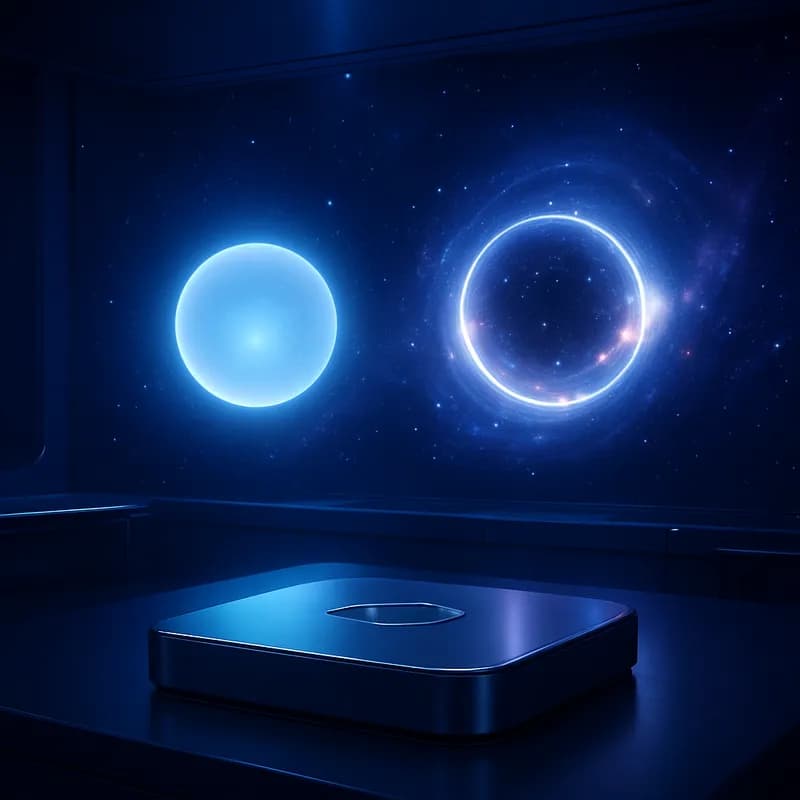
According to the research, these two particle types slowly separate over cosmic timescales. The heavier particles tend to sink toward the high-gravity centers of galaxies, while the lighter particles drift toward the outer edges. This internal stratification offers a fresh perspective on how galactic structures evolve and maintain their shape.
Solving Astronomical Discrepancies
This dual-particle model could resolve several conflicting observations that have long puzzled astronomers. Specifically, it explains why some dwarf galaxies appear unusually diffuse and lacking in central density, while other regions of space exhibit dense dark matter clumps capable of intense gravitational lensing—the bending of light from distant stars. By allowing for a dynamic distribution of mass, this theory bridges the gap between these seemingly contradictory cosmic phenomena.