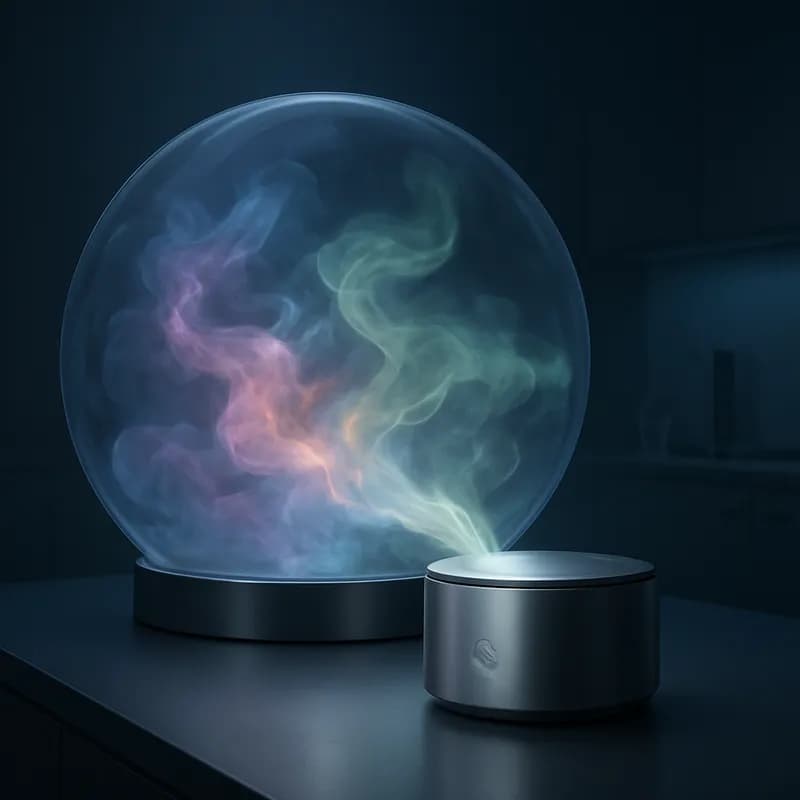
Recent scientific inquiries into the human mind are challenging the assumption that we all share a similar internal experience of the world. A new study focusing on 'blind minds'—individuals with varying degrees of mental imagery—reveals significant differences in how people process imagined sensations.
The Spectrum of Aphantasia
While most individuals possess the ability to visualize people or scenes that are not physically present, a segment of the population lacks this 'mind's eye.' This phenomenon, known as aphantasia, is now being studied beyond just visual elements. Researchers are investigating whether these differences extend to other senses, such as the ability to imagine smells, sounds, or textures.
Redefining Internal Reality
The findings suggest that the human imagination is not a uniform faculty. For some, dreams and thoughts are rich with sensory detail, including vivid colors and distinct aromas. For others, the internal landscape is devoid of these sensory overlays, relying instead on conceptual or non-visual information processing. This research highlights the hidden diversity in cognitive architecture and how it shapes our individual perceptions of reality.