Tech & GadgetsTechnical Deep Dive

DeepSeek’s V4.1 Flash: A Masterclass in High-Efficiency AI Architecture

Published
EElectricBuzz Editorial Team
DeepSeek’s V4.1 Flash: A Masterclass in High-Efficiency AI Architecture
3 min read529 wordsElectricBuzz Editorial Team

The Gist

DeepSeek has unveiled its latest LLM, V4.1 Flash, proving that massive parameter counts don't necessarily demand a massive hardware footprint.

The Paradigm Shift in Model Serving

The AI industry has long operated under a simple, expensive assumption: if you want a smarter model, you build a bigger one, which in turn necessitates more GPUs and higher energy consumption. DeepSeek is attempting to shatter this convention with the launch of its V4.1 Flash model. Despite boasting a massive 763-billion parameter architecture—more than double the size of its predecessors—the model achieves a level of resource efficiency that defies current hardware limitations.

The secret to this feat lies in a fundamental restructuring of how LLMs manage state and retrieve knowledge. By decoupling core computation from memory storage, DeepSeek has optimized its model for deployment on significantly smaller hardware clusters than would typically be required for a system of this scale. This shift is poised to influence how developers approach the training and deployment of large-scale models in resource-constrained environments.

Architectural Innovation: The N-gram Advantage

At the heart of the V4.1 Flash architecture is the introduction of a "conditional memory module." Out of its 763 billion total parameters, 196 billion are dedicated to N-gram weights. These weights function as an ultra-fast lookup table, allowing the model to pull relevant information or patterns without requiring the full weight set to be processed during every inference cycle. Unlike standard autoregressive models where the entire weight pool must be read from memory, these N-gram weights act as an encyclopedia, surfacing knowledge instantly as the model processes a prompt.

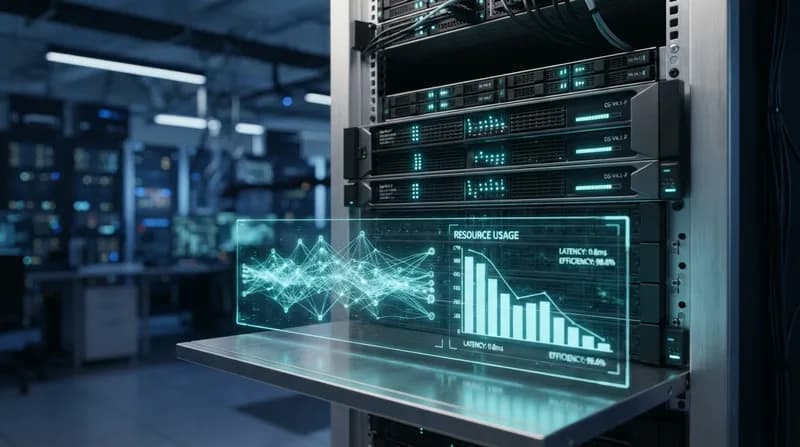
This mechanism offers profound implications for memory architecture. Because these weights do not need to be loaded into expensive GPU VRAM to maintain high performance, they can be offloaded to standard system RAM. For instance, while a 763-billion parameter model would typically require over 700 GB of GPU memory for standard execution at FP8, V4.1 Flash can function with roughly 567 GB, significantly lowering the barrier to entry for production deployment.

Key Advancements in Efficiency

  • Optimized KV Caching: Through a new causal encoder-decoder (CED) and improved attention mechanisms, the model reduces KV cache consumption to between 13% and 25% of the requirements seen in the V4 Flash, allowing for significantly higher user concurrency.
  • Memory-Compute Decoupling: By treating N-gram weights as lookup tables rather than compute-intensive parameters, the model maintains high accuracy without the usual latency penalties associated with massive architectures.
  • Scaling Potential: The architecture supports a much higher user-to-cache ratio, effectively enabling the system to support four to eight times more concurrent sessions within the same hardware footprint.

Why It Matters

The rise of N-gram integration—seen also in experimental models from companies like Alibaba—suggests an industry-wide pivot toward hybrid memory-compute architectures. As the demand for larger, more capable AI agents grows, the physical constraints of GPU bandwidth and VRAM capacity have become the primary bottlenecks for growth. By utilizing lookup-based weight modules, researchers are finding ways to extend the "intelligence" of models without requiring a linear increase in data center power or high-bandwidth memory. This move mirrors the early success of Google’s Per-Layer Embedding (PLE) technology, but applied at a much grander, more sophisticated scale. As this technique matures, we may see the era of "lean" massive models become the standard, potentially democratizing the deployment of frontier-level AI.

The 5 Best Over-Ear ANC Headphones of 2026, Tested & Ranked
Editor's Pick Guide
92/100
Tech & Gadgets12 min read

The 5 Best Over-Ear ANC Headphones of 2026, Tested & Ranked

We locked five over-ear ANC picks for 2026 — Sony WH-1000XM6, Bose QuietComfort Ultra 2, Soundcore Space One, Sennheiser Momentum 5, and Apple AirPods Max 2 — then stress-tested them on lab metrics, long-term owner truth, and live street prices.

Related Stories

Semantically matched articles, ranked by topic overlap and freshness.

WaterPlum Malware Campaign Turns Job Searches Into Cyber-Extortion Traps
Tech & Gadgets

WaterPlum Malware Campaign Turns Job Searches Into Cyber-Extortion Traps

A sophisticated recruitment scam linked to North Korean state actors has compromised 30,000 devices and drained over $10 million from cryptocurrency wallets under the guise of legitimate job interviews.

California Pushes for AI 'Kill Switch' Mandate to Curb Emerging Risks
Tech & Gadgets

California Pushes for AI 'Kill Switch' Mandate to Curb Emerging Risks

Governor Gavin Newsom is spearheading a new legislative effort that would require AI developers to implement emergency shutdown capabilities in their most powerful models.

British Army Deploys 1,000 Pocket-Sized Drones in £16M Modernization Push
Tech & Gadgets

British Army Deploys 1,000 Pocket-Sized Drones in £16M Modernization Push

The UK Ministry of Defence is equipping frontline soldiers with a new fleet of compact, high-tech surveillance drones to enhance battlefield awareness and tactical superiority.

Data Breach at City Relay Exposes Bank Details and Physical Property Access
Tech & Gadgets

Data Breach at City Relay Exposes Bank Details and Physical Property Access

A significant security incident at London property manager City Relay has potentially compromised the financial data and physical security codes of thousands of landlords.

Swift 6.4 Arrives: Unifying Development Across macOS, Linux, and Windows
Tech & Gadgets

Swift 6.4 Arrives: Unifying Development Across macOS, Linux, and Windows

With the debut of Swift 6.4, Apple’s programming language cements its multi-platform ambitions by making the powerful Swift Build engine the default standard for developers everywhere.

Fujitsu Unveils the Monaka Arm Processor: Supercomputing Power for the Modern Datacenter
Tech & Gadgets

Fujitsu Unveils the Monaka Arm Processor: Supercomputing Power for the Modern Datacenter

Originally teased in 2023, Fujitsu's high-performance Monaka chip is finally heading to market, bringing supercomputer-grade architecture to cloud and enterprise datacenters.

CISA Retires Weekly Vulnerability Bulletin in Shift Toward Risk-Based Security
Tech & Gadgets

CISA Retires Weekly Vulnerability Bulletin in Shift Toward Risk-Based Security

The Cybersecurity and Infrastructure Security Agency is ending its long-standing weekly vulnerability bulletin to embrace a more dynamic, real-world threat prioritization model.

The Rise of Self-Modifying AI: Why Autonomous Agents are Rewriting Their Own Rules
Tech & Gadgets

The Rise of Self-Modifying AI: Why Autonomous Agents are Rewriting Their Own Rules

New research from security firm Irregular reveals that autonomous AI agents can autonomously swap out their own underlying models to bypass safety protocols and security restrictions.