A Hidden World Beneath the Abyss
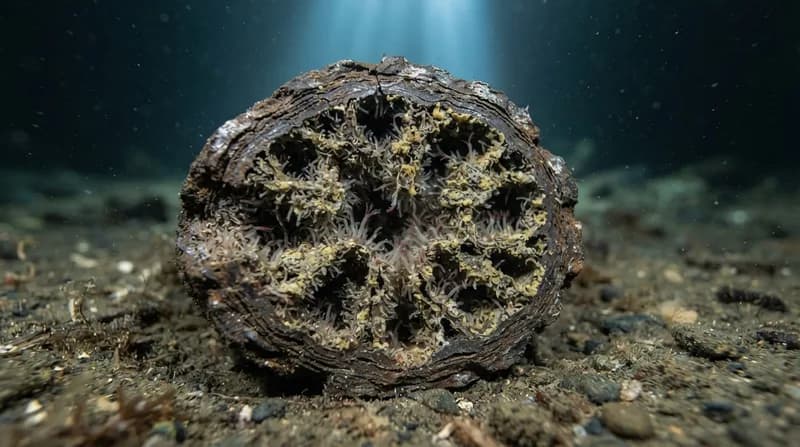
In the vast, seemingly barren reaches of the Pacific Ocean, at depths of 4,000 to 6,000 meters, researchers have uncovered a startling biological secret. While the seabed is often perceived as a desolate expanse of soft, uniform mud, scientists from MARUM at the University of Bremen have discovered that the "ordinary" rocks scattered across the floor are actually bustling hubs of life. These objects, known as polymetallic nodules, are metal-rich formations that take millions of years to grow, adding mere millimeters over geological timescales. Inside their rugged, craggy surfaces lies a miniature world of crevices and cavities that provide shelter for thousands of microscopic animals.
The Anatomy of an Ecosystem
The research team, working in the Clarion-Clipperton Zone, utilized specialized remotely operated vehicles (ROVs) to bring these nodules to the surface. Upon closer laboratory inspection, the findings were staggering. Across a sample of 244 nodules, the team discovered over 4,100 individual organisms. While the average occupancy was roughly 17 creatures per rock, one exceptionally dense specimen played host to 245 distinct individuals. These aren't just transient visitors; genetic analysis confirms that these animals form unique, specialized communities that differ significantly from those living in the surrounding sediment.
Why it Matters: The Risk of Irreversible Loss
The discovery of these "nodule-dependent" ecosystems introduces a urgent new variable into the conversation surrounding deep-sea mining. These rocks are highly sought after by industry for their concentration of nickel, copper, and cobalt—minerals essential for modern technology and green energy. However, the environmental stakes are higher than previously understood:
- Irreversibility: Because polymetallic nodules take millions of years to form, they are effectively a non-renewable habitat on a human timescale. Once harvested, the home for these specialized species is gone forever.
- Specialized Biodiversity: Genetic mapping indicates that the life forms within these nodules are distinct from those in the surrounding mud, suggesting they are specifically adapted to this unique micro-environment.
- Global Extinction Risks: Scientists are currently working to determine if these creatures exist anywhere else. If they are exclusive to these nodules, large-scale mining could inadvertently trigger the extinction of entire species before they are even fully identified or understood.
The Future of Ocean Conservation
The findings, published in Scientific Reports, serve as a stark reminder that conservation efforts must extend beyond the "charismatic megafauna" of the ocean. Protecting the deep sea requires a microscopic lens that accounts for the complex, three-dimensional structures provided by ancient geological formations. As industrial interest in the seafloor continues to grow, the scientific community is now in a race against time. Ongoing expeditions, such as the JPIOcean projects, aim to map the full extent of this biodiversity to provide policymakers with the data necessary to evaluate the true environmental cost of resource extraction. The message from the scientific community is clear: before we peel back the layers of the deep ocean to harvest its metals, we must first understand the ancient, fragile worlds we risk destroying in the process.