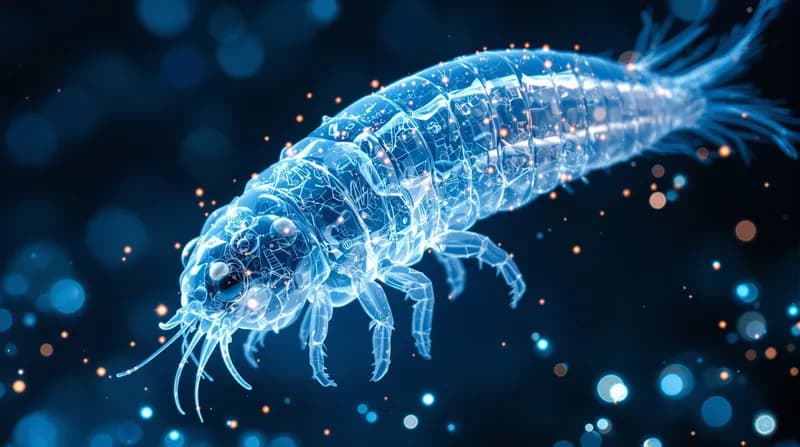
In a remarkable display of biological engineering, larvae of the lake fly are challenging long-held assumptions about insect physiology. These tiny organisms perform a daily migration into the depths of Lake Malawi, plunging more than 200 meters below the surface to escape predators. At these depths, the water pressure is high enough to crush most insects, yet these larvae thrive by utilizing specialized internal mechanisms.
The Secret of the Air Sacs
The larvae manage their buoyancy through the use of tiny air sacs. According to recent findings, the ability to control these sacs at extreme depths is facilitated by a rubber-like protein called resilin. By altering the pH levels within their bodies, the larvae can cause the resilin to expand or shrink, effectively regulating the volume of the air sacs despite the immense external pressure.
Challenging Marine Biology Norms
This discovery has significant implications for our understanding of why insects are largely absent from the open ocean. Historically, it was believed that insects could not withstand the mechanical stresses of deep-water environments. However, the toughness and pressure-resistance of these lake fly larvae suggest that the barriers to insect life in the ocean may be ecological or chemical rather than purely physical.