ScienceTechnical Deep Dive

Decades-Old Leukemia Drug Reveals Hidden Biological Mechanism

Published
EElectricBuzz Editorial Team
Decades-Old Leukemia Drug Reveals Hidden Biological Mechanism
3 min read509 wordsElectricBuzz Editorial Team

The Gist

“Researchers have discovered that a 70-year-old cancer drug's efficacy is controlled by a protein acting as a scaffold, rather than just an enzyme, uncovering new pathways for potential treatment optimization.”

The Surprising Resilience of a Legacy Drug

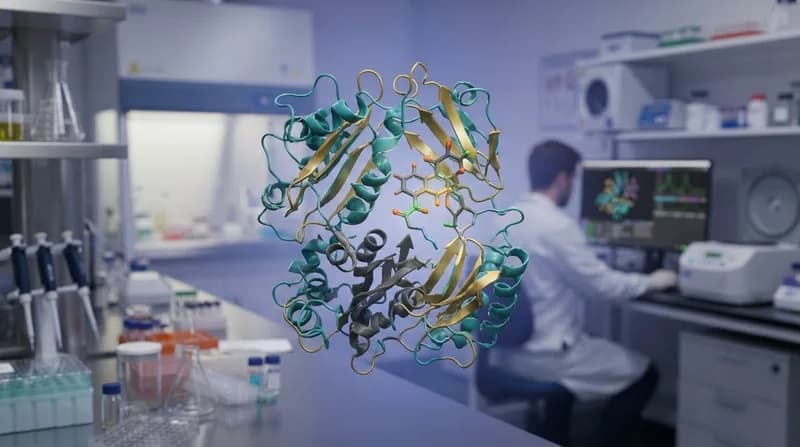
For over seven decades, 6-thioguanine (6-TG) has been a staple in the pharmacological arsenal against leukemia. While its clinical application is well-documented, the precise molecular mechanisms that dictate why specific cells succumb to the drug while others remain resilient have long been a subject of scientific investigation. A multi-institutional research collaboration, led by the CeMM Research Center for Molecular Medicine of the Austrian Academy of Sciences, has now shed light on a long-hidden factor influencing this cellular response: a protein known as NUDT5.

The study, which includes findings from the University of Oxford, the Weizmann Institute of Science, and the University of Dundee, challenges the conventional wisdom that a drug's success is governed primarily by enzyme-substrate interaction. Instead, the research highlights a non-catalytic role for NUDT5, suggesting it functions as a critical structural scaffold that organizes cellular metabolism in ways previously unrecognized by modern oncology.

The Power of Targeted Protein Degradation

To determine if the presence of NUDT5 was the driving force behind drug resistance, the research team employed an advanced methodology known as targeted protein degradation. Unlike traditional inhibitors, which merely occupy an active site to block an enzyme’s chemical function, degraders prompt the cell to completely dismantle and remove the targeted protein. By developing a specialized cell-based platform, the researchers successfully produced dNUDT5, a highly selective degrader designed to eliminate NUDT5 entirely.

The experimental results provided a clear, binary outcome. When the team used traditional methods to inhibit the enzymatic activity of NUDT5, there was no meaningful change in how leukemia cells responded to 6-TG. However, when the protein was fully removed via dNUDT5, the cells exhibited a significant increase in protection against the toxicity of the medication. These findings underscore a vital distinction: the physical presence of the protein itself, rather than its chemical output, is the primary driver of drug sensitivity.

Implications for Future Cancer Research

The discovery also illuminates the complex interplay between different proteins within the cell. The researchers identified that NUDT5 works in direct opposition to another protein, NUDT15, which is already known for its influence on thiopurine drug response. While the depletion of NUDT15 renders cells more susceptible to 6-TG, the removal of NUDT5 induces a state of resistance. This push-pull dynamic suggests that the sensitivity to leukemia treatment is a finely tuned balance of protein interactions.

Why it Matters

  • Beyond Catalysis: The research confirms that proteins perform essential biological functions as structural scaffolds, independent of their traditional enzymatic roles.
  • Redefining Drug Targets: Traditional inhibition may be missing the mark; targeted degradation reveals biological layers that inhibitors often overlook.
  • Personalized Medicine: Uncovering these hidden mechanisms helps clarify why patients exhibit widely different responses to the same chemotherapeutic regimen.

While this breakthrough does not immediately introduce a new clinical drug, it provides a fundamental shift in how oncologists and pharmacologists view established treatments. By demonstrating that protein degradation can expose previously invisible biological regulatory systems, the study paves the way for a more nuanced approach to drug development and, eventually, more precise, personalized leukemia therapies.


SPONSORED
The 5 Best Over-Ear ANC Headphones of 2026, Tested & Ranked
Editor's Pick Guide
92/100
Tech & Gadgets•12 min read

The 5 Best Over-Ear ANC Headphones of 2026, Tested & Ranked

We locked five over-ear ANC picks for 2026 — Sony WH-1000XM6, Bose QuietComfort Ultra 2, Soundcore Space One, Sennheiser Momentum 5, and Apple AirPods Max 2 — then stress-tested them on lab metrics, long-term owner truth, and live street prices.

Related Stories

Semantically matched articles, ranked by topic overlap and freshness.

Genetic Deep Dive: How Tropical Trees Mastered Night-Time Breathing to Survive Drought
Science

Genetic Deep Dive: How Tropical Trees Mastered Night-Time Breathing to Survive Drought

New research into the genus Clusia reveals how ancient genome duplication paved the way for a remarkable water-saving photosynthesis strategy.

Virtual Reality and Classical Music: The New Prescription for Emergency Anxiety
Science

Virtual Reality and Classical Music: The New Prescription for Emergency Anxiety

A groundbreaking study reveals that immersive VR experiences paired with classical music can rapidly stabilize blood pressure in emergency room patients.

Cosmic Magnetism: New Evidence Reveals a Hidden Architect of the Solar System
Science

Cosmic Magnetism: New Evidence Reveals a Hidden Architect of the Solar System

Researchers at MIT have discovered that powerful magnetic fields, not just gravity, helped shape our solar system during its first 200,000 years.

Breakthrough Triple Therapy Nearly Normalizes CFTR Function in Children with Cystic Fibrosis
Science

Breakthrough Triple Therapy Nearly Normalizes CFTR Function in Children with Cystic Fibrosis

Groundbreaking research from Charité – Universitätsmedizin Berlin reveals that triple-drug therapy can restore vital molecular channels in young children with cystic fibrosis to near-normal levels.

Sky-High Survival: How Drones Could Transform Emergency Cardiac Care
Science

Sky-High Survival: How Drones Could Transform Emergency Cardiac Care

New research suggests that integrating drones into emergency response networks can drastically cut wait times for life-saving defibrillators.

Hidden Prevalence: Why Phelan-McDermid Syndrome Is More Common Than Previously Realized
Science

Hidden Prevalence: Why Phelan-McDermid Syndrome Is More Common Than Previously Realized

New research suggests a rare genetic disorder linked to autism may be significantly more widespread than earlier estimates, highlighting a critical need for expanded genetic screening.

Sexual Dimorphism in Cancer: New Findings on Metabolic Supplements and Lung Tumor Growth
Science

Sexual Dimorphism in Cancer: New Findings on Metabolic Supplements and Lung Tumor Growth

A UCLA-led study reveals that the dietary supplement calcium alpha-ketoglutarate affects lung tumor progression in diametrically opposite ways depending on biological sex.

Geological Unraveling: Scientists Witness the Death of a Subduction Zone
Science

Geological Unraveling: Scientists Witness the Death of a Subduction Zone

A groundbreaking study has captured the rare, real-time breakdown of the Cascadia subduction zone, revealing that tectonic systems die through a slow, piece-by-piece process.