The Challenge of Cellular Senescence
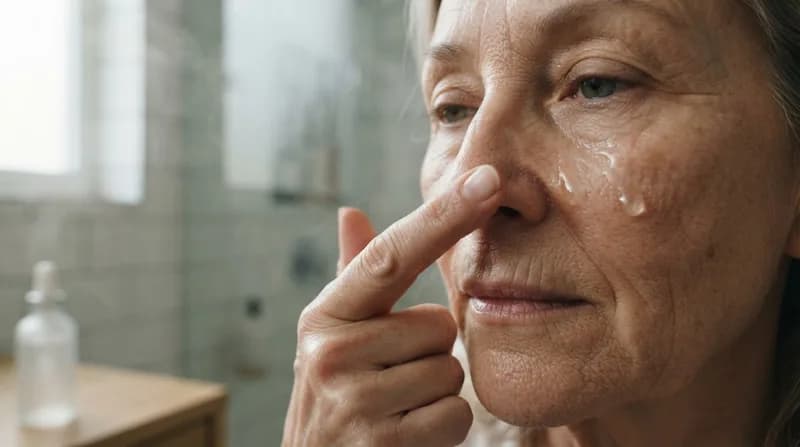
As the human body ages, skin tissue begins to accumulate what scientists call senescent cells. These are cells that have suffered damage or stress and, rather than undergoing the natural process of cell death, remain in a sort of permanent, dormant state. While they are technically alive, they are far from healthy. These lingering cells function as cellular clutter, releasing inflammatory substances that disrupt the normal behavior of nearby functional cells and significantly impair the body's natural ability to repair itself.
For older adults, this accumulation of 'zombie' cells is a major clinical hurdle. It is the primary reason why injuries, surgical incisions, and chronic wounds take substantially longer to heal in aging populations. Addressing this biological bottleneck has become a major focus for regenerative medicine, leading to the development of a class of experimental compounds known as senolytics—drugs specifically engineered to clear out these dysfunctional cells.
The Promise of ABT-263
A recent study published in the journal Aging has highlighted a significant breakthrough using a senolytic agent called ABT-263. Researchers at the Boston University Aram V. Chobanian and Edward Avedisian School of Medicine explored the drug's efficacy by applying it topically to the skin of aged mice. The results were striking: a brief, five-day course of treatment effectively purged the target senescent cells, leaving the healthier cellular population intact.
The impact on wound healing was clinically significant. When the researchers induced small wounds to test the skin's regenerative capacity, the treated group outperformed their untreated counterparts by a wide margin. By the 24th day, 80% of the mice treated with the topical ABT-263 had achieved full wound closure, compared to just 56% in the control group. This indicates that the treatment does not just clean the skin—it prepares the biological environment to initiate a much more efficient repair response.
Mechanism of Action: Why It Works
Interestingly, the drug's effectiveness seems linked to a controlled, temporary burst of inflammation. While chronic inflammation is typically detrimental to recovery, a brief, well-timed inflammatory response is actually a necessary early phase of the wound-healing cycle. The application of ABT-263 appeared to act as a wake-up call for the skin's regenerative machinery. Following this activation, the skin showed a marked increase in the expression of genes responsible for collagen production and the formation of new blood vessels.
By bolstering these essential repair pathways, the treatment allows aging skin to mimic the more rapid recovery times observed in younger tissue. Furthermore, the researchers noted a key advantage in the delivery method. By administering the drug topically rather than orally, they were able to minimize systemic exposure, potentially avoiding the adverse side effects often associated with systemic senolytic therapies. This localized approach makes it a highly promising candidate for preoperative care, potentially allowing surgeons to 'prime' a patient's skin before elective procedures.
Why It Matters
- Surgical Recovery: Could shorten recovery times for elderly patients undergoing elective surgeries.
- Chronic Wound Management: Offers a potential therapeutic pathway for slow-healing ulcers or pressure sores.
- Targeted Therapy: The topical application method limits systemic side effects, a significant leap forward for drug safety in geriatric care.
- Regenerative Potential: Demonstrates that aging skin retains a latent ability to heal if the cellular 'noise' is removed.
While these preclinical results in mice are highly encouraging, researchers emphasize that the road to human application is long. Future studies must rigorously evaluate the safety profile and therapeutic dosage for human skin. Nevertheless, this work marks an important step toward treating the biological hallmarks of aging as a manageable condition rather than an inevitable decline.