Rewriting the Black Hole Origin Story
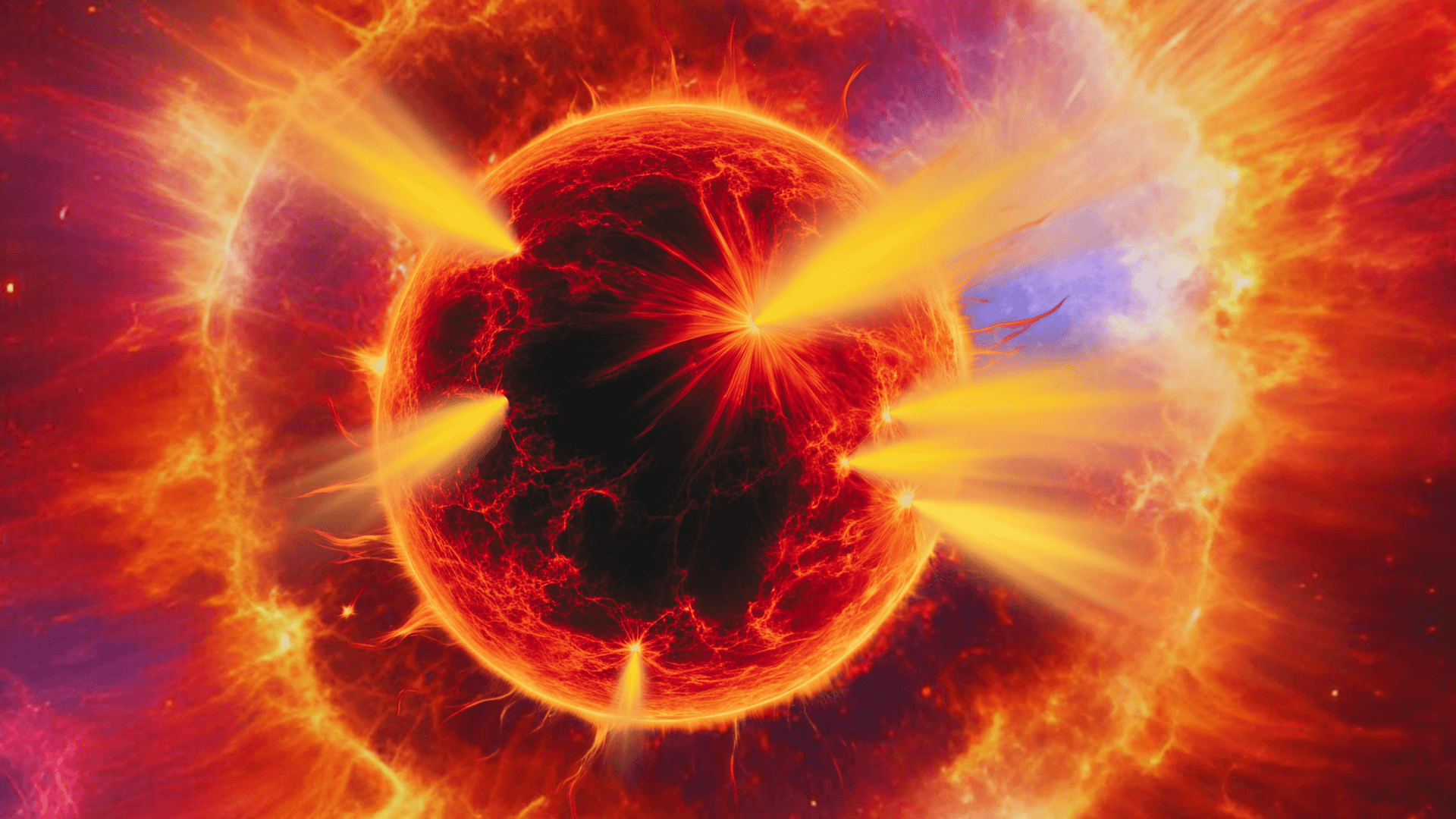
For decades, the narrative surrounding the birth of a black hole has been a dramatic, high-energy affair. Conventional astrophysical models dictate that when a massive star exhausts its nuclear fuel, its core collapses, triggering a violent rebound effect that blows the outer layers into space in a brilliant supernova explosion. The remaining dense core then persists as a black hole. However, a groundbreaking analysis of data from the LIGO, Virgo, and KAGRA gravitational wave detector network suggests that this explosive ending may not be the universal rule.
A research team led by Caltech's Katerina Chatziioannou has identified a distinct subpopulation of black holes that likely formed through a process known as a "failed supernova." Instead of a star detonating in a blaze of light, these massive stellar objects appear to have simply imploded, vanishing from the visible sky without a corresponding explosion. This quiet transition leaves behind a black hole that carries unique characteristics in its mass and spin, providing the first clear evidence that some stars depart the universe with a whimper rather than a bang.
The Gravitational Wave Signature
The study, published in the journal Physical Review D, analyzed the mass distribution of 257 black hole mergers detected over the last decade. The researchers observed an unexpected statistical "pile-up": a significant abundance of black holes measuring approximately 10 times the mass of our sun. Remarkably, this group accounted for 75% of the total sample. Conversely, the team noticed a notable scarcity of black holes ranging between 12 and 16 solar masses.
This "mass gap" serves as a critical clue regarding the internal physics of stellar collapse. If these 10-solar-mass black holes represent a unique class of objects formed by direct, non-explosive collapse, it suggests that the physics governing their formation is distinct from the processes that generate larger or smaller entities. The researchers also examined the spin rates of these objects, finding that the 10-solar-mass cohort exhibited a specific, consistent range of spin signatures, further pointing toward a unified, common origin distinct from their explosive counterparts.
Why It Matters
- Redefining Stellar Evolution: This research challenges the standard model of stellar death, proving that the "supernova" pathway is not the only route to creating a black hole.
- Decoding Cosmic History: By analyzing the mass and spin of merging black holes, scientists can peer back in time to understand the life cycles of stars that occurred billions of years ago.
- Advancing Gravitational Physics: These findings demonstrate that the LIGO-Virgo-KAGRA detector network is moving beyond simple detection into the realm of precise astrophysical population mapping.
Implications for Future Astronomy
The discovery of this potential "failed supernova" channel provides a roadmap for future observational astronomy. Because these stars do not produce a light show, they are notoriously difficult to identify through traditional telescopes. By correlating gravitational wave data—which records the "ripples" of spacetime—with the potential history of these celestial objects, astronomers can begin to piece together a map of the universe's most silent, yet powerful, actors.
While hard observational evidence of a failed supernova remains elusive, the theoretical framework is gaining traction. Future research will likely focus on reconciling this "missing" mass in the stellar population with the frequency of these silent implosions. As detectors become more sensitive, our ability to distinguish between these different birth mechanisms will only sharpen, further illuminating the dark, complex mechanics of the cosmos.