The Anatomy of an Aviation Blackout
The U.S. air travel system ground to a complete halt this past Friday, resulting in a five-hour nationwide freeze that grounded thousands of flights and threw airports into a state of disarray. The incident, which persisted until the evening, saw domestic departures suspended entirely while international arrivals were managed under restricted, case-by-case protocols. The disruption triggered widespread logistical chaos, impacting major hubs and regional airports alike, as the Federal Aviation Administration (FAA) struggled to maintain secure communications across its network.
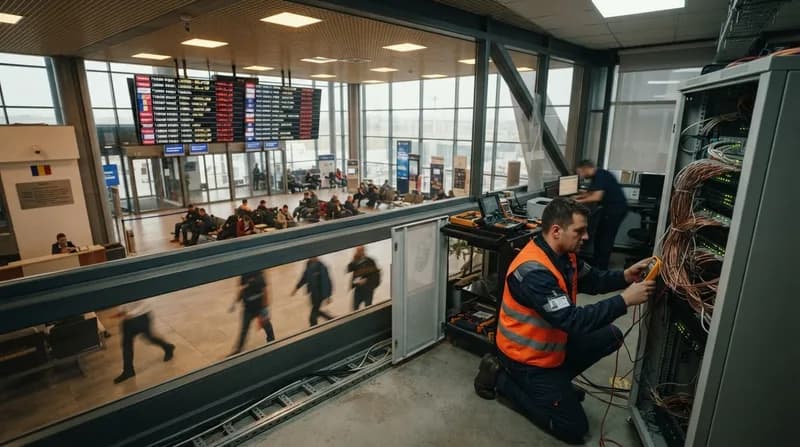
Transportation Secretary Sean Duffy later confirmed that the outage originated within the FAA Telecommunications Infrastructure (FTI). The root cause, according to official reports, centers on a technical failure involving copper wiring that occurred during an ongoing network modernization project. As the agency transitioned from aging legacy copper infrastructure to a more robust fiber optic system, a critical malfunction occurred, forcing a system-wide reboot that ultimately failed to restore communication services, necessitating the emergency ground stop.
Infrastructure Modernization Under Scrutiny
L3Harris, the primary contractor responsible for managing the FAA’s vast telecommunications network, is currently at the center of a federal investigation. The company, which supports communication across more than 4,400 facilities, acknowledged that it has successfully completed over 70 percent of the planned transition to fiber optic technology. However, the specific failure during this latest phase has raised significant questions regarding the stability of the remaining copper-based infrastructure and the risks inherent in deep system upgrades.
While initial reports speculated about the potential involvement of newer software systems, firms like Air Space Intelligence (ASI) have publicly clarified that their "SMART" system, currently under a 12-year, $875 million contract, was not involved in the outage. The investigation is now narrowing down whether the failure was a result of human error during the transition or a physical hardware malfunction, such as a faulty router, that compounded the issues caused by the legacy copper wiring.
Why it Matters: The Fragility of Air Traffic Control
- Systemic Dependency: The FAA’s FTI serves as the backbone for air traffic control, connecting thousands of facilities. A single point of failure can ripple across the entire continent.
- Aging Infrastructure: The incident highlights the inherent risks of maintaining "legacy" copper wire systems that were never designed for the bandwidth and reliability demands of modern air traffic management.
- Vendor Reliability: As private contractors take on more critical roles in managing national infrastructure, the accountability and rigorous testing protocols of these firms become matters of national security.
Outlook and Implications
This grounding event serves as a stark reminder of the complexities involved in digitizing critical national infrastructure. As the industry pushes toward a full fiber optic migration to enhance safety and efficiency, the transition period remains a high-risk window. For travelers, the incident underscores the vulnerability of modern flight networks to low-level hardware failures. Future FAA modernization efforts will likely face increased scrutiny from lawmakers regarding both the speed of the transition and the redundancy protocols necessary to prevent a total system collapse during maintenance windows.