The Fight for Screen Privacy
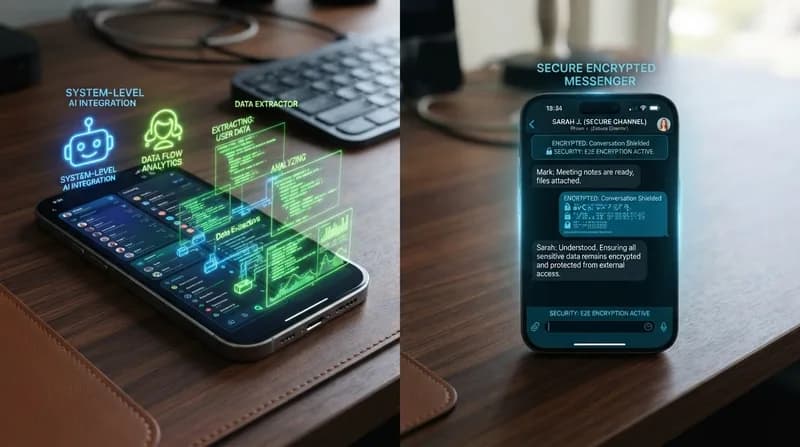
In a bold move to preserve the sanctity of private communication, Signal has officially rolled out defensive measures designed to block AI agents like Apple’s Siri and Google’s Gemini from accessing in-app content. As AI-powered assistants become increasingly integrated into the fabric of mobile operating systems, they frequently rely on 'on-screen awareness' to function, a process that inherently involves scanning the user's display. Signal’s leadership argues that this level of access poses a significant threat to the security of encrypted messaging, as these agents may capture and transmit sensitive information to external cloud servers, effectively bypassing the privacy guarantees built into the app.
The updated Signal apps for iOS and Android now include a default 'screenshot blocking' feature. While this may seem like a simple UI tweak, its primary function is to thwart the optical character recognition (OCR) systems that AI agents use to scrape text from images or the screen. By preventing these agents from 'reading' the app's interface, Signal ensures that private conversations remain confined to the intended parties. While users can manually disable this protection if they wish to take screenshots, they are explicitly warned that doing so could leave their data exposed to the data-harvesting mechanisms of their device's built-in AI assistants.
Why it Matters
The conflict highlights a fundamental design flaw in modern operating systems: the lack of granular control for developers to isolate their apps from invasive, OS-level AI. Signal CEO Meredith Whittaker has voiced concerns that developers are being forced to choose between a cohesive user experience and basic security. The current ecosystem, dominated by companies like Apple, Google, and Microsoft, offers few, if any, robust APIs that allow an application to explicitly deny access to an AI agent while retaining normal functionality. This 'all or nothing' approach forces apps to resort to defensive cat-and-mouse games, such as blocking screen captures, to maintain user privacy.
Furthermore, this development signals a shift in the broader digital landscape. For years, the 'user agent'—represented by web browsers and now AI assistants—was expected to serve the owner's best interests. However, as these agents evolve to capture vast amounts of personal context, they are increasingly viewed as potential conduits for corporate surveillance. The backlash from major players like Signal, alongside similar defensive measures from companies like Amazon and Target against unauthorized shopping bots, suggests that the industry is entering an era of 'AI containment,' where companies and consumers alike are erecting digital barriers to prevent the unchecked sprawl of autonomous agents.
The Road Ahead for OS Privacy
While Signal is taking proactive steps to defend its ecosystem, the platform admits these measures are incomplete. Because AI agents can potentially access data through deeper layers of the device file system, screen-level blocking is only a partial fix. True privacy, according to Signal, will require a fundamental shift in how operating systems manage permissions, moving away from broad access and toward a model where AI agents must explicitly ask for, and be denied, access to specific data streams.
Apple has begun to hint at addressing these concerns with upcoming updates to macOS, which introduce more granular control over 'Full Disk Access' and data APIs. However, questions remain about whether these protections are designed to empower the user or merely to reinforce the platform holder's own gatekeeping power. As AI agents move from the periphery to the core of our digital interactions, the ability to control exactly what these systems see—and what they share—will become the defining privacy challenge of the coming decade.