The Race to the Edge of the Light-Day
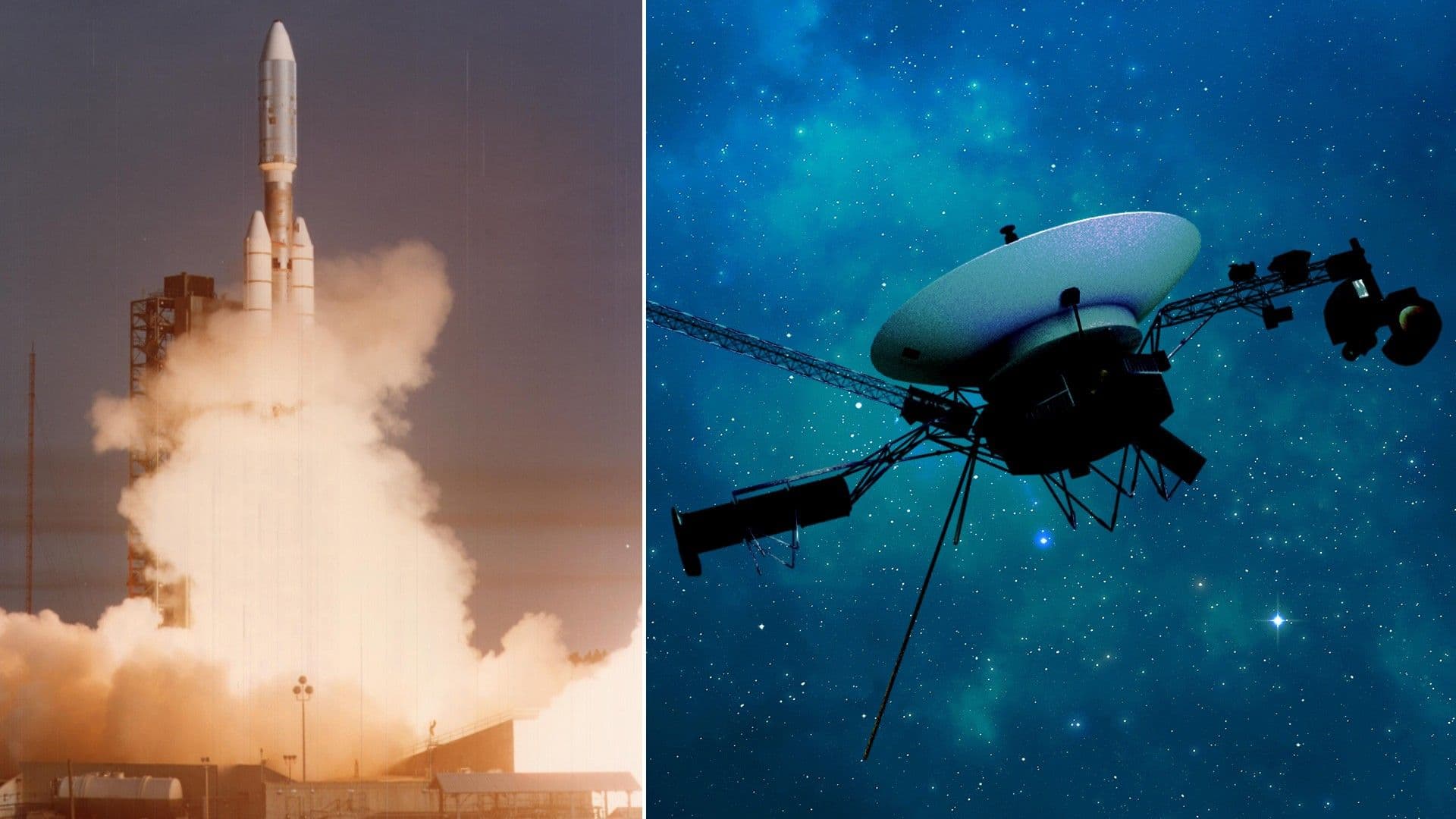
In the vast silence of interstellar space, NASA’s Voyager 1 is approaching a staggering milestone: a distance of one full light-day from Earth. This means that a signal sent from mission control in California now requires 24 hours to reach the spacecraft, which is currently cruising at a distance of approximately 16 billion miles (25.9 billion kilometers). While the feat is a testament to the longevity of the nearly 50-year-old hardware, it raises a lingering question for space enthusiasts: if Voyager 2 launched two weeks earlier in 1977, why is it destined to reach this same light-day milestone nearly a decade later than its sibling?
The answer lies in a combination of carefully calculated trajectory planning and the physics of planetary gravity assists. While both missions were originally designed to explore Jupiter and Saturn, their paths diverged significantly to accommodate specific scientific goals. Voyager 1 was placed on a faster, more aggressive trajectory, allowing it to reach Jupiter months ahead of its counterpart. This speed wasn't just for show; it was a strategic choice to ensure the craft reached the moon Titan, which scientists were eager to study for its potential pre-life chemistry.
Gravity Assists: The Cosmic Slingshot
The speed differential between the two probes is primarily the result of "gravity assists." As each spacecraft passed by massive planets, NASA engineers utilized the gravitational pull of those worlds to pivot and accelerate the probes, essentially borrowing momentum from the planets themselves. Because planets are so immensely massive compared to the tiny probes, the spacecraft gained significant velocity without meaningfully affecting the orbit of the planets they encountered.
By the time the Voyager missions concluded their primary planetary encounters, Voyager 1 had successfully exited the plane of the solar system at a velocity of roughly 3.5 astronomical units (AU) per year. Voyager 2, however, was tasked with a more complex itinerary. To fulfill its extended mission to Uranus and Neptune, it had to navigate specific orbital paths that ultimately resulted in a more stately cruising speed of 3.1 AU per year. During its final encounter with Neptune, the craft even lost speed as it maneuvered to fly by the moon Triton and angled its trajectory out of the ecliptic plane.
Why it Matters
- Longevity: Both probes have survived well into the 2030s, far exceeding their original design specifications.
- Technical Ingenuity: NASA has managed to keep these probes functional by remotely managing power, including "Big Bang" procedures to reallocate energy from instruments as their nuclear power sources decay.
- Interstellar Insights: As the only man-made objects to ever reach interstellar space, these probes remain our sole direct messengers from beyond the heliosphere.
The Future of the Voyager Fleet
As Voyager 1 marks the 24-hour signal delay, mission managers at the Jet Propulsion Laboratory continue to perform the delicate task of balancing power consumption against scientific output. With their radioisotope thermoelectric generators (RTGs) losing power with each passing year, the team is forced to systematically retire instruments to keep the most critical data streams alive.
Despite these challenges, the mission remains a triumph of 1970s engineering. By prioritizing scientific discovery through specific gravitational maneuvers, NASA managed to turn a pair of planetary explorers into the most distant scouts in human history. Whether they are zipping through the void at 3.5 AU or 3.1 AU, both Voyager probes continue to redefine our understanding of the universe, proving that even after half a century, they still have plenty to teach us about the great unknown.