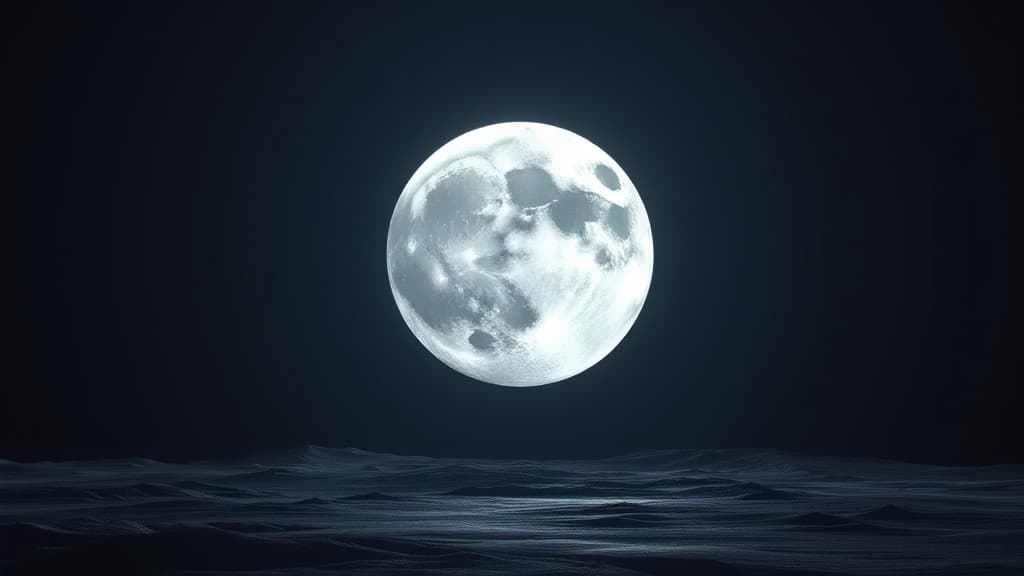
Analysis of lunar soil samples returned by China’s Chang’e-6 mission has provided scientists with a new understanding of the interaction between the Moon and solar wind. Researchers discovered that solar wind particles penetrate significantly deeper into the regolith on the Moon's far side compared to the side facing Earth.
The Role of Earth's Magnetosphere
The study highlights the protective role of Earth's magnetosphere. While the near side of the Moon spends a portion of its orbit within this magnetic shield—which slows down and deflects incoming solar particles—the far side remains largely unprotected. This results in a much more intense and deep-reaching bombardment of solar wind on the lunar far side.
A Window into Earth's History
Evidence for this uneven bombardment was found in the concentration and depth of noble gases trapped within the lunar soil samples. Beyond explaining lunar geology, these findings offer a unique opportunity for heliophysics. By studying the gases locked in the regolith, scientists believe they can reconstruct the ancient history of Earth’s magnetic shield and its evolution over billions of years.