The Policy Shift
Earlier this year, Canada and China reached a landmark agreement designed to bridge the gap in electric vehicle accessibility. The deal established a specific import quota allowing 49,000 electric vehicles manufactured in China to enter the Canadian market at a drastically reduced tariff rate of 6.1%. This stands in stark contrast to the standard 106.1% tariff that Canada, mirroring U.S. trade policy, previously imposed on Chinese-made electric vehicles to protect domestic interests.
The program was structured into two distinct time windows, each with a goal of importing 24,500 units. Operated on a first-come, first-served basis by Global Affairs Canada, the policy was intended to foster a more competitive EV landscape. However, the reality of the implementation has revealed that being the first mover is more important than simply being a manufacturer of electric cars, as the expected flood of Chinese domestic brands has yet to materialize.
The Unforeseen Beneficiary: Tesla
While the agreement was initially viewed as a potential gateway for Chinese automakers like BYD, Geely, or Nio to establish a foothold in North America, the reality has proven to be quite different. As of the end of August 2026, only 15,603 of the allotted 24,500 vehicles had been imported. The primary entity taking advantage of this loophole is not a Chinese conglomerate, but the American titan, Tesla.
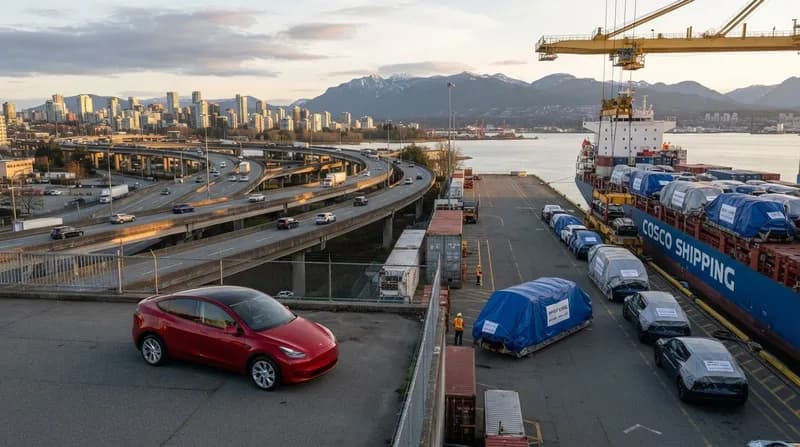
Tesla’s Gigafactory in Shanghai is one of the company's most efficient production hubs, boasting significantly lower manufacturing costs compared to its facilities in the United States or Germany. By leveraging the new trade rules—which focus on the location of manufacture rather than the nationality of the brand—Tesla has been able to resume shipping Shanghai-produced vehicles to Canada. This strategy allows the company to maintain healthy margins while offering competitive pricing to the Canadian consumer, effectively outmaneuvering traditional competitors who lack the existing logistical supply chains in China.
The Future of the Quota
Because the initial window under-delivered on its import targets, Canadian regulators have decided to roll over the remaining balance. Consequently, the second window, running from September 2026 through February 2027, now has an expanded capacity of 33,397 vehicles. This extension represents a significant opportunity for other manufacturers to claim their share of the discounted tariff space.
Market analysts suggest that this window will likely be more competitive. As major players like BYD prepare to potentially enter the Canadian market toward the end of 2026, the first-come, first-served nature of the tariff quota may lead to a scramble for space. While Tesla remains the current clear winner, the arrival of dedicated Chinese EV brands will eventually test whether the quota is large enough to sustain multiple high-volume manufacturers, or if the race for limited import slots will become the next major hurdle for global automakers in Canada.