Bridging Code and Canvas
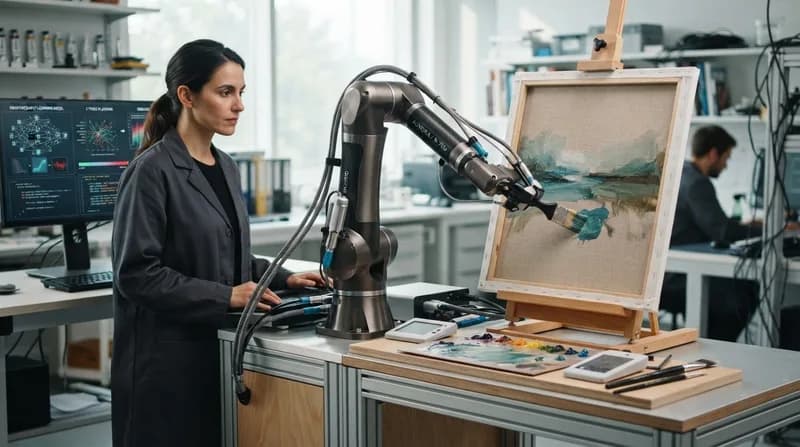
In a fascinating intersection of software engineering and digital art, researchers have unveiled a novel approach to training AI models. By leveraging the HuggingEnvs/watercolour-grpo-hps-led environment, developers are teaching language models that typically specialize in coding to manipulate digital brushes and create intricate watercolour effects. This experiment moves beyond simple text generation, pushing AI into the realm of spatial reasoning and aesthetic decision-making.
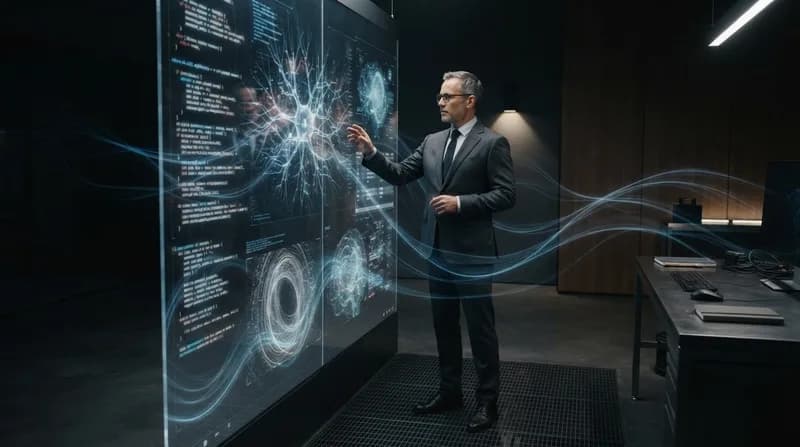
The methodology relies on Reinforcement Learning (RL), specifically utilizing Group Relative Policy Optimization (GRPO). By rewarding the model for its visual output based on a Human Preference Score (HPS), the system iteratively improves its ability to simulate the fluid, translucent characteristics of watercolour paint. The model isn't just generating pixels; it is writing the underlying code that directs the digital brush, effectively learning to 'paint' through algorithmic instructions.
Why it Matters
This project signifies a shift in how we perceive AI capability. By utilizing code as a medium for visual expression, the researchers demonstrate that large models can be fine-tuned to master complex, multi-step creative tasks. This has massive implications for future autonomous agents, which may eventually use similar frameworks to perform physical-world tasks requiring high degrees of precision, such as robotic assembly or automated industrial design.
- Technique: Group Relative Policy Optimization (GRPO) for iterative learning.
- Objective: Teaching models to prioritize visual fidelity through iterative code refinement.
- Evaluation: Utilizing a Human Preference Score (HPS) to refine the artistic outputs.
- Framework: Built upon the HuggingEnvs ecosystem, providing a controlled environment for agentic training.
As these models become more adept at balancing stylistic constraints with technical execution, we can expect to see AI agents tackling even more complex simulation tasks. The integration of coding logic into artistic generation confirms that the future of generative AI lies in the ability to bridge abstract intent with concrete, high-fidelity execution.