The Milestone: A 'Noir' Debut
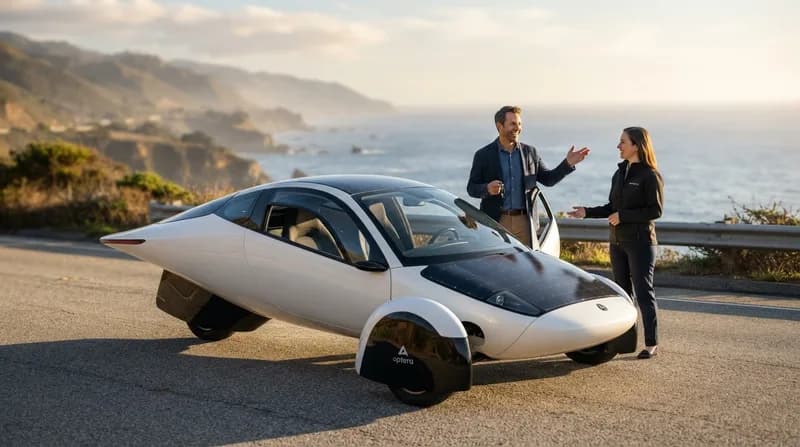
Aptera Motors has officially marked a landmark moment in its development timeline by completing the first solar-electric vehicle intended for a paying customer. The vehicle, finished in a distinctive matte black paint scheme dubbed 'Noir', represents the fruition of years of engineering and prototype iteration. This initial unit is earmarked for Martin Hartono, the CEO of GDP Venture and a prominent early investor who participated in the company’s Accelerator Programme, which prioritized delivery based on the level of financial support provided to the startup during its development phase.
While this marks a significant achievement, it is important to note that the vehicle has not yet reached the customer's hands. The completion serves as a technical proof-of-concept for the final consumer-ready build rather than the commencement of mass-market deliveries. Aptera has indicated that it intends to complete additional vehicles for its early waitlist members as it refines its manufacturing cadence, though the company has remained cautious about providing a specific timeline for full-scale commercial distribution.
The Technology Behind the Three-Wheeler
The Aptera design is defined by its ultra-aerodynamic, three-wheeled architecture, which is purpose-built for maximum efficiency. Its most striking feature is the integration of high-efficiency solar cells directly into the vehicle's body panels. Under optimal sun exposure, the company claims these integrated cells can generate enough energy to provide up to 40 miles of range per day without needing to plug into a traditional grid.
For longer journeys, the vehicle functions like a standard battery-electric car and can be charged through conventional infrastructure. The manufacturer estimates a total range of up to 400 miles on a single full charge, a figure that positions it as a competitive alternative for commuters seeking to minimize charging downtime. By utilizing a 14-station validation assembly line—which was first utilized in March 2026—the company has performed rigorous thermal, crash, and braking tests to ensure that these production-intent units meet safety and performance standards.
Why it Matters
- Efficiency Breakthroughs: By combining lightweight materials with solar integration, Aptera is pushing the boundaries of what is possible for daily commuter vehicles that aim to be 'always charging.'
- Investor-Led Launch: The use of an Accelerator Programme to fund and prioritize early vehicle builds is a unique financial strategy that has helped bridge the gap between initial concept and functional production units.
- Path to Mass Production: While 50,000 reservations exist, the industry is closely watching how Aptera scales from single-unit assembly to a reliable, consistent production output.
As Aptera transitions from the validation phase to actual customer fulfillment, the focus will undoubtedly shift toward regulatory certification and the logistics of global export. With the first unit already off the line, the company has cleared the most significant hurdle in its journey: proving that the design is not just a concept, but a viable machine ready for the open road.