E-BUZZ ME Logo
ScienceTechnical Deep Dive

Ancient Footprints Reveal Mystery Hominin Presence in Africa

Published
Ancient Footprints Reveal Mystery Hominin Presence in Africa
1 min read153 words

The Gist

A set of 1.4-million-year-old footprints found at an ancient lakebed suggests a previously unknown or unclassified hominin species once roamed East Africa.

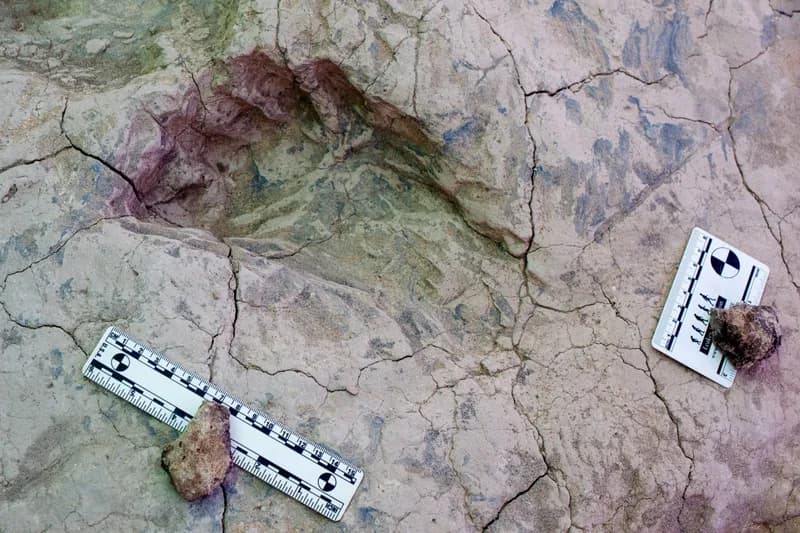
New archaeological evidence from a shallow mudflat in Africa is challenging our understanding of human evolution. Researchers have identified footprints left by a group of eight individuals more than 1.4 million years ago, but the physical characteristics of these tracks do not align with the two species known to inhabit the region at that time.

A Distinct Evolutionary Path

Historically, researchers believed that Homo erectus and Paranthropus boisei were the primary hominins occupying this landscape. However, the size and shape of these newly analyzed footprints suggest a different biomechanical profile. The tracks indicate a distinct gait and foot structure that does not perfectly match the slender, long-striding Homo erectus or the more robust Paranthropus.

The discovery suggests that the ancient African landscape was more diverse than previously thought, potentially hosting a 'mystery' lineage that coexisted alongside our direct ancestors. This find highlights the complexity of the hominin family tree during the Pleistocene epoch.


Related Stories

Semantically matched articles, ranked by topic overlap and freshness.

Hidden Charcoal Unlocks Precise Age of Ancient Cave Art
Science69%

Hidden Charcoal Unlocks Precise Age of Ancient Cave Art

New radiocarbon dating of charcoal found within pigments at France’s Font-de-Gaume cave provides a more accurate timeline for prehistoric masterpieces.

Chicxulub Asteroid Impact Unleashed a Global Firestorm to End the Dinosaur Era
Science63%

Chicxulub Asteroid Impact Unleashed a Global Firestorm to End the Dinosaur Era

New evidence details how trillions of tonnes of rock vapor incinerated land-based life following the massive asteroid strike 66 million years ago.

Jaguar Completes Remarkable 2,100-Kilometer Trek Across the Amazon
Science62%

Jaguar Completes Remarkable 2,100-Kilometer Trek Across the Amazon

A jaguar named Gaspar has completed an extraordinary journey across the Amazon, navigating through farms and across roads over a distance of 1,300 miles.

Twisted Laser Light Offers New Precision in Identifying Mirror-Image Molecules
Science60%

Twisted Laser Light Offers New Precision in Identifying Mirror-Image Molecules

A breakthrough in laser technology allows scientists to distinguish between right-handed and left-handed molecules with unprecedented speed and sensitivity.

NASA’s Swift Observatory Detects Supermassive Black Hole Devouring a Star
Science60%

NASA’s Swift Observatory Detects Supermassive Black Hole Devouring a Star

A rare tidal disruption event has been captured by NASA, revealing a wandering black hole consuming a star with the brightness of 10 billion suns.

Exercise Shows Limited Impact on Hip Osteoarthritis Relief
Science59%

Exercise Shows Limited Impact on Hip Osteoarthritis Relief

A comprehensive review reveals that physical exercise provides only modest improvements for patients suffering from hip osteoarthritis pain.

Genomics May Be the Key to Saving Matcha from Climate Change
Science59%

Genomics May Be the Key to Saving Matcha from Climate Change

Rising temperatures are threatening the yield and flavor of traditional Japanese matcha, prompting scientists to turn to genetic research to future-proof the crop.

Weakening Atlantic Current Linked to Intensified California Storms
Science59%

Weakening Atlantic Current Linked to Intensified California Storms

New research suggests a slowing Atlantic Meridional Overturning Circulation could supercharge atmospheric rivers in California while reducing snowfall in Greenland.