E-BUZZ ME Logo
Artificial IntelligenceTechnical Deep Dive

Your Current GPU Just Got an Upgrade: Waypoint-1.5 Unlocks Stunning Interactive Worlds

Published
Your Current GPU Just Got an Upgrade: Waypoint-1.5 Unlocks Stunning Interactive Worlds
1 min read155 words

The Gist

A new advancement, Waypoint-1.5, is set to revolutionize how everyday GPUs render complex, high-fidelity interactive environments, making cutting-edge visuals more accessible than ever.

High-Fidelity Worlds for Everyone

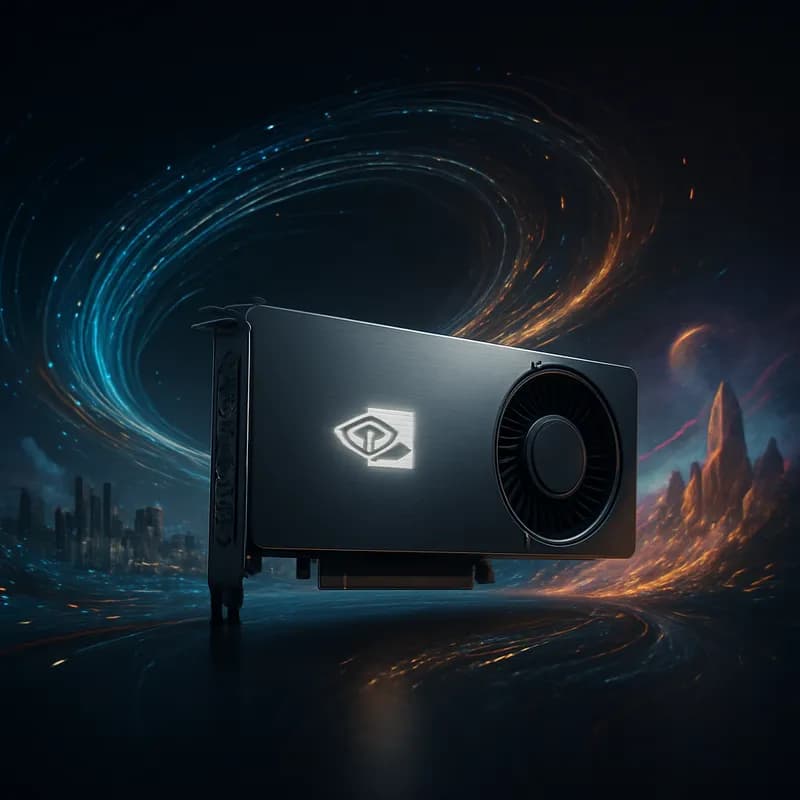
Forget the endless upgrade cycle for a moment. A new development dubbed Waypoint-1.5 is poised to transform the landscape of interactive graphics, promising to deliver astonishingly high-fidelity worlds without demanding the absolute latest, most expensive GPUs. This innovation is a significant win for gamers, developers, and anyone engaging with virtual environments.

Waypoint-1.5 focuses on optimizing how graphics are rendered and interacted with, enabling richer, more detailed, and more dynamic virtual spaces. The core breakthrough lies in its ability to achieve these superior visual experiences on 'everyday GPUs,' meaning a broader audience can now dive into truly next-generation visuals without needing to overhaul their existing hardware setup.

This technology could democratize access to immersive gaming, advanced simulations, and detailed virtual content creation, empowering a wider range of users and developers to push the boundaries of digital realism. Get ready for a visual upgrade that's more about smart innovation than raw processing power.

Related Stories

Semantically matched articles, ranked by topic overlap and freshness.

Intel Unveils AutoRound: Advanced Quantization for LLMs and VLMs
Artificial Intelligence63%

Intel Unveils AutoRound: Advanced Quantization for LLMs and VLMs

Intel has introduced AutoRound, a sophisticated weight-only quantization algorithm designed to optimize Large Language Models and Vision-Language Models.

Introducing HELMET: A New Benchmark for Long-Context Language Models
Artificial Intelligence63%

Introducing HELMET: A New Benchmark for Long-Context Language Models

Researchers have unveiled HELMET, a holistic evaluation framework designed to rigorously test how AI models handle massive amounts of data and long-form sequences.

Cohere Models Now Available via Hugging Face Inference Providers
Artificial Intelligence62%

Cohere Models Now Available via Hugging Face Inference Providers

Cohere's powerful large language models are now accessible directly through Hugging Face's managed infrastructure, streamlining deployment for developers.

Tiny Agents: Building MCP-Powered AI in Just 50 Lines of Code
Artificial Intelligence61%

Tiny Agents: Building MCP-Powered AI in Just 50 Lines of Code

A new minimalist approach demonstrates how developers can leverage the Model Context Protocol (MCP) to create functional AI agents with surprisingly little code.

Optimizing LLM Performance: Understanding Prefill and Decode for Concurrent Requests
Artificial Intelligence61%

Optimizing LLM Performance: Understanding Prefill and Decode for Concurrent Requests

A deep dive into how optimizing the prefill and decode phases of LLM inference can significantly improve performance for concurrent user requests.

PipelineRL: Enhancing Reinforcement Learning Workflows
Artificial Intelligence59%

PipelineRL: Enhancing Reinforcement Learning Workflows

PipelineRL introduces a streamlined approach to managing reinforcement learning pipelines, focusing on reproducibility and scalability.

Unlocking Interoperability: How to Build an MCP Server with Gradio
Artificial Intelligence59%

Unlocking Interoperability: How to Build an MCP Server with Gradio

A new integration allows developers to transform Gradio applications into Model Context Protocol (MCP) servers, enabling seamless connections between AI tools and LLMs.

GPS Satellite Network Provides Two Decades of Space Radiation Data
Science59%

GPS Satellite Network Provides Two Decades of Space Radiation Data

A massive cross-calibration effort involving 25 GPS satellites has unlocked twenty years of continuous space radiation tracking.