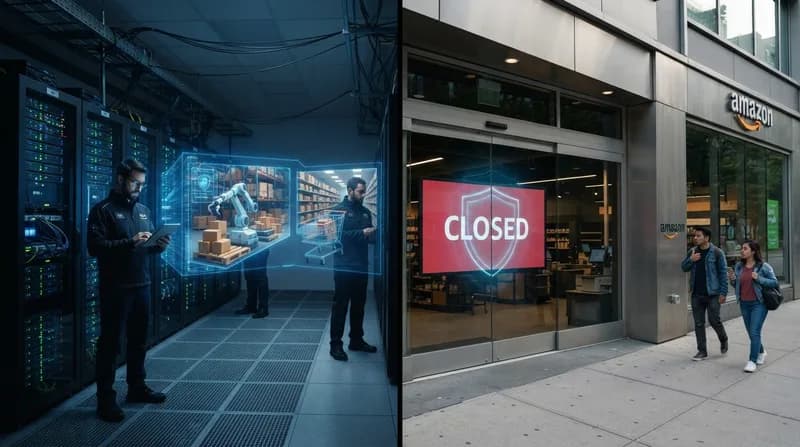
The Myth of the Invulnerable Cloud
In the world of cloud infrastructure, the narrative is often one of absolute resilience. When major services experience downtime, it is usually met with public outcry and intense media coverage. However, a significant incident involving Amazon Web Services (AWS) on November 15 proved that even the giants are not immune to failure. Despite the technical disruption, the event barely registered in the public consciousness, creating a stark contrast to the chaotic tech outages that have grounded airlines and paralyzed global communication in recent weeks.
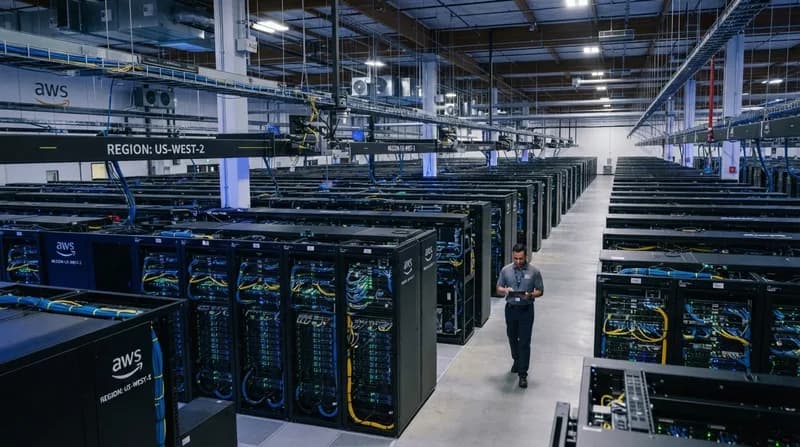
The incident centered on 'us-east-1,' AWS's oldest and most historically significant region. At 3:05 AM PST, the platform began reporting sign-up errors, authentication hurdles, and connectivity failures. While the disruption hit 11 of the company's core services, the silence surrounding the outage was deafening. To the average user, and even to seasoned technology editors, the event was invisible.
The Factors Behind the Stealth Outage
Several variables converged to insulate AWS from the usual PR fallout of a service disruption. The most immediate factor was timing; the incident occurred during the pre-dawn hours on a Sunday, long before the majority of the workforce began their daily operations. By the time most businesses were fully operational, the system had largely recovered, with an all-clear issued by 6:53 AM PST.
Furthermore, the nature of the impacted services played a critical role in minimizing 'consumer screaming.' The primary failure involved the IAM Identity Center, which affects engineers and developers trying to access their management accounts rather than the end-user applications that power consumer retail or media streaming. Because the underlying consumer-facing applications remained operational, there was no mass wave of reports on platforms like Downdetector to trigger a larger news cycle.
Why it Matters: The Perception Gap
The discrepancy between technical reality and public perception highlights a shift in how we monitor the modern internet. As businesses increasingly outsource their critical infrastructure to centralized providers like AWS, the responsibility for uptime shifts from local IT teams to global hyperscalers. When these systems fail, the impact is immense, yet our detection methods—often reliant on crowdsourced reporting—are inherently skewed toward consumer-facing convenience rather than infrastructure health.
- Centralization Shifts: Companies are increasingly relying on external giants to handle critical back-end operations, which improves average stability but concentrates the risk of catastrophic failure.
- The Downdetector Effect: Crowd-sourced outage reporting is a double-edged sword; while it acts as an early warning system for users, it often fails to detect back-end issues that disrupt internal workflows without crashing front-end interfaces.
- Narrative vs. Reality: AWS's reputation as a 'gold standard' for reliability often creates a feedback loop where minor incidents are disregarded because they don't fit the established narrative of perfect uptime.
The Outlook for Cloud Reliability
As the digital landscape evolves, the definition of an 'outage' is becoming more complex. AWS, like any massive platform, continues to face challenges that go beyond simple server bugs, including 'acts of war' and geopolitical tensions that can threaten physical infrastructure. While the company remains sensitive to how it is portrayed on monitoring sites, the truth remains that even the most robust systems will have their moments of instability. Ultimately, the recent events suggest that public attention is fickle, and in the current climate of high-profile SaaS failures, 'staying quiet' is perhaps the most effective public relations strategy a cloud provider can employ.