The Arrival of the ID. Buzz AD in Lake Nona
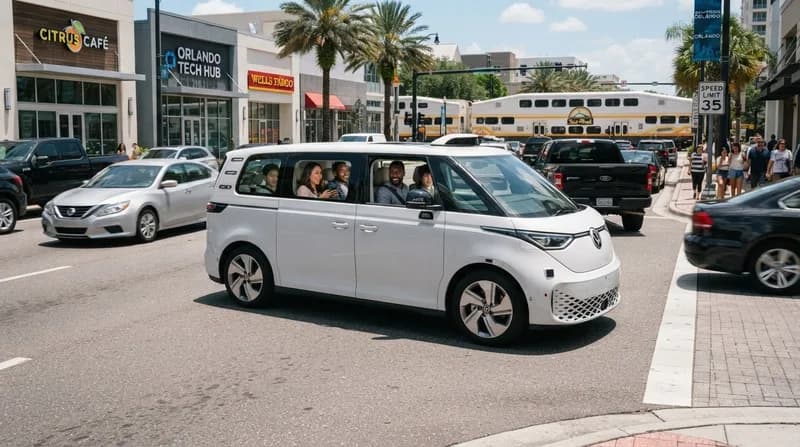
The streets of Lake Nona, Florida, have officially become a testing ground for the future of public transit. Moia America, the domestic subsidiary of Volkswagen’s mobility division, has launched its first public-facing autonomous passenger trials in the United States. In partnership with Beep, a specialized provider of autonomous fleet solutions, the companies are deploying the Volkswagen ID. Buzz AD—the autonomous variant of the iconic electric van—to transport selected participants across predefined routes.
This initiative represents a significant step forward from controlled testing environments to real-world traffic scenarios. The vehicles operate at standard road speeds, providing a tangible look at how autonomous micro-transit might function in suburban settings. By allowing test passengers to book rides directly through the Beep app, the partners are gathering critical data on how commuters interact with human-operated "safety drivers" and AI-driven navigation systems.
Technology Integration and Scaling Ambitions
At the heart of the fleet is a sophisticated hardware and software stack powered by Mobileye. The vehicles are equipped with an array of sensors designed to ensure safety while navigating dynamic environments, and they are accompanied by trained personnel tasked with monitoring the system and intervening if necessary. While this phase is strictly focused on testing with invited participants, it serves as a pilot for a much broader vision.
The collaboration between Moia and Beep is not intended to compete with individual ride-hailing services. Instead, the companies are aiming to solve the "middle-mile" and public transit gaps by offering an AI-powered, cost-efficient shared mobility solution. This operational model is part of a larger plan to supply Beep with a massive fleet of 5,000 autonomous vehicles, signaling that the companies are preparing for a long-term, high-volume presence in the U.S. transit landscape.
Why It Matters
- Beyond Robotaxis: Unlike competitors focused on personal taxi services, this initiative prioritizes high-capacity, shared transit that complements existing public transportation infrastructure.
- Real-World Feedback: By collecting direct input from riders during these early stages, the developers are refining the user experience, making sure the transition to fully autonomous, driverless operations feels intuitive and safe.
- Strategic Scaling: The ambition to deploy 5,000 vehicles highlights the shift from experimental concepts to the industrialization of autonomous mobility.
As the trial continues, participants are encouraged to share their experiences, effectively acting as early co-developers of the platform. For residents of Lake Nona, this means that the future of commuting is no longer a concept limited to brochures or digital mock-ups; it is a moving, electric, and autonomous reality currently traversing their own neighborhoods.