Optimizing for the Edge
The recent release of the Inkling 2 Mini, a 26-billion parameter Mixture-of-Experts (MoE) model, has set a new benchmark for local AI efficiency. With its unique architecture—which processes tokens through 48 layers by looping 12 middle layers three times—the model offers a potent balance of coding proficiency and reasoning capabilities. However, translating this performance to real-world infrastructure like the NVIDIA RTX PRO 6000 96GB GPU requires more than standard settings. To close the gap between theoretical potential and practical throughput, researchers recently turned to an autonomous coding agent equipped with specialized inference-optimization skills to automate the benchmarking and configuration process.
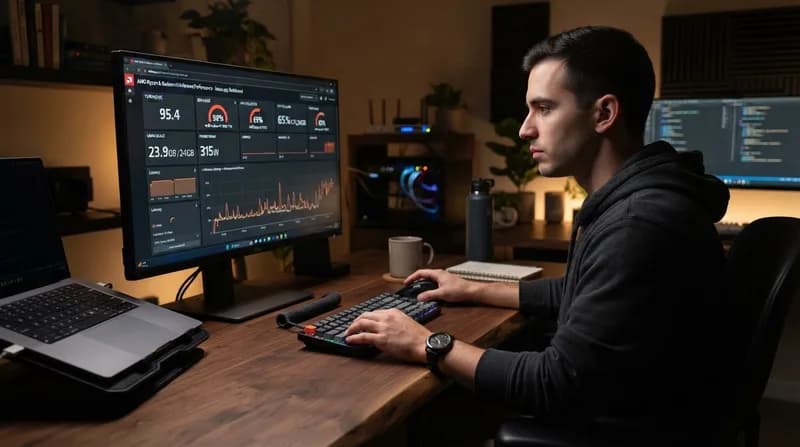
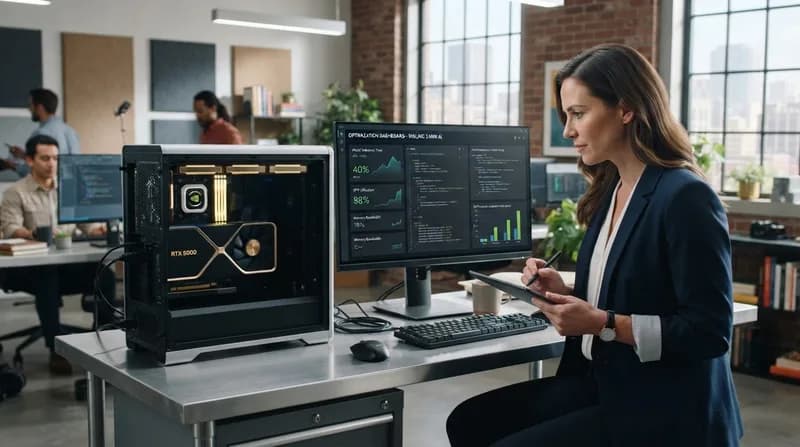
By leveraging Hugging Face infrastructure, including Jobs and Inference Endpoints, the autonomous agent conducted 46 distinct experimental runs to determine the ideal configuration. The results were significant: single-user decode performance climbed from 136 tokens per second to over 190 tokens per second, a 40% improvement. Furthermore, aggregate throughput for 8-user scenarios saw a 26% boost, reaching 716 tokens per second. This experiment demonstrates that even on hardware not specifically targeted by standard serving recipes, intelligent automation can squeeze near-maximum efficiency out of modern LLM stacks.
The Methodology of Automated Tuning
The optimization strategy relied on a rigorous, reproducible protocol designed to avoid the pitfalls of manual configuration. The agent employed a "bracket" control system, ensuring that every candidate flag was tested against baseline control runs before being accepted. This prevented regressions and ensured that gains in speed did not come at the cost of model accuracy or output consistency. The agent utilized a bespoke driver script that managed the entire lifecycle of the server, from warming up kernels to logging metrics, which were then stored for deep analysis in a centralized project log.
One of the key technical hurdles addressed was the memory management of the KV cache when utilizing speculative decoding. By carefully adjusting the `gpu-memory-utilization` flags and ensuring the speculative configuration matched the model’s block size requirements, the agent successfully bypassed previous Out-Of-Memory (OOM) errors. The final configuration, which utilizes vLLM nightly with DSpark speculative decoding, operates at an impressive 95% of the RTX PRO 6000's hardware memory bandwidth limit, effectively signaling that the system is operating near the absolute physical ceiling of the hardware.
Why it Matters
- Maximized Hardware ROI: Demonstrates how organizations can extract premium-tier performance from existing workstation-class GPUs without needing to purchase server-grade B200 or GB300 chips.
- Automated Efficiency: Highlights the shift from manual "guess-and-check" parameter tuning toward autonomous optimization agents that can run hundreds of variations overnight.
- Lossless Acceleration: The implementation of DSpark speculative decoding provides substantial speedups while maintaining byte-identical output to non-speculative inference, crucial for production environments where consistency is non-negotiable.
Deployment Implications
For developers looking to replicate these results, the process is now documented through a fully pinned image digest. By utilizing the specific vLLM nightly build identified during the experiments, teams can deploy the Inkling 2 Mini across their own infrastructure with high confidence in both stability and throughput. The use of scale-to-zero capabilities with Inference Endpoints further optimizes costs, making high-performance local AI deployment both technically feasible and economically attractive for businesses requiring privacy and speed.