A New Frontier in Minimally Invasive Medicine
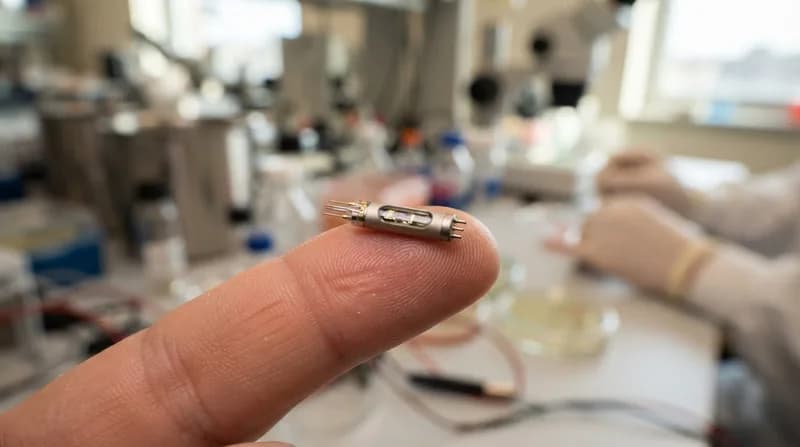
In a significant leap for bioengineering, scientists at NYU Abu Dhabi, in collaboration with Cleveland Clinic Abu Dhabi, have unveiled a groundbreaking miniature device capable of regulating nerve activity. Unlike traditional neuromodulation systems, which often require extensive surgical intervention, bulky batteries, and complex lead wires, this new technology is delivered via a standard needle injection. Roughly the size of a single seed, the device represents a paradigm shift in how clinicians might approach the treatment of chronic pain and various movement disorders.
The fundamental innovation lies in the device's ability to operate without an internal power source. By drawing power wirelessly from an external source, the implant provides a reliable, long-term interface for electrical stimulation. This allows medical professionals to adjust stimulation parameters in real-time, tailoring the treatment to the specific biological requirements of the patient without the need for follow-up surgeries to replace depleted batteries or repair hardware.
Precision Control Without the Operating Room
The practical application of this technology centers on its ease of deployment and ongoing management. Because the device is small enough to be injected, it can be positioned with high precision near target nerves. Once implanted, its location and functionality can be verified using common medical imaging infrastructure, such as CT scans and ultrasound. This integration with existing clinical diagnostic tools ensures that healthcare providers can monitor the device's stability and efficacy with minimal burden to the patient.
Furthermore, the electrical stimulation provided by the device is fully programmable. This feature is crucial for treating conditions where nerve activity is irregular or undesired. By fine-tuning the signal, doctors can suppress pain pathways or modulate motor control signals, offering a level of adaptability that was previously only achievable through highly invasive implants. The research, recently published in Science Advances, highlights that this device bridges the critical gap between non-invasive external wearables and traditional, permanent surgical implants.
Clinical Implications and Future Outlook
While the current results are rooted in laboratory and preclinical testing, the implications for patient care are profound. By moving away from surgical implantation, this technology significantly lowers the barriers for patients who might otherwise avoid neuromodulation due to the risks associated with surgery or the long recovery times required by current standards of care. The ability to provide effective relief through a simple injection could lead to a massive expansion in the number of patients eligible for nerve-stimulation therapies.
- Invasive Surgery Avoided: Eliminates the need for traditional incisions, reducing scarring and recovery time.
- Wire-Free Architecture: Removes the complications of lead migration and wire failure common in older systems.
- Battery-Less Operation: Power is delivered wirelessly, ensuring the device remains compact and maintenance-free within the body.
- Real-Time Adjustability: Programmable electrical signals allow for dynamic treatment plans based on patient feedback.
As the scientific team continues to refine this bioelectronic interface, the focus will shift toward rigorous clinical trials to validate the device's safety and effectiveness in human patients. If these upcoming phases prove successful, this seed-sized innovation could redefine the standard of care for millions suffering from intractable pain, turning once-daunting surgical procedures into routine, office-based interventions.