Unlocking the Unconscious
For decades, general anesthesia has been viewed as a biological 'off switch'—a state where the brain retreats into silence and inactivity. However, a landmark study conducted by researchers at Baylor College of Medicine is fundamentally upending this assumption. By monitoring neural activity in patients undergoing epilepsy surgery, scientists have discovered that the human brain remains remarkably busy even when a person is deeply anesthetized, engaging in high-level tasks like language parsing and predictive modeling.
The study, published in the journal Nature, centers on the hippocampus, a critical hub for memory and learning. Using high-resolution Neuropixels probes—a hardware technology capable of recording activity from hundreds of individual neurons simultaneously—the team was able to map electrical signals that would have been invisible to traditional monitoring equipment. The results indicate that the brain is not merely idling; it is actively interpreting the surrounding environment and preparing for what comes next.
Predictive Coding in the Dark
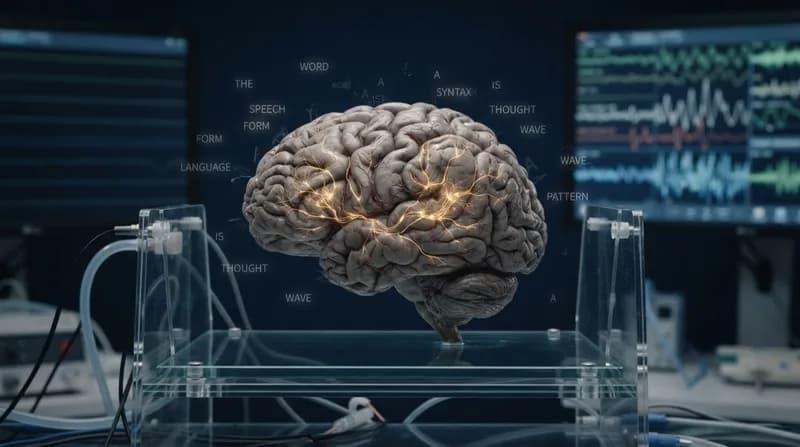
One of the most profound revelations from the study is the brain's engagement in 'predictive coding' while under anesthesia. In the waking state, the brain constantly uses past experience to forecast future events, a mechanism essential for coherent thought and communication. When researchers played audio stories to anesthetized patients, they observed distinct patterns of neuronal firing corresponding to specific linguistic categories—nouns, verbs, and adjectives. Even more impressive, the hippocampus showed signs of anticipating upcoming words in a sentence structure, demonstrating that the biological hardware for language processing remains fully engaged.
Furthermore, the team observed neural plasticity in real-time. When exposed to a series of repeating tones interrupted by anomalous sounds, the hippocampal neurons improved their ability to distinguish the 'odd' sounds over time. This suggests that the brain retains a baseline capacity to learn and adapt to environmental stimuli, even in the absence of conscious awareness. This finding blurs the once-sharp line between the 'awake' brain and the 'unconscious' brain.
Why It Matters
- Redefining Consciousness: The study suggests that consciousness might be less about the activity of individual regions like the hippocampus and more about how these regions communicate across a larger network.
- Technological Synergy: The observed neural mechanisms mirror how modern Large Language Models (LLMs) operate, providing a unique bridge between biological neurobiology and AI development.
- Clinical Applications: These insights could accelerate the development of sophisticated speech prosthetics, utilizing existing hippocampal signals to help patients who have lost the ability to communicate due to neurological injury or stroke.
An Outlook on Future Neural Interfaces
While the implications for our understanding of consciousness are immense, the research team is cautious about overstating the results. These experiments were conducted under specific anesthetic protocols and localized in the hippocampus. Whether these findings hold true for other brain regions—or during states like natural sleep or coma—remains a target for future investigation.
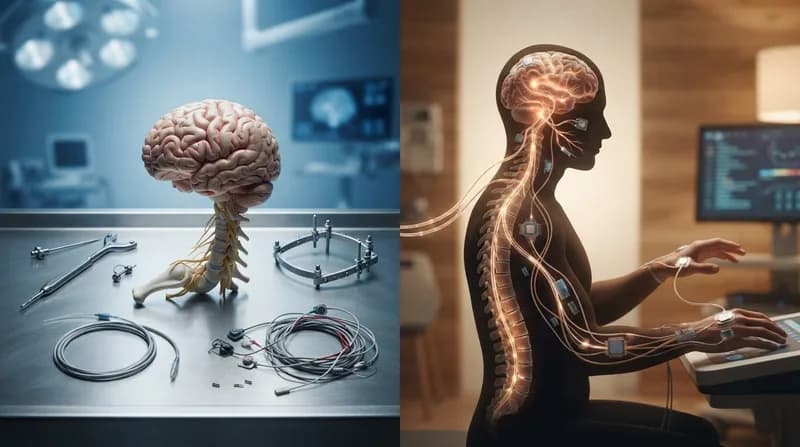
Nevertheless, the intersection of advanced neuro-recording hardware and linguistic analysis opens a new frontier in neuroscience. If the brain is effectively 'running in the background' during unconsciousness, the potential to tap into these latent signals for therapeutic use—such as brain-computer interfaces (BCIs) that can bypass damaged pathways—is now a tangible goal rather than a science-fiction hypothesis. As we continue to bridge the gap between AI architecture and human neurobiology, we may eventually find that our brains are far more capable than we are consciously aware of.