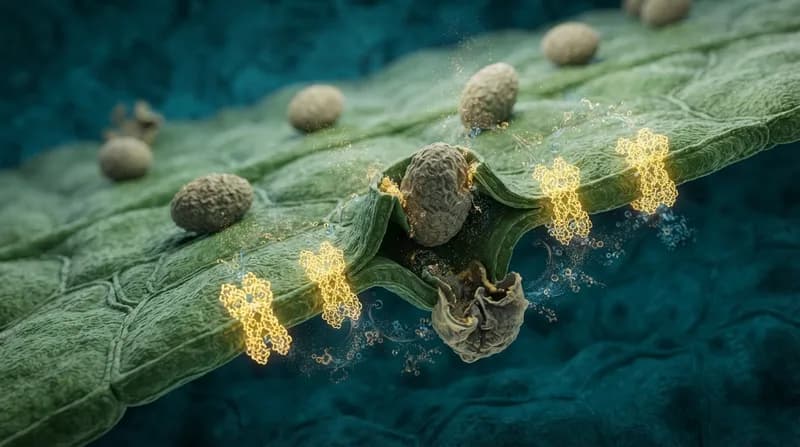
A Critical Threat to Global Food Security
The stability of the world's food supply faces an escalating challenge from Magnaporthe oryzae, a devastating fungus responsible for blast disease. While it has long been the primary threat to rice cultivation, it has recently expanded its reach, endangering wheat and barley harvests across Asia and Africa. Current estimates suggest that blast disease destroys enough rice annually to feed approximately 60 million people. As climate change shifts agricultural conditions, these fungal pathogens are finding new hospitable environments, making the need for resilient crop varieties a top priority for global food security researchers.
The Science of Tandem Kinase Proteins
For decades, agricultural scientists have focused on Nucleotide-binding and leucine-rich receptors (NLRs) to understand plant immunity. However, a collaborative team led by the John Innes Centre in the United Kingdom has pivoted toward a less-understood class of immune sensors: tandem kinase proteins (TKPs). These proteins possess a unique region known as a Heavy Metal Associated (HMA) domain. By utilizing advanced biophysical techniques and molecular crystallography, the research team successfully mapped how these HMA domains act as biological bait to attract and bind to molecules released by the blast fungus during an infection.
The study, published in Science Advances, demonstrates that these HMA domains can be re-engineered. By making precise changes to the amino acids where the fungal effectors bind, the researchers successfully modified TKPs to recognize two distinct fungal threats simultaneously. This achievement of 'dual specificity' marks a significant departure from naturally occurring receptors, which typically evolve to recognize only a narrow range of pathogens.
Why it Matters
- Multi-Target Defense: Unlike traditional breeding, which often targets single-pathogen resistance, this engineering approach allows crops to recognize multiple fungal effectors at once.
- Layered Protection: By combining these engineered TKPs with existing NLR receptors, researchers aim to create a multi-layered immune system. This makes it significantly harder for fungi to mutate and evade plant defenses.
- Climate Resilience: As agricultural zones move due to changing climates, this technology could provide the necessary toolkit to fortify cereals in regions where they previously lacked protection.
The Path to Commercialization
While these initial results were conducted using protoplasts—individual plant cells—the potential implications for field-ready agriculture are immense. The research team is now moving toward testing these engineered receptors in whole plants within controlled greenhouse environments. The goal is to develop a method for 'stacking' resistance genes, essentially equipping wheat, rice, and barley with a comprehensive armor against a variety of fungal invaders.
Looking ahead, the researchers believe that the integration of artificial intelligence and precision breeding will further accelerate this process. By predicting how different HMA domains will interact with evolving fungal molecules, scientists may soon be able to design custom immune receptors, creating super-resistant crops that can sustain growing populations despite the increasing pressure of global agricultural pathogens.