Defending the High Ground
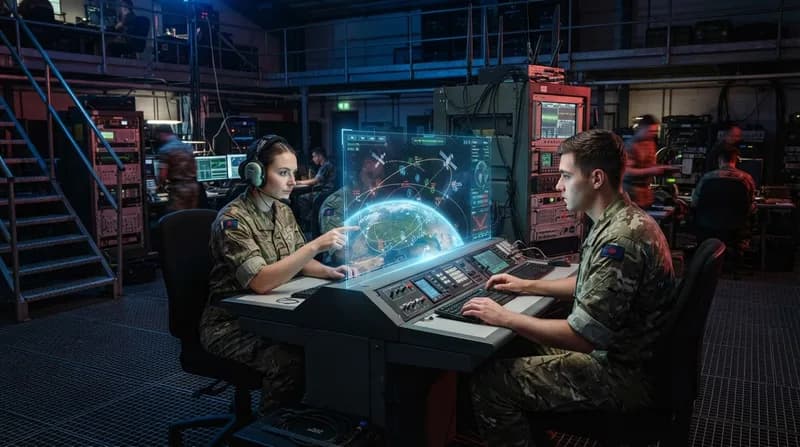
In a strategic pivot toward modern orbital security, the United Kingdom’s Royal Air Force (RAF) has officially commissioned the No. III Space Effects Squadron. Unveiled at the inaugural UK Space Power Conference in London by Air Chief Marshal Sir Harvey Smyth, the new unit represents a significant evolution in Britain's approach to national defense. While previous squadrons focused primarily on surveillance and monitoring for potential hazards, the No. III squadron is designed to actively respond to threats, ensuring that vital space-based assets remain protected.
The formation of this unit coincides with the recent rebranding of RAF High Wycombe as the Air and Space Command, signaling that space is now officially treated as a primary theater of military operations. The Ministry of Defence (MoD) maintains that while the unit is classified, its mandate is clear: to safeguard national interests and, if necessary, deny space-based advantages to potential adversaries.
The Shift Toward Electronic Warfare
Rather than relying on kinetic anti-satellite missiles—which create hazardous debris clouds and draw international condemnation—the UK government has explicitly renounced destructive testing. Instead, the No. III Space Effects Squadron will leverage sophisticated electronic warfare (EW) capabilities. This tactical shift focuses on "disrupting, degrading, and denying" hostile actions through non-kinetic means, such as jamming signals or neutralizing high-power microwave interference.
This approach aligns with the UK’s commitment to the UN Committee on the Peaceful Uses of Outer Space. By utilizing ground-based or space-integrated electronic systems, the RAF can intercept and mitigate threats from lasers or signal-dazzling equipment without adding to the ever-increasing problem of orbital debris that threatens the International Space Station and commercial communications.
Why It Matters: The Vulnerability of Modern Life
- Critical Infrastructure: Modern power grids rely on precise time coding from satellite navigation to synchronize operations across the UK.
- Emergency Response: Satellite-linked navigation is the backbone of modern emergency service coordination and logistics.
- National Security: Satellites provide the essential intelligence, weather forecasting, and early-warning missile detection required for modern military defense.
- Economic Stability: With global telecommunications and financial markets dependent on orbital assets, a single "darkened" sector could have cascading economic impacts.
Future Implications
As the squadron scales, the MoD intends to expand its capabilities to counter an increasingly complex threat landscape. Observers note that "dogfight" maneuvers between satellites and the use of directed energy are becoming commonplace among global powers. By investing in defensive EW technology now, the RAF is positioning itself to maintain resilience in an environment where orbiting assets have become the most critical, yet vulnerable, component of national security. While specific technical details of the squadron’s equipment remain under wraps, the message to adversaries is clear: the UK is taking the high ground with a focus on precision and sustainability in orbit.