A New Frontier in Clean Energy
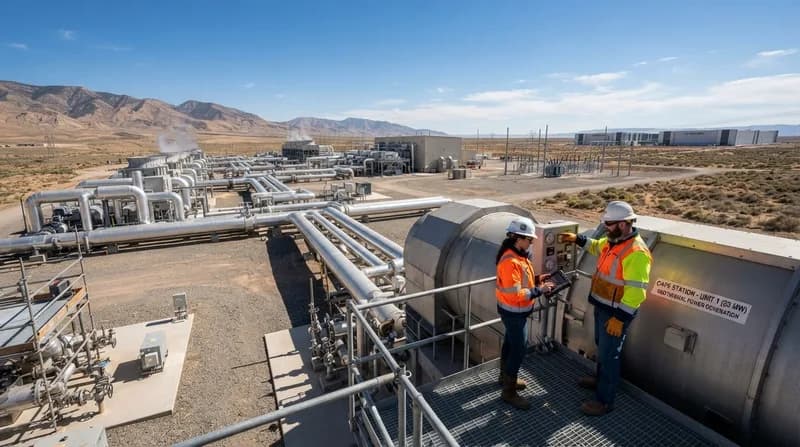
The quest for consistent, carbon-free energy has reached a significant milestone in Beaver County, Utah. Fervo Energy, an innovator in Enhanced Geothermal Systems (EGS), has officially brought its Cape Station power plant online. The activation of the first 33 MW "GeoBlock" represents more than just a successful engineering project; it is a critical proof-of-concept for the viability of deep-crust heat harvesting on a utility scale.
Fervo’s strategy involves leveraging advanced horizontal drilling and fracturing techniques originally perfected by the oil and gas sector. By drilling dual wells to depths of approximately 8,000 feet, the company can circulate water through hot, fractured rock beds. This water reaches temperatures of 190 degrees Celsius, which is then utilized to drive high-efficiency turbines. Unlike solar or wind, this process provides constant, baseload power, making it an ideal energy source for the power-hungry datacenters that form the backbone of modern tech infrastructure.
Why it Matters
- Grid Reliability: Geothermal provides consistent "baseload" power, unlike weather-dependent renewables, offering a stable alternative to fossil fuels.
- Scalability: While the current output is 33 MW, the site is designed to scale toward a total capacity of four gigawatts, significantly shifting the regional energy profile.
- Tech Industry Buy-in: Major tech players like Google are actively pivoting toward geothermal energy to satisfy the extreme power requirements of their growing AI and cloud computing footprint.
Project Trajectory and Future Outlook
The deployment at Cape Station is moving rapidly. Following the initial 33 MW activation, Fervo anticipates an additional 66 MW of capacity to come online by the end of this year, bringing the site to a 100 MW total. The company’s roadmap is even more ambitious, with a stated goal of reaching half a gigawatt of capacity by 2028. This growth is backed by substantial corporate interest, as Google and other hyperscalers seek to mitigate the "power wall"—the grid constraints currently limiting the expansion of new AI-focused facilities.
However, the industry still faces economic hurdles. While EGS technology is technically impressive, analysts from the Rhodium Group have pointed out that early adopters may pay a premium of up to 20 percent compared to traditional electricity rates. As drilling techniques improve and the technology achieves economies of scale, these costs are expected to stabilize. For now, Fervo’s progress in Utah serves as a vital bridge toward a more sustainable, high-uptime future for global compute operations, proving that the solution to our modern energy crisis may lie thousands of feet beneath our feet.