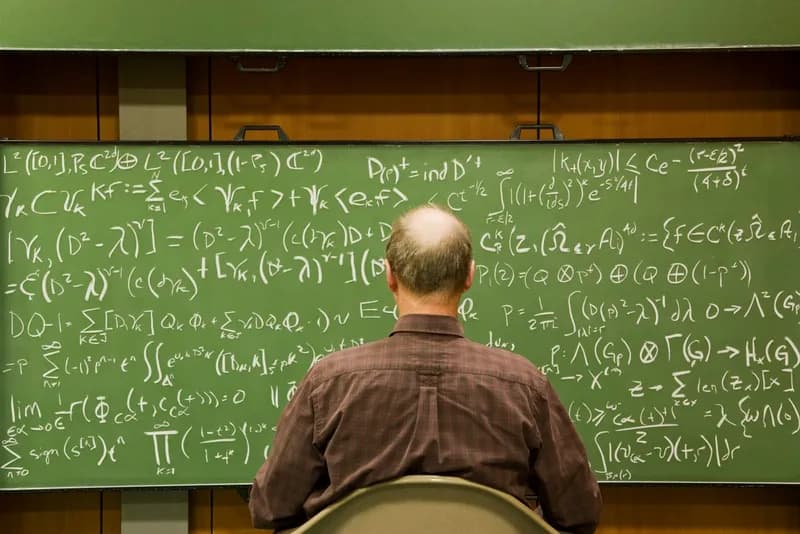
In the world of mathematics, it is possible to provide a definitive proof without actually revealing the answer to the problem at hand. This seemingly paradoxical approach, often referred to as an existence proof, allows mathematicians to demonstrate that a solution must exist according to logical rules, even if the specific solution remains elusive.
A Century of Controversy
As noted by columnist Jacob Aron, this mathematical 'shortcut' was not always widely accepted. Roughly 100 years ago, the mathematical community was deeply divided over the legitimacy of these non-constructive proofs. Traditionalists argued that a proof was only valid if it provided a clear path to the solution, while proponents of the new method argued that logical certainty of existence was sufficient.
A Modern Mathematical Standard
Despite the initial friction that led to intellectual 'blows' between leading scholars, the technique has survived and flourished. Today, it is considered a common and essential part of modern mathematics. By bypassing the need for explicit calculation, researchers can navigate complex theoretical landscapes and establish foundations for further discovery, proving that sometimes, knowing a door exists is just as important as having the key.