The Micro-Scale Breakthrough
In the world of industrial chemistry, success has historically been dictated by voltage, electrode material, and the composition of the chemical solution. However, a team from Seoul National University’s College of Engineering, led by Professor Jaeyune Ryu, has identified a critical, previously overlooked variable: local pH. This discovery refers to the microscopic acidity or alkalinity of the liquid immediately surrounding an electrode, which can differ drastically from the overall pH of the bulk solution.
By mastering the control of this tiny, localized chemical environment, the researchers were able to skyrocket the selectivity of their chemical reactions from a mediocre 16% to a near-perfect 97%. This shift suggests that many historical chemical failures in labs were not due to poor reactants, but rather a lack of control over these precise, nano-scale acidic fluctuations.
Refining the Reactor Design
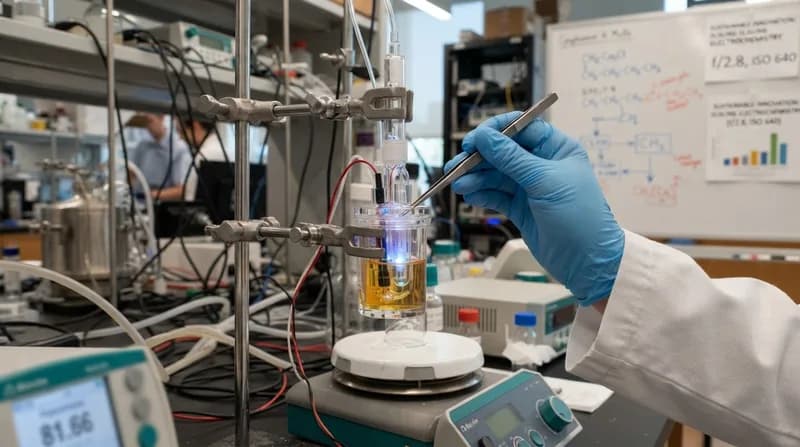
The team’s approach centers on a sophisticated redesign of the electrochemical reactor. Because traditional electrodes often generate extreme pH gradients—with some regions reaching highly alkaline levels (pH 11) while others become aggressively acidic (pH 2.5)—the chemical stability of the final product is often compromised. The new reactor design effectively mitigates these extremes.
By decreasing the distance between electrodes from 20 mm to 4 mm and optimizing the electrolyte flow rate, the researchers created a self-balancing system. The moving liquid serves as a buffer, preventing the buildup of hydrogen ions that would otherwise derail the production process. This hardware-focused optimization resulted in a 14-fold increase in production rates, proving that physical reactor architecture is just as vital as the chemical catalysts themselves.
Why It Matters
- Sustainability: The method utilizes oxygen and electricity to drive reactions, eliminating the need for hazardous oxidizing agents like peroxide.
- Broad Applicability: The study indicates that roughly 89% of modern electrochemical research involves electron and proton transfers, meaning this local pH control strategy could improve thousands of existing industrial processes.
- Economic Impact: By increasing yield from 16% to 97%, the process significantly reduces waste, lowering the cost of manufacturing for essential polymers and fine chemicals.
Applications in Modern Industry
The implications for this technology are vast, particularly in the production of high-value compounds like lactones and epoxides. Lactones are fundamental building blocks for biodegradable plastics and polyurethanes, while epoxides are crucial for high-performance adhesives, electronic coatings, and pharmaceuticals. In testing, the team successfully produced ε-caprolactone—a vital material for medical sutures and drug-delivery systems—with an 82% yield.
Because these reactions occur at room temperature and standard atmospheric pressure, the process removes the need for energy-intensive heating or high-pressure equipment. When powered by renewable energy, this technology represents a significant leap forward in creating a carbon-neutral footprint for the chemical manufacturing sector, turning the invisible micro-environment of an electrode into a powerful engine for sustainable industrial growth.