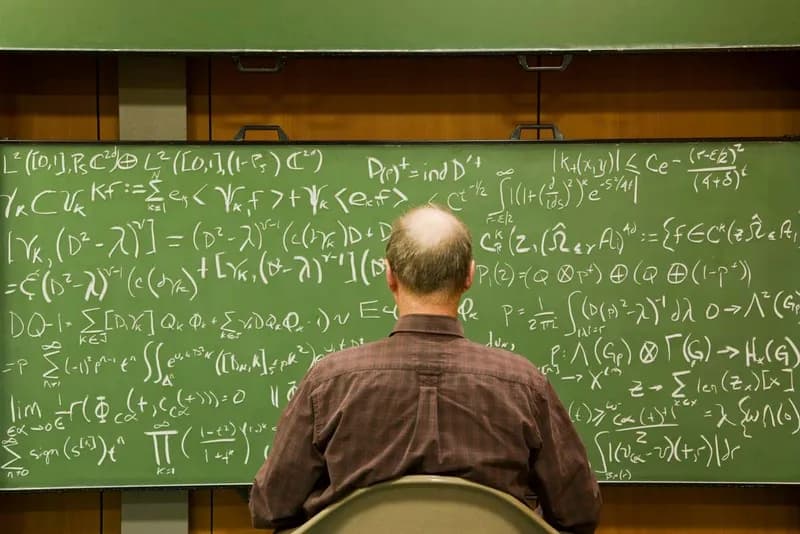
In the world of mathematics, the concept of a proof is usually synonymous with a step-by-step demonstration of how a result is achieved. However, a controversial technique known as the non-constructive proof allows mathematicians to verify that a solution exists without actually revealing what that solution is.
A Century of Controversy
As highlighted by columnist Jacob Aron, this 'sneaky' mathematical trick was not always widely accepted. Roughly 100 years ago, the mathematical community was deeply divided over the legitimacy of these methods. Critics argued that claiming something exists without providing a specific example felt like a logical shortcut rather than a rigorous discovery.
The Modern Standard
Despite the early academic friction, the perspective has shifted significantly. Today, these existence proofs are a staple of modern mathematics and theoretical science. They allow researchers to bypass immense computational hurdles by first establishing the possibility of a solution, providing a foundation for further investigation in fields ranging from cryptography to complex physics.