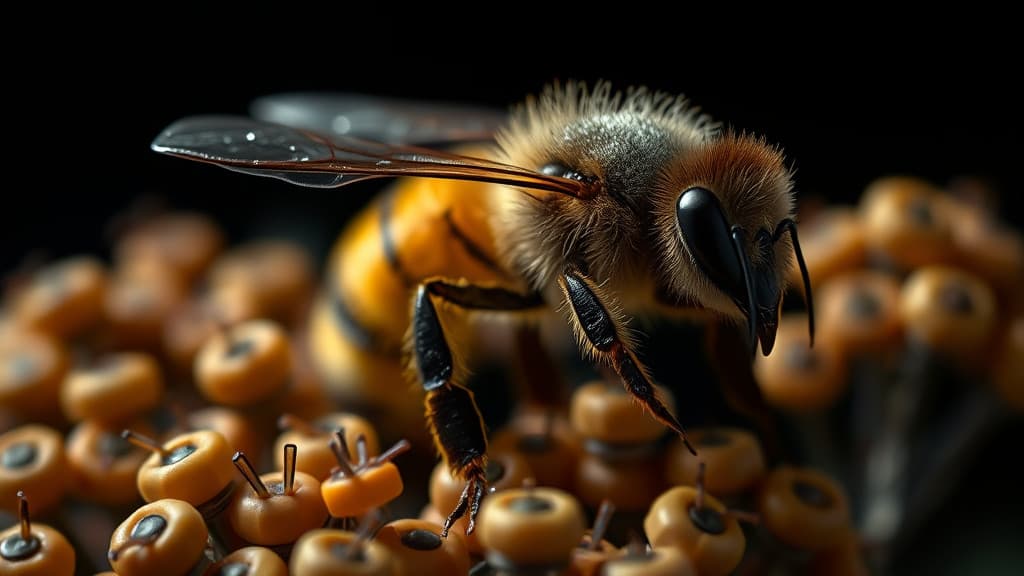
A new scientific study has uncovered a hidden neural mechanism that governs how honeybees transition between different roles within a colony. Researchers discovered that specific brain circuits act as biological switches, determining which tasks a bee performs throughout its lifecycle.
The Neural Basis of Roles
In a typical colony, worker bees progress through various duties as they age, eventually moving from internal hive maintenance to external foraging. However, the study found that by deactivating these specific neural circuits, older worker bees reverted to younger behaviors, such as caring for the queen, instead of performing their expected later-life duties.
Implications for Social Structures
The findings suggest that the complex division of labor observed in bee colonies is not just a social phenomenon, but one deeply rooted in individual brain chemistry. This discovery provides a new perspective on how social insects maintain highly organized societies through internal biological programming.