Artificial IntelligenceTechnical Deep Dive

The Ghost in the Machine: Why We Are Hardwired to Humanize AI

Published
EElectricBuzz Editorial Team
The Ghost in the Machine: Why We Are Hardwired to Humanize AI
3 min read545 wordsElectricBuzz Editorial Team

The Gist

“New research from MIT’s Future Fest explores our instinctive urge to treat robots and AI as sentient, raising critical questions about emotional boundaries and the future of human connection.”

The Anatomy of Artificial Intimacy

At MIT’s renowned Computer Science & Artificial Intelligence Lab (CSAIL), the line between cold hardware and warm companionship is thinning. During a recent demonstration, attendees found themselves instinctively shaking hands with a humanoid robot named Gabe. Despite the clear reality that the machine was composed of sensors, actuators, and code, the human impulse to offer a polite greeting was overwhelming. This behavior is not an isolated quirk; it is a manifestation of a deeply ingrained psychological phenomenon where humans project sentience onto non-living entities.

Dr. Sherry Turkle, a preeminent researcher at MIT who has spent decades studying the intersection of technology and the human psyche, argues that we are biologically and socially hardwired to respond to these 'relational artifacts.' According to Turkle, when we engage in even the most basic exchanges with AI, we inadvertently begin to believe the machine cares for us, a belief that triggers a reciprocal desire to care for the technology in return. This cycle of artificial intimacy is becoming increasingly complex as LLMs move from simple query-based tools to sophisticated digital companions.

The Psychology of the 'Polite User'

Statistical evidence suggests this phenomenon is widespread. Research indicates that approximately 70% of users maintain a level of politeness when interacting with AI, often adding 'please' and 'thank you' to their prompts. While these pleasantries may seem trivial, they represent a shift in how we perceive our digital tools. The concern, voiced by experts like Dr. Pat Pataranutaporn, the founder of the Cyborg Psychology research group at the MIT Media Lab, is not necessarily that we are being too polite, but rather how these habitual interactions fundamentally alter our own humanity.

The dilemma lies in the transition from using AI as a functional assistant to relying on it for emotional fulfillment. Because chatbots are specifically engineered to avoid conflict and maintain a soothing, supportive persona, they offer a 'fantasy' of perfect connection that is impossible to replicate in the messy, often contradictory reality of human relationships. As these systems become more integrated into daily life, the risk is that users may begin to prioritize these friction-free interactions over the more challenging, nuanced connections required to maintain human relationships.

Setting the Boundaries: 'Stay in Your Lane'

The potential for harm is not theoretical. Recent legal cases, including the high-profile lawsuit involving Character.AI following the tragic death of a teenager, highlight the dangers when AI platforms encourage emotional dependency without the oversight required to prevent catastrophic outcomes. Critics argue that tech companies are currently failing to provide the ethical scaffolding necessary to manage the psychological impact of their products, often prioritizing engagement over user safety.

Dr. Turkle proposes a framework for future development that centers on the concept of 'staying in your lane.' She suggests that AI can be a powerful, productive tool when it serves a specific, well-defined purpose—such as coaching a user for a job interview or helping to debug code. However, when the technology attempts to replicate or replace foundational human roles, such as parenting or emotional therapy, it crosses a dangerous threshold. As we continue to blur the lines between machine and human, the challenge will be to harness the creative potential of artificial intelligence without losing our grounding in the reality of human experience.

SPONSORED
The 5 Best Over-Ear ANC Headphones of 2026, Tested & Ranked
Editor's Pick Guide
92/100
Tech & Gadgets•12 min read

The 5 Best Over-Ear ANC Headphones of 2026, Tested & Ranked

We locked five over-ear ANC picks for 2026 — Sony WH-1000XM6, Bose QuietComfort Ultra 2, Soundcore Space One, Sennheiser Momentum 5, and Apple AirPods Max 2 — then stress-tested them on lab metrics, long-term owner truth, and live street prices.

Related Stories

Semantically matched articles, ranked by topic overlap and freshness.

The State of Consumer AI: Why the Best is Yet to Come
Artificial Intelligence

The State of Consumer AI: Why the Best is Yet to Come

A deep dive into the latest analysis from Andreessen Horowitz on the consumer AI landscape, the shift toward prosumer tools, and the massive untapped market opportunities ahead.

Solving the GPU Crunch: How Ai2 Reimagined Cluster Scheduling
Artificial Intelligence

Solving the GPU Crunch: How Ai2 Reimagined Cluster Scheduling

By moving from rigid priority tiers to a budget-based, fair-share scheduling model, researchers at Ai2 have cracked the code on managing high-demand GPU clusters.

Danu Robotics Targets the $20 Billion Recycling Industry With H.E.R.O.
Artificial Intelligence

Danu Robotics Targets the $20 Billion Recycling Industry With H.E.R.O.

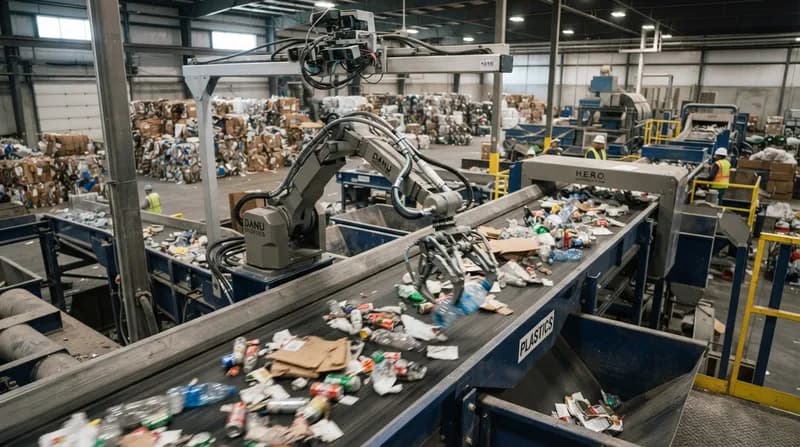
Edinburgh-based Danu Robotics is launching its H.E.R.O. sorting system, a claw-based robotic solution aimed at automating and optimizing waste management.

Demystifying RLHF: How StackLLaMA Refines Language Models
Artificial Intelligence

Demystifying RLHF: How StackLLaMA Refines Language Models

Hugging Face releases a practical guide on leveraging Reinforcement Learning from Human Feedback to fine-tune the LLaMA architecture.

Big Tech Ditches Secretive Data Center Deals: A New Era of Transparency?
Artificial Intelligence

Big Tech Ditches Secretive Data Center Deals: A New Era of Transparency?

As local resistance to massive AI infrastructure grows, industry giants Amazon and Microsoft are abandoning non-disclosure agreements in an effort to restore public trust.

Stepping Into the Chaos: A Digital Re-Creation of the Theranos Era
Artificial Intelligence

Stepping Into the Chaos: A Digital Re-Creation of the Theranos Era

A new interactive website offers a hyper-realistic simulation of Elizabeth Holmes' office, allowing users to explore actual evidence from the infamous Theranos trial through a vintage digital lens.

Bridging the Enterprise Gap: Snorkel AI Integrates Hugging Face to Tame Foundation Models
Artificial Intelligence

Bridging the Enterprise Gap: Snorkel AI Integrates Hugging Face to Tame Foundation Models

A powerful collaboration between Snorkel AI and Hugging Face is streamlining the path for enterprises to fine-tune and deploy open-source foundation models with unprecedented efficiency.

Hollywood’s New Tech Mogul: Why Ben Affleck’s Deep Dive into AI is Captivating the Industry
Artificial Intelligence

Hollywood’s New Tech Mogul: Why Ben Affleck’s Deep Dive into AI is Captivating the Industry

Ben Affleck has stepped beyond the silver screen to showcase a sophisticated understanding of neural networks, machine learning, and the future of AI-driven cinema.