The Achilles' Heel of Exascale Computing
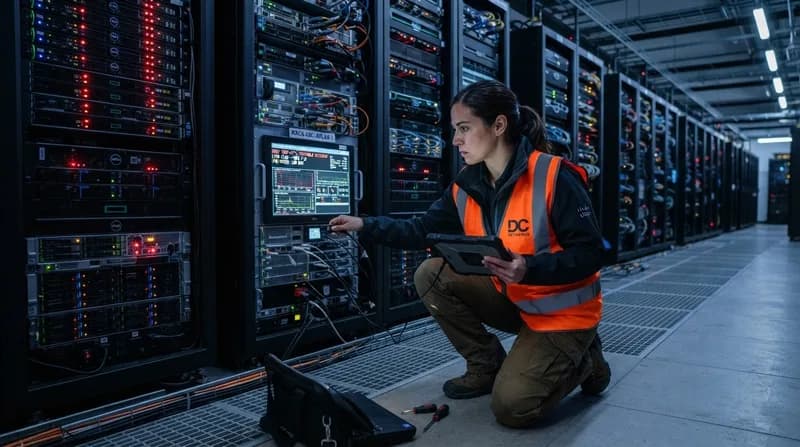
The modern era of exascale computing, exemplified by the Frontier supercomputer at Oak Ridge National Laboratory, represents a pinnacle of scientific achievement. Yet, behind the headline-grabbing performance metrics lies an uncomfortable reality: these machines are incredibly fragile. When a system relies on the orchestrated cooperation of thousands of processors, a single failing component—be it a memory bit, a faulty GPU, or a human error during maintenance—can bring the entire simulation to a screeching halt. The challenge is no longer just about raw speed; it is about maintaining resilience in a system where scale amplifies every possible point of failure.
Scott Atchley, CTO of the Oak Ridge Leadership Computing Facility, notes that the sheer density of hardware is a double-edged sword. Frontier features massive amounts of high-bandwidth memory, which inherently increases the surface area for hardware faults. During the machine’s early deployment, it recorded uncorrectable double-bit memory errors approximately 1.5 times per day. While these incidents may sound minor, in a tightly coupled environment like the Message Passing Interface (MPI) framework, the loss of a single rank means the entire collective operation must stop, forcing researchers into a costly recovery cycle.
The Mathematical Dilemma of Checkpointing
To mitigate the risk of losing hours or even days of computation, researchers rely on "checkpointing"—periodically saving the state of an application to storage. However, this safety net comes with its own efficiency tax. The process of writing vast amounts of data to filesystems like the Lustre-based Orion, or even to node-local SSDs, consumes significant computing time. If a researcher saves too frequently, they lose a substantial percentage of their total compute budget to overhead. If they save too infrequently, a single crash could force them to repeat hours of work.
This balancing act is governed by models like the Young-Daly checkpointing formula, which helps calculate the optimal interval based on job size and the system's mean time between failures. As system scale increases, the time spent writing these checkpoints can devour a significant portion of a project's allocation. Consequently, the "useful work" performed by a supercomputer is often significantly lower than its peak theoretical capability. Estimates from 2026 suggest that on machines as complex as Frontier, nearly 4.3 percent of resources are effectively surrendered to the combined costs of failures, restarts, and checkpointing.
Why It Matters
- Operational Throughput vs. Peak Speed: A system might have 98%+ hardware availability, but "useful science" is often lower due to the time spent recovering from internal job failures.
- The Scale Multiplier: As systems grow in complexity, the probability of at least one node failing during a long-running job approaches 100%, making resilience strategies mandatory rather than optional.
- Hidden Costs: Beyond the hardware, there is the social and institutional cost of rejoining job queues, which can delay urgent scientific research by days following a catastrophic failure.
Engineering the Next Wave of Resilience
The industry is beginning to move beyond reactive checkpointing toward more sophisticated recovery methods. Some of the most promising research involves "live" state migration, where an application detects an underperforming or failing GPU and attempts to transfer its workload to a healthy node in real-time, avoiding a complete restart. These techniques require highly advanced fault detection, consistent state synchronization, and, crucially, the availability of spare hardware resources that are not currently tied up in the compute queue.
While software engineers work on these failover mechanisms, hardware manufacturers are simultaneously working to improve memory protection and error correction. However, as Atchley points out, solving these problems creates a shifting landscape; as old failure modes are engineered out, the next generation of architectures inevitably introduces new, unforeseen bottlenecks. Resilience research may lack the glamour of speed records, but it remains the most critical barrier to maximizing the value of the world's most powerful digital assets.