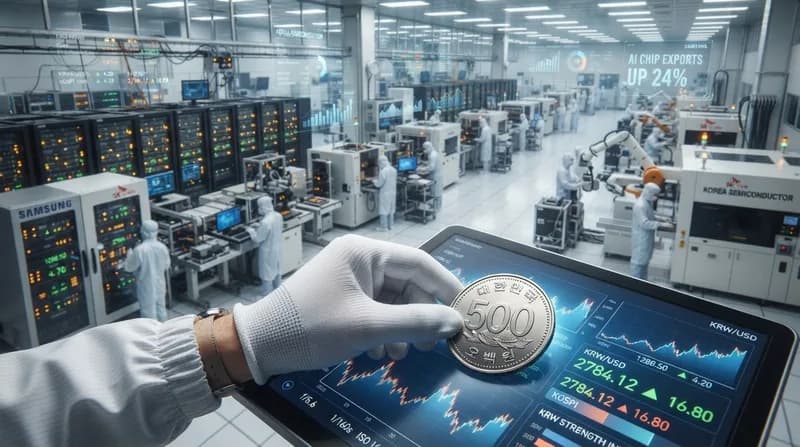
A New Economic Momentum
South Korea is currently riding the crest of a significant AI hardware boom, with semiconductor giants SK Hynix and Samsung Electronics at the forefront of this industrial shift. As demand for specialized artificial intelligence chips continues to climb globally, these domestic powerhouses are seeing their export revenues reach historic highs. This influx of foreign capital is not merely an isolated corporate victory; it is becoming a critical driver for the South Korean currency, the won, which is now positioned for its most impressive performance in nearly a decade.
The mechanics behind this currency surge are tied to the unique fiscal obligations of these tech conglomerates. To satisfy year-end requirements, firms like SK Hynix and Samsung must convert a significant portion of their dollar-denominated export earnings into local currency. This conversion is necessary to facilitate substantial employee bonuses, cover record-setting corporate tax bills, and finalize dividend payouts to shareholders following a year of extraordinary growth.
Why it Matters
- Liquidity Influx: The sheer volume of currency conversion required for taxes and internal payouts acts as a natural stabilizer and catalyst for the won't valuation.
- AI Hardware Demand: As the global infrastructure for AI continues to scale, South Korean memory and logic chips remain a bottleneck and a necessity, ensuring that export revenues remain robust.
- Institutional Stability: The predictability of these year-end corporate flows provides a rare moment of stability in the foreign exchange market, separating South Korea’s trade strength from more volatile global assets.
Strategic Outlook and Economic Implications
Looking ahead, the synergy between the AI hardware industry and the national economy appears locked in a virtuous cycle. While the primary drivers are the advanced manufacturing facilities producing HBM (High Bandwidth Memory) and specialized AI logic chips, the resulting financial health extends deep into the national treasury and the private sector. The government's tax intake, bolstered by the AI boom, provides more room for infrastructure reinvestment, while the increased wealth within these tech companies trickles down through the massive bonus structures currently being deployed.
Market analysts suggest that this trend is likely to persist as long as the global appetite for AI compute power remains insatiable. As these firms continue to invest in next-generation fabrication plants, the demand for local capital to support construction and domestic operations will likely maintain the pressure on currency markets. Consequently, the won is shifting from a currency sensitive to global cyclical downturns toward one buoyed by its position as the beating heart of the AI hardware supply chain.