The Rise of Jon’s Arm Reference
For several years, developers working with Arm architecture have relied on an unofficial, community-driven resource known as "Jon’s Arm Reference." Created by developer Jon Palmisciano in 2022, the site gained a massive following for its clean, high-performance interface. Unlike the official Arm documentation portal, which users often describe as bloated with popups, tracking, and complex navigation, Palmisciano’s project offered a streamlined "bullshit-free" experience that prioritized readability and speed.
The technical elegance of the project stems from how it was constructed. Palmisciano utilized machine-readable XML files provided by Arm, stripping away the heavy web elements and wrapping the core data in custom, lightweight CSS. Furthermore, he implemented a high-speed search functionality that developers found superior to the official offering. By transforming dense technical manuals into a fluid, user-friendly tool, the site became an essential daily utility for engineers who needed to verify opcodes and operands without fighting through marketing overlays.
The Legal Storm
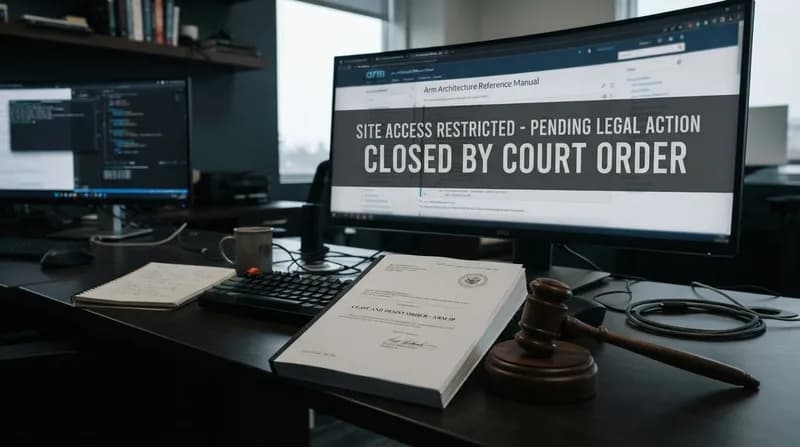
Despite the site’s popularity and clear utility to the developer ecosystem, it has officially landed in the crosshairs of Arm’s legal department. Arm has issued a demand for the site to be taken offline by December 4, 2026. The company’s legal counsel cites copyright infringement regarding the inclusion of proprietary ISA (Instruction Set Architecture) reference materials and the unauthorized use of the Arm trademark.
Arm’s official stance emphasizes the necessity of controlling its brand and maintaining the integrity of its technical resources. A spokesperson for the company stated that they have a responsibility to act as the primary source of truth for its architecture to ensure accuracy, which is vital for maintaining a consistent developer ecosystem. While Arm claims it wants to engage in a "constructive dialogue" with Palmisciano, the developer remains skeptical that the site can remain functional under the strict conditions laid out by the corporation.
Why It Matters
The conflict highlights a recurring friction point in the tech industry: the tension between corporate "brand protection" and the organic, community-led initiatives that often make complex technologies usable. For many software engineers, the official documentation provided by major silicon vendors is often optimized for business metrics rather than developer productivity. When a community member bridges that gap, they often create a product that is objectively better for the end-user, yet legally precarious.
For those who rely on the site, the loss represents more than just a preference for a cleaner UI; it signals the end of a tool that successfully optimized workflow for hundreds of developers. As Palmisciano considers his options—which include open-sourcing his build tooling so developers can host their own local, ad-free instances of the documentation—the situation serves as a stark reminder of how fragile independent developer tools can be when they rely on proprietary assets.
Outlook and Implications
With a December 4 deadline looming, the future of the hosted version of Jon’s Arm Reference appears grim. However, the developer has already noted that community members are archiving the site, ensuring that the information will likely survive in one form or another. Palmisciano’s potential pivot to releasing his construction scripts as open-source code could ultimately empower the developer community to maintain their own private, bloat-free documentation environments, effectively decentralizing the resource that Arm is currently attempting to consolidate.