E-BUZZ ME Logo
ScienceTechnical Deep Dive

The Adult Brain Can Repair Itself Better Than Scientists Thought

Published
The Adult Brain Can Repair Itself Better Than Scientists Thought
1 min read92 words

The Gist

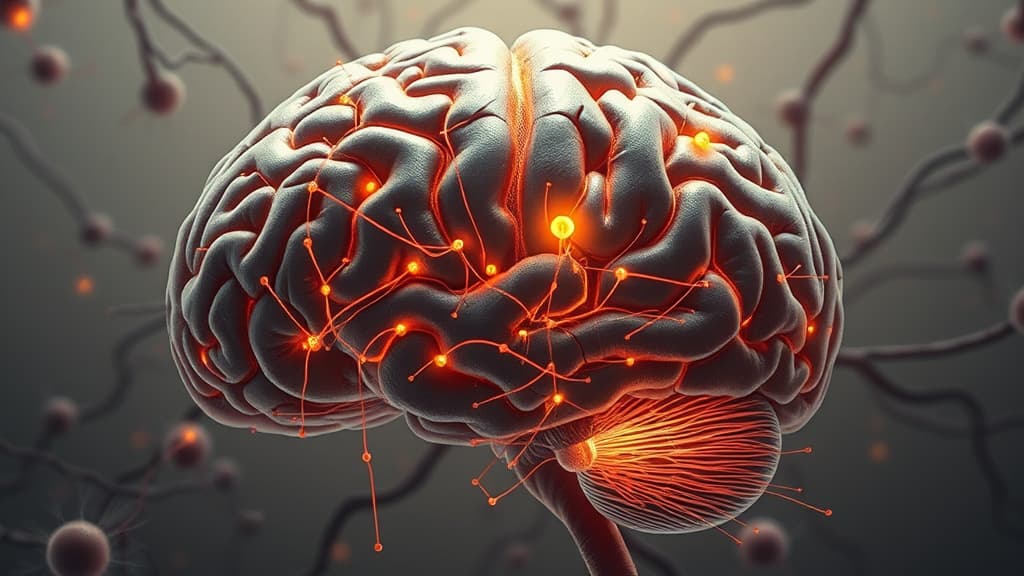
Researchers at the University of Zurich have discovered a hidden repair system in the adult brain, allowing it to rebuild damaged cellular networks through specialized support cells called astrocytes. This breakthrough could lead to new ways of supporting recovery from brain-related ailments involving the loss of astrocytes.

The adult brain has long been considered a relatively fixed entity, but a recent discovery by researchers at the University of Zurich is challenging this notion.

Key Insights

The study reveals that specialized astrocytes can rebuild damaged brain tissue by sending newly formed cell nuclei through long cellular extensions, repopulating damaged areas of the brain. This previously unknown ability of the adult brain to repair itself after injury or disease could lead to new ways of supporting recovery from ailments involving the loss of astrocytes, offering hope for improved treatments and therapies.

Related Stories

Semantically matched articles, ranked by topic overlap and freshness.

WiFi Signals Can Identify You with Near-Perfect Accuracy
Science

WiFi Signals Can Identify You with Near-Perfect Accuracy

Researchers have discovered that ordinary WiFi networks can identify people with nearly 100% accuracy using signals from nearby devices, raising serious privacy concerns. This technology has the potential to turn everyday wireless networks into invisible surveillance systems, tracking individuals without their knowledge or consent.

A Strange Crystal Made of Electrons Reveals Its Hidden Motion
Science

A Strange Crystal Made of Electrons Reveals Its Hidden Motion

Physicists have discovered a new way to examine the collective motion of electrons in a Wigner crystal, a quantum state where electrons arrange themselves into a crystal-like pattern. By using light to probe the electrons, researchers have uncovered optical signals that reveal the hidden dynamics of the electrons, potentially leading to a deeper understanding of strongly correlated matter.

James Webb Captures Cosmic Lion Sculpted by Dying Star
Science

James Webb Captures Cosmic Lion Sculpted by Dying Star

The James Webb Space Telescope has revealed a stunning infrared view of the Lion Nebula, showcasing the dramatic aftermath of a dying Sun-like star. The nebula's distinctive lion-like face and sprawling 'mane' are illuminated by the intense radiation of a white dwarf at its center.

Sheep's Wool Transformed into Bone-Regrowing Material
Science

Sheep's Wool Transformed into Bone-Regrowing Material

Scientists at King's College London have developed a wool-based material that helps repair damaged bone in animal models, producing more organized and structurally similar tissue to healthy bone. This breakthrough could turn sheep's wool into a promising new material for regenerative medicine, offering a sustainable and renewable source for bone repair.

Scientists Turn Starlink into Giant Scanner for Earth's Upper Atmosphere
Science

Scientists Turn Starlink into Giant Scanner for Earth's Upper Atmosphere

Researchers at Kyoto University have developed a technique to map the Earth's upper atmosphere using Starlink satellite data, which could improve orbit safety by providing more accurate atmospheric density information. This innovation uses tomography to estimate thermospheric density, creating a detailed snapshot of the upper atmosphere around 1,200 satellites.

E-Scooter Safety Crisis: Nearly 500 Children Injured in England Since 2019
Science

E-Scooter Safety Crisis: Nearly 500 Children Injured in England Since 2019

A new study reveals a concerning trend in e-scooter-related injuries among children in England, prompting calls for urgent legislative review and improved public health messaging.

80-million-year-old snake brain reveals a surprising evolutionary secret
Science

80-million-year-old snake brain reveals a surprising evolutionary secret

An 80-million-year-old fossil of a snake has revealed that early snakes explored underground, terrestrial, and marine worlds much earlier than scientists realized. The discovery was made possible by a detailed digital reconstruction of the specimen, showing a more diverse and complex evolutionary history.

Lifestyle Choices May Prevent Nearly Half of Dementia Cases
Science

Lifestyle Choices May Prevent Nearly Half of Dementia Cases

A recent long-term brain study reveals that common risks such as smoking and high blood pressure are strongly linked to vascular dementia, suggesting that healthier lifestyle choices could help delay dementia. By adopting healthier habits, individuals may be able to reduce multiple forms of brain damage and lower their risk of developing dementia.