The Evolutionary Resilience of Pancreatic Cancer
Pancreatic ductal adenocarcinoma remains one of the most formidable challenges in modern oncology, claiming the lives of nearly 85% of patients within five years of diagnosis. For years, clinicians have struggled to understand why this specific cancer is so adept at evading treatment and spreading rapidly throughout the body. A landmark study from NYU Langone Health and the Perlmutter Cancer Center has now provided the most granular view of this disease to date, revealing that the key to its survival lies in its ability to constantly rewrite its own genetic identity.
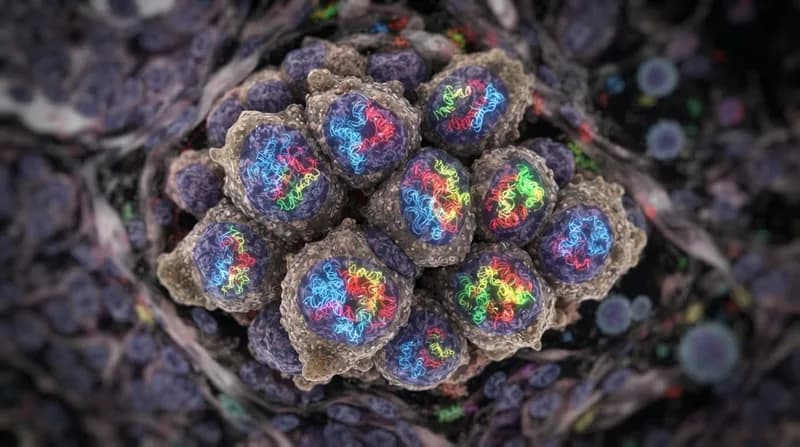
By analyzing nearly half a million individual cells across 62 distinct tumor samples, researchers have moved beyond traditional "bulk" analysis. Instead, they focused on clonal heterogeneity—the existence of various subpopulations of cancer cells within a single tumor, each possessing a unique genetic signature. This approach has allowed scientists to map exactly how these clones evolve, transition between aggressive and less aggressive states, and build fortresses against the patient's own immune system.
Targeting the MYC Gene
One of the most significant discoveries involves the role of the MYC gene. The study found that as tumors progress, certain populations of cells exhibit increased MYC activity, which drives them toward a highly aggressive, "basal" state. When the researchers experimentally blocked this gene in laboratory settings, they observed a remarkable transformation: the aggressive cells reverted to a more "classical," less dangerous form. Crucially, this transition also made the cancer cells more susceptible to attacks from immune cells.
This finding suggests that the aggressive nature of these tumors is not a fixed trait but a dynamic process that can potentially be reversed. By targeting the specific molecular mechanisms that drive this evolution, doctors may eventually be able to strip the cancer of its ability to adapt and spread, opening new avenues for therapeutic intervention.
Evasion and the Immune Barrier
The research also shed light on why standard immunotherapies often fail to gain traction in pancreatic cancer patients. The single-cell analysis uncovered that specific cell clones express higher levels of the TIGIT gene, a protein that acts as an "off-switch" for the immune system, effectively hiding the cancer from detection. Simultaneously, these same cells were found to have suppressed activity of the PD1 gene—a common target for existing checkpoint inhibitor therapies.
This distinct genetic profile explains why therapies aimed at PD1 often fall short; the tumor has simply reconfigured itself to utilize different pathways for immune evasion. Understanding this clonal diversity is essential for future precision medicine efforts, as it implies that effective treatment will require a multi-pronged approach that anticipates these shifting defenses rather than relying on a single, static therapeutic target.
Why It Matters
- Beyond Subtypes: The study explains the mechanism behind how tumors shift between "classical" and "basal" states, a transition that was previously poorly understood.
- Precision Targeting: Insights into TIGIT and MYC gene activity provide specific targets for clinical trials aiming to restore immune visibility.
- Methodological Shift: By analyzing 443,451 single cells rather than bulk samples, the research team identified clonal diversity that would have been invisible in traditional diagnostic tests.
As the scientific community moves toward personalized oncology, this work serves as a blueprint for how clinicians might eventually monitor tumor evolution in real-time. By tracking the life cycle of these cell clones, researchers believe it is possible to stay one step ahead of the disease's capacity to adapt, potentially transforming pancreatic cancer from a terminal diagnosis into a manageable condition.