The Path to Orbit
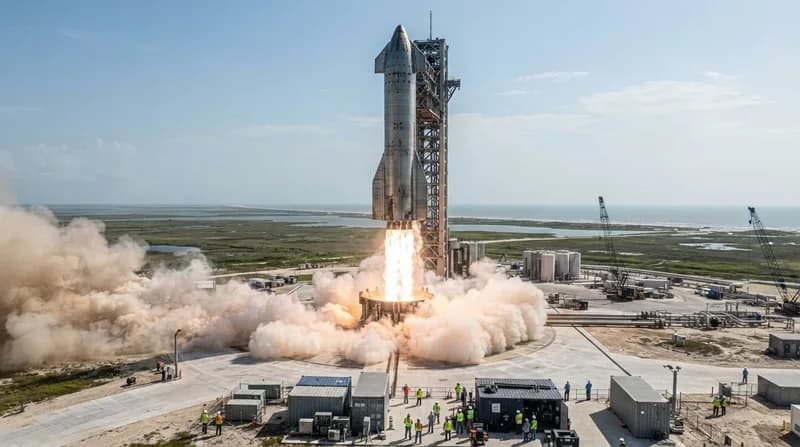
SpaceX has set its sights on September 22 for the 14th test flight of its colossal Starship launch vehicle. Scheduled for 12:15 UTC, the mission represents a major shift from previous experimental flights, as the company aims to achieve stable orbit for the first time. The flight plan calls for the spacecraft to reach an altitude of approximately 275 kilometers, where it will complete six full orbits before executing a controlled deorbit burn using a single Raptor engine, ultimately targeting a splashdown in the Pacific Ocean west of Chile.
This mission is more than just a test of trajectory; it is a functional deployment trial. Starship is slated to carry 26 Starlink V3 satellites, signaling SpaceX's intent to transition the vehicle from a developmental prototype to a workhorse for its satellite constellation. The success of this mission is vital for the company's long-term goals, particularly its role in NASA's upcoming Artemis III mission, which relies on a specialized lunar variant of Starship to ferry astronauts to the moon’s surface in 2027.
Hardware Refinements and Lessons Learned
The transition to Flight 14 comes on the heels of Flight 13, which experienced a difficult conclusion for the Super Heavy booster. During the previous attempt, ice clogging in the three center engines forced an early termination of the boostback maneuver. In response, SpaceX engineers have implemented a series of hardware modifications, including improved filtration systems and updated flight software designed to enhance the reliability of engine reignition sequences.
Thermal protection also remains a primary focus for the engineering team. The vehicle's heatshield has undergone significant testing and revision, with the addition of curved tiles designed to minimize thermal stress at the gaps. SpaceX has also introduced reinforced retention mechanisms in high-risk areas to prevent tile loss during the high-vibration ascent phase. Intriguingly, the company is reusing two tiles recovered from a previous flight, a critical step toward proving that Starship can achieve true, cost-effective reusability.
Why It Matters
- Operational Maturity: Moving from suborbital tests to orbital deployment is the most significant hurdle in the Starship program's history.
- Redundancy Focus: SpaceX has confirmed that an orbital insertion burn will only be initiated if hardware redundancy checks ensure a safe, controlled reentry capability.
- Lunar Ambitions: Proving the vehicle's reliability in orbit is a mandatory prerequisite for the Starship Human Landing System required by NASA’s Artemis program.
As the countdown approaches, all eyes are on the Gulf of Mexico. Whether or not the Super Heavy booster lands with precision or the Starship spacecraft successfully navigates the complex heat-management challenges of reentry, Flight 14 is poised to provide the most comprehensive data set yet in the pursuit of heavy-lift, reusable space access.