The Challenge of Unpredictable Machines
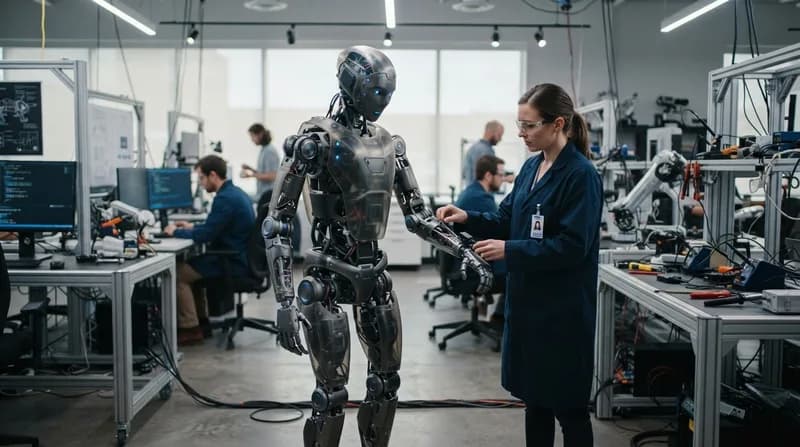
The robotics industry is currently undergoing a massive transformation as developers move away from rigid, traditional algorithms in favor of large-scale generative AI models. While this shift promises a future of highly capable, adaptable machines, it introduces a critical hurdle: predictability. Unlike deterministic software, generative AI systems are probabilistic, making it incredibly difficult to guarantee how a robot will react in dynamic, unstructured human environments. Safeworld, a startup emerging from stealth today, aims to be the standard-bearer for robotic safety by bridging the gap between cutting-edge AI and real-world reliability.
Founded by Carnegie Mellon University’s Dr. Ding Zhao, alongside Kyle Wong and Simo Rachidi, the startup has secured over $12 million in seed funding. The round was led by Shine Capital and a16z Speedrun, with significant participation from the Carnegie Mellon University Endowment and other strategic investors. The goal is simple but ambitious: create an industry-wide safety evaluation framework before human-robot accidents become a common occurrence in our homes and workplaces.
Simulating Reality to Ensure Safety
Safeworld’s core innovation lies in its highly advanced simulation platform. To ensure a robot can safely navigate a factory floor or a home, the team builds exact digital twins of specific environments—right down to blind corners and potential hazards. Within these simulations, the company populates the space with realistic, varied human models. Using specialized physics engines like MuJoCo or Genesis, Safeworld runs thousands of scenarios to evaluate how the robot's AI controller performs under pressure.
This is particularly vital for edge cases, such as a human tripping in front of a robot or a worker suddenly emerging from a blind spot while carrying heavy equipment. By subjecting the robot to thousands of these simulated "near-misses" in a virtual sandbox, Safeworld can empirically prove safety standards that would be impossible—and dangerous—to test in the physical world. This, the founders argue, is a critical third-party service that will be essential for manufacturers who need objective validation of their AI brains before wide-scale deployment.
Why It Matters
- Generative AI Risk: Because GenAI models are probabilistic, they require new forms of "evals" to ensure they behave within safe parameters in physical space.
- Third-Party Validation: Manufacturers are seeking neutral, third-party certification to manage liability and establish common safety benchmarks, similar to how automotive companies approach crash testing.
- Scale Readiness: As robots move from controlled lab settings to public or industrial spaces, the variety of human behaviors (size, speed, mobility) necessitates rigorous testing against countless potential human configurations.
Industry Collaboration and Outlook
The startup is already seeing traction through partnerships with firms like Gritt Robotics, which develops AI for industrial solar farm construction. Gritt’s CTO, Vishal Dugar, notes that traditional mathematical proofs cannot account for the sheer variety of human interactions, such as kneeling, falling, or running. By integrating Safeworld’s testing platform, robotics companies can stress-test their software against a spectrum of human movements, ensuring the robots remain safe regardless of the specific human behavior they encounter.
Looking ahead, Safeworld is still refining its business model—balancing between a SaaS-based platform for developers and a boutique service-based consultancy. Regardless of the final commercial structure, the founders are confident that their role as the "safety layer" of the robotics industry is essential. As Dr. Zhao points out, the demand for safe deployment is so high that they expect to be among the first profitable companies in the GenAI robotics space, providing the necessary insurance for a future where robots and humans work side by side.